|
|
|||||||
  /_derived/Amy_Lou_Jenkins_htm_cmp_blank110_vbtn.gif) /_derived/Writers%20Wanted_htm_cmp_blank110_vbtn.gif)          /_derived/Featured_Writers_htm_cmp_blank110_vbtn.gif)  |
|||||||
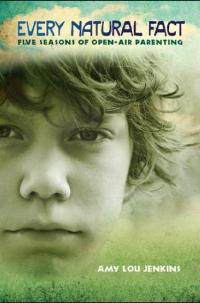 Amy
Lou Jenkins is the award-winning author of
Every Natural Fact: Five Seasons of Open-Air Parenting Amy
Lou Jenkins is the award-winning author of
Every Natural Fact: Five Seasons of Open-Air Parenting
"If you combined the lyricism of Annie Dillard, the vision of Aldo Leopold, and the gentle but tough-minded optimism of Frank McCourt, you might come close to Amy Lou Jenkins.Tom Bissell author of The Father of All Things
"Sentence by sentence, a joy to
read." —
Phillip Lopate
|
|||||||
|
Anthologies online participates in various affiliate programs and most links to books and products in articles/anthologies/author or any page offer some referral payment, pay for click or other reimbursement. The payment is generally pennies per click or purchase. Anthologies online also runs paid ads.The Anthologiesonline web site and newsletter are provided on an "as is" basis without any warranties of any kind and disclaim all warranties, including the warranty of merchantability, non-infringement of third parties' rights, and the warranty of fitness for particular purpose. No person or organization makes any warranties about the accuracy, reliability, completeness, or timeliness of the material, services, software text, graphics and links. Any communication is generally considered to be nonconfidential. See Privacy Policy. |
|||||||
|
|
|||||||


read poetry, Ted Kooser
|
|
In the smallest of landscapes, Scottish poet Kathleen Jamie
finds the larger story.
Kathleen Jamie has worked her way up in a man's world--Scottish poetry. While
her poems do sound more lithe than the gruff lyrics of Hugh MacDiarmid, Norman
MacCaig, or George Mackay Brown, her phrasings are nonetheless robust and often
brusque--quite new to an ear accustomed to American poetry's tendency to whisper
to itself. Consider the emphatic clang and headlong momentum of "The Barrel
Annunciation":
I blame the pail
set under our blocked kitchen rhone
which I slopped across the yard
and hoisted to the butt's
oaken rim seven
or nine times in that spring storm.
Included in Waterlight are domestic poems about being a
wife and a mother, and references to laundry, cooking, etc.; yet the poems also
insistently address history, culture, politics, and industry. Moreover, the
poems travel--literally, to Canada, Budapest, the Himalayas, and figuratively,
in their scope and sweep. So, this is not what one might call "women's poetry,"
nor could it be faulted as the work of some cerebral Athena. It's smart, tough,
healthy, clear-eyed, unapologetic--and exhilarating.
Waterlight, though, is a deceptively slim introduction to Kathleen
Jamie's ten books. And it's also a bizarre form of introduction, as it begins
with her repeatedly waving goodbye--as if she appears in the volume unwillingly
or against her better judgment. The book opens with the most recent work, and
this as a whole concerns itself with missed epiphanies. Repeatedly some
half-hearted gesture of diverting, erasing, letting go, or losing track
concludes the poems.
Consider, for example, the volume's two poems titled "Rhododendrons," one from
The Tree House (2004), the other from Jizzen (1999). In the newer
"Rhododendrons," the speaker sees the flowering shrubs from a boat, apparently
while crossing a loch:
It wasn't sand martins
hunting insects in the updraught,
or the sudden scent of bog myrtle
that made me pause, lean
across the parapet,
but a handful of purple baubles
reflected below the water's surface.
This is lovely--that it's not the flowers themselves but their
reflection "below" the water, and how this meets the sonic reflection of "purple
baubles." Next, however, the reflected rhododendron blossoms appear to the
speaker "as comfortable and motionless / as a family in their living room //
watching tv," and with this image the poem's energy begins to dissipate; the
poem turns away from the flowers' reflection and toward an association laden
with passivity, banality, and boredom. Subsequently, when the poem continues--
What was it,
I'd have asked, to exist
so bright and fateless
while time coursed
through our every atom
over its bed of stones--?
--it's not clear whether the speaker is addressing the flowers
or the family watching tv. "I'd have asked," she writes, not quite mustering the
requisite effort or interest. And then she ends it, as if knocking over a
half-built house of cards:
But darkness was weighing
the flowers and birds' backs,
and already my friends had moved on.
The earlier "Rhododendrons," however, does not abandon its
insights on the brink. In four eight-line stanzas, it offers a history of
rhododendrons in Scotland, simultaneously concretizing these flowering shrubs
and working them as a metaphor for immigration and interculturation. Brought
"under sail" from "a red-tinged east," the flowers are
carried down gangplanks
in dockers' arms. Innocent
and rare.
...........
their blooms a hidden gargle
in their green throats.
Then, after the shrubs come "shuddering on trains" through
towns, begins the "terribly gentle / work" of planting them:
the fertile
globe of the root-ball
undisturbed, Yunnan
or Himalayan earth
settled with them.
This poem is precise and expansive both, its "fertile / globe"
echoing the entire volume's wanderlust. It interleaves its subject with a
consideration of exotic versus native, mute versus articulate, energizing the
rhododendrons and the speaker. While the newer poem proposes oppositions--above
versus below, natural versus technological, immediate versus removed (as beneath
the surface of the water, or beyond the tv screen), it doesn't develop them, and
it doesn't achieve the range or verve of the earlier one.
Or consider "Rooms," a poem from Mr and Mrs Scotland Are Dead, the final
section of Waterlight. The poem is so compressed I must quote the
entirety:
Though I love this travelling life and yearn
like ships docked, I long
for rooms to open with my bare hands,
and there discover the wonderful, say
a ship's prow rearing, and a ladder
of rope thrown down.
Though young, I'm weary:
I'm all rooms at present, all doors
fastened against me;
but once admitted start craving
and swell for a fine, listing ocean-going prow
no man in creation can build me.
This poem is short, but in the interpenetration of its images
it becomes expansive. It's an example, too, of how Jamie's poems buck against
typical gender categories. The speaker longs for settled "rooms" that contain
the very soul of travel: "a ship's prow rearing" and casting off its lines.
Next, she herself is "all rooms" with "all doors / fastened against" her--so
she's locked in and out at once, an existence that's both pure interiority and
exiled. Then, once "admitted," admitted through the door or admitted into
consciousness, out of that inchoate interior state, she begins to "swell" and
crave a ship--she becomes the sea. No man can build for her this ship she
craves, and no man can build her. As the poem uncoils its mercurial yearnings,
to wander, to settle, be unencumbered, admitted, understood, penetrated,
independent--it deftly crafts Jamie's situation as a Scottish woman writer
assailing the current. This poem moves at breakneck speed, daring the reader to
hang on.
Joanie Mackowski is the author of The Zoo (University of Pittsburgh
Press, 2002) and has work in Best American Poetry 2007. She teaches with
the Creative Writing Program at the University of Cincinnati.
© 2008 by Joanie Mackowski. All rights reserved.
Distributed by the Poetry Foundation at www.poetryfoundation.org.
American Life in Poetry: Column 126
BY TED KOOSER, U.S. POET LAUREATE, 2004-2006
The British writer Virginia Woolf wrote about the pleasures of having a room of
one's own. Here the Vermont poet Karin Gottshall shows us her own sort of
private place.
The Raspberry Room
It was solid hedge, loops of bramble and thorny
as it had to be with its berries thick as bumblebees.
It drew blood just to get there, but I was queen
of that place, at ten, though the berries shook like fists
in the wind, daring anyone to come in. I was trying
so hard to love this world--real rooms too big and full
of worry to comfortably inhabit--but believing I was born
to live in that cloistered green bower: the raspberry patch
in the back acre of my grandparents' orchard. I was cross-
stitched and beaded by its fat, dollmaker's needles. The effort
of sliding under the heavy, spiked tangles that tore
my clothes and smeared me with juice was rewarded
with space, wholly mine, a kind of room out of
the crush of the bushes with a canopy of raspberry
dagger-leaves and a syrup of sun and birdsong.
Hours would pass in the loud buzz of it, blood
made it mine--the adventure of that red sting singing
down my calves, the place the scratches brought me to:
just space enough for a girl to lie down.
American Life in Poetry: Column 114
BY TED KOOSER, U.S. POET LAUREATE, 2004-2006
Poetry can be thought of as an act of persuasion: a poem attempts
to bring about some kind of change in its reader, perhaps no more than a moment
of clarity amidst the disorder of everyday life. And successful poems not only
make use of the meanings and sounds of words, as well as the images those words
conjure up, but may also take advantage of the arrangement of type on a page.
Notice how this little poem by Mississippi poet Robert West makes the very best
use of the empty space around it to help convey the nature of its subject.
Echo
A lone
voice
in the
right
empty space
makes
its own
best
company.
American Life in
Poetry: Column 096
BY TED KOOSER, U.S. POET LAUREATE, 2004-2006
Grief can endure a long, long time. A deep loss is very reluctant to let us set
it aside, to push it into a corner of memory. Here the Arkansas poet, Andrea
Hollander Budy, gives us a look at one family's adjustment to a death.
For Weeks After the Funeral
The house felt like the opera,
the audience in their seats, hushed, ready,
but the cast not yet arrived.
And if I said anything
to try to appease the anxious air, my words
would hang alone like the single chandelier
waiting to dim the auditorium, but still
too huge, too prominent, too bright, its light
announcing only itself, bringing more
emptiness into the emptiness.
Copyright (c) 2006 by Andrea Hollander Budy. First published in "Five Points"
and included in her book, "Woman in the Painting ." Reprinted by permission of
the author and Autumn House Press. This weekly column is supported by The Poetry
Foundation, The Library of Congress, and the Department of English at the
University of Nebraska-Lincoln. This column does not accept unsolicited poetry.
American Life in Poetry: Column 067
BY TED KOOSER, U.S. POET LAUREATE, 2004-2006
One in a series of elegies by New York City poet Catherine Barnett, this poem
describes the first gathering after death has shaken a family to its core. The
father tries to help his grown daughter forget for a moment that, a year
earlier, her own two daughters were killed, that she is now alone. He's
heartsick, realizing that drinking can only momentarily ease her pain, a pain
and love that takes hold of the entire family. The children who join her in the
field are silent guardians.
Family Reunion
My father scolded us all for refusing his liquor.
He kept buying tequila, and steak for the grill,
until finally we joined him, making margaritas,
cutting the fat off the bone.
When he saw how we drank, my sister
shredding the black labels into her glass
while his remaining grandchildren
dragged their thin bunk bed mattresses
first out to the lawn to play
then farther up the field to sleep next to her,
I think it was then he changed,
something in him died. He's gentler now,
quiet, losing weight though every night
he eats the same ice cream he always ate
only now he's not drinking,
he doesn't fall asleep with the spoon in his hand,
he waits for my mother to come lie down with him.
Reprinted from "Into Perfect Spheres Such Holes Are Pierced," Alice James Books,
2004, by permission of the author. Copyright (c) 2004 by Catherine Barnett. This
weekly column is supported by The Poetry Foundation, The Library of Congress,
and the Department of English at the University of Nebraska-Lincoln. This column
does not accept unsolicited poetry.
|
American
Life in Poetry: Column By Ted Kooser, U.S. Poet Laureate  Remember those Degas paintings of the ballet dancers? Here is a similar figure study, in muted color, but in this instance made of words, not pigment. As this poem by David Tucker closes, I can feel myself holding my breath as if to help the dancer hold her position. |
American Life in Poetry: Column 063
BY TED KOOSER, U.S. POET LAUREATE, 2004-2006
Remember those Degas paintings of the ballet dancers? Here is a similar figure
study, in muted color, but in this instance made of words, not pigment. As this
poem by David Tucker closes, I can feel myself holding my breath as if to help
the dancer hold her position.
The Dancer
Class is over, the teacher
and the pianist gone,
but one dancer
in a pale blue
leotard stays
to practice alone without music,
turning grand jetes
through the haze of late afternoon.
Her eyes are focused
on the balancing point
no one else sees
as she spins in this quiet
made of mirrors and light--
a blue rose on a nail--
then stops and lifts
her arms in an oval pause
and leans out
a little more, a little more,
there, in slow motion
upon the air.
Reprinted from the 2005 Bakeless Prize winner "Late for Work", by David Tucker,
Houghton Mifflin, 2006, by permission of the author. "The Dancer" first appeared
in "Visions International", No. 65, 2001. Copyright (c) 2001 by David Tucker.
This weekly column is supported by The Poetry Foundation, The Library of
Congress, and the Department of English at the University of Nebraska-Lincoln.
This column does not accept unsolicited poetry.
American Life in Poetry: Column 055
By Ted Kooser, U.S. Poet Laureate
A circus is an assemblage of illusions, and here Jo McDougall, a Kansas poet,
shows us a couple of performers, drab and weary in their ordinary lives, away
from the lights at the center of the ring.
| What We Need
It is just as well we do not see, |
From "Dirt," Autumn House Press, Pittsburgh, 2001. Copyright (c) 2001 by Jo
McDougall, whose most recent book is "Satisfied With Havoc," Autumn House Press,
2004. Reprinted by permission of the author and Autumn House Press. This weekly
column is supported by The Poetry Foundation, The Library of Congress, and the
Department of English at the University of Nebraska-Lincoln. This column does
not accept unsolicited poetry.