|
|
|||||||
  /_derived/Amy_Lou_Jenkins_htm_cmp_blank110_vbtn.gif) /_derived/Writers Wanted_htm_cmp_blank110_vbtn.gif)          /_derived/Featured_Writers_htm_cmp_blank110_vbtn.gif)  |
|||||||
 Amy
Lou Jenkins is the award-winning author of
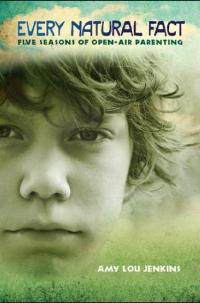
Every Natural Fact: Five Seasons of Open-Air Parenting Amy
Lou Jenkins is the award-winning author of
Every Natural Fact: Five Seasons of Open-Air Parenting
"If you combined the lyricism of Annie Dillard, the vision of Aldo Leopold, and the gentle but tough-minded optimism of Frank McCourt, you might come close to Amy Lou Jenkins.Tom Bissell author of The Father of All Things
"Sentence by sentence, a joy to
read." —
Phillip Lopate
|
|||||||
|
Anthologies online participates in various affiliate programs and most links to books and products in articles/anthologies/author or any page offer some referral payment, pay for click or other reimbursement. The payment is generally pennies per click or purchase. Anthologies online also runs paid ads.The Anthologiesonline web site and newsletter are provided on an "as is" basis without any warranties of any kind and disclaim all warranties, including the warranty of merchantability, non-infringement of third parties' rights, and the warranty of fitness for particular purpose. No person or organization makes any warranties about the accuracy, reliability, completeness, or timeliness of the material, services, software text, graphics and links. Any communication is generally considered to be nonconfidential. See Privacy Policy. |
|||||||
|
|
|||||||


Jack Gilbert thinks poets should be greedy for "what's inside them."
"I don't want to be at peace," Jack Gilbert pronounced shortly after his 80th
birthday. Yet he has spent much of his life on remote Greek islands, on a
houseboat in Kashmir, on a western Massachusetts farm, and in the outskirts of
Sausalito, California, either alone or in the company of one other. He has never
owned a home and has driven a car only twice. But the unique kernel of Gilbert's
poetry is its fearless exploration of the adult heart.
Gilbert was born in Pittsburgh in 1925 and grew up in the East Liberty district.
His father worked in the circus for a time and died after falling out the window
of a Prohibition-era men's club when Jack was 10. He was admitted to the
University of Pittsburgh because of a clerical error, where he began writing
poetry (having previously written only prose) and earned a B.A. in 1947. After
several years in Paris, Aix-en-Provence, and Italy, Gilbert made his way to San
Francisco, where the Beat and Haight-Ashbury countercultures were beginning to
thrive.
Gilbert lived in the Bay Area for 11 years, from 1956 to 1967, during which time
he attended San Francisco State, worked with Ansel Adams, took Jack Spicer's
magic workshop, and enjoyed a years-long friendly argument about poetry with
Allen Ginsberg. Gilbert didn't like much of Ginsberg's work until one day when
Ginsberg walked through a roadless and undeveloped area of Sausalito to
Gilbert's cabin. He read aloud from two pages of poetry he'd just written.
Gilbert liked it. It was the beginning of Ginsberg's iconic poem "Howl," read
publicly for the first time in 1956 to wild acclaim, and published in 1958. Four
years later Gilbert's first book, Views of Jeopardy, won the Yale Younger
Poets Prize and was nominated for a Pulitzer. Gilbert enjoyed a year and a half
of stateside fame, then won a Guggenheim Fellowship in 1964 and left for Greece
with the poet Linda Gregg. Six years would pass before he returned.
Gilbert wrote poems in Greece (and Denmark and England) that became
Monolithos, his second book, finally coaxed into publication by editor
Gordon Lish in 1982, 20 years after Gilbert's debut. That book, too, was
nominated for the Pulitzer Prize--as well as the National Book Critics Circle
Award. By then, Gilbert had separated from Gregg and married Michiko Nogami.
In 1982, after only 11 years of marriage, Michiko died of cancer at age 36.
Gilbert next published a limited-edition volume called Kochan, a
collection of elegiac poems written for Michiko, whose ghost would inspire what
many call his best love poems, written in the early 1990s. Those poems
constitute much of Gilbert's third book, The Great Fires, which appeared
in 1994. By this point he had been teaching from time to time, stretching the
money in order to live quietly abroad, writing.
Last year Gilbert turned 80 and published his fourth book, Refusing Heaven.
His is an aesthetic of exclusion. "There is usually a minimum of decoration in
the best," he has said. "Both the Chinese and the Greeks were in love with what
mathematicians mean by elegance: not the heaping up of language, but the use of
a few words with utmost effect." Despite their streamlined appearance, Gilbert's
poems are not sentimental, obvious, or thin.
One of my favorite poems from The Great Fires contains even fewer
elements than a classical haiku: the poem simply describes a man carrying a box.
"He manages like somebody carrying a box / that is too heavy, first with his
arms / underneath. . . . Afterward, / he carries it on his shoulder, until the
blood / drains out of the arm that is stretched up / to steady the box and the
arm goes numb. But now / the man can hold underneath again, so that / he can go
on without ever putting the box down." The lines appear almost inconsequential.
But the title of the poem is "Michiko Dead."
In a recent interview in The Paris Review, Gilbert asked, "Why do so many
poets settle for so little? I don't understand why they're not greedy for what's
inside them. . . . When I read the poems that matter to me, it stuns me how much
the presence of the heart--in all its forms--is endlessly available there."
What is the most important thing a poet must seek, I asked him. His response:
"Depth and warmth."
Sarah Manguso is the author of a story collection and two collections of
poetry, including Siste Viator (Four Way Books). She earned degrees from
Harvard and the University of Iowa, and lives in Brooklyn.
© 2007 by Sarah Manguso. All rights reserved.
Distributed by the Poetry Foundation at www.poetryfoundation.org.