|
|
|||||||
  /_derived/Amy_Lou_Jenkins_htm_cmp_blank110_vbtn.gif) /_derived/Writers Wanted_htm_cmp_blank110_vbtn.gif)          /_derived/Featured_Writers_htm_cmp_blank110_vbtn.gif)  |
|||||||
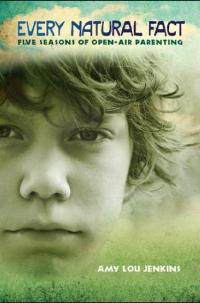 Amy
Lou Jenkins is the award-winning author of
Every Natural Fact: Five Seasons of Open-Air Parenting Amy
Lou Jenkins is the award-winning author of
Every Natural Fact: Five Seasons of Open-Air Parenting
"If you combined the lyricism of Annie Dillard, the vision of Aldo Leopold, and the gentle but tough-minded optimism of Frank McCourt, you might come close to Amy Lou Jenkins.Tom Bissell author of The Father of All Things
"Sentence by sentence, a joy to
read." —
Phillip Lopate
|
|||||||
|
Anthologies online participates in various affiliate programs and most links to books and products in articles/anthologies/author or any page offer some referral payment, pay for click or other reimbursement. The payment is generally pennies per click or purchase. Anthologies online also runs paid ads.The Anthologiesonline web site and newsletter are provided on an "as is" basis without any warranties of any kind and disclaim all warranties, including the warranty of merchantability, non-infringement of third parties' rights, and the warranty of fitness for particular purpose. No person or organization makes any warranties about the accuracy, reliability, completeness, or timeliness of the material, services, software text, graphics and links. Any communication is generally considered to be nonconfidential. See Privacy Policy. |
|||||||
|
|
|||||||


Richard Kenney's first poetry collection in fifteen
years is worth the wait
The One-Strand River, by Richard Kenney. Alfred A. Knopf. $26.95.
Fifteen years have passed since Kenney's last book, and The One-Strand River
finds the author having deviated some from his last known trajectory. After
The Invention of the Zero (1993), I would have guessed Kenney's poems would
spiral farther out into the dismal reaches of the Thomas Pynchon / boy genius
nebula of literature. Time had other plans, and although one must factor out
certain quirks, losing every third poem or so to a gimmick of some kind ("This
poem is no fun," etc.), Kenney has developed a capacity to be at least
intermittently restrained, and the result is not only the entry of affection and
wonder into his poetry but their coexistence with mordancy and mischief. Real
feeling and satirical bite result.
The texture of the writing is defined by verbal impetuousness, a lunge for the
aptest comparison at any cost in baroqueness--on the highway he watches "a lone
deinonychid biker" whose shadow "writhes like a count's cape / Caught in a belt
sander." The mood is defined, contrarily, by wariness and moderation amid
midlife shoals where "Churlish / Thoughts bedevil me, often," although he has to
admit "ambrosias / Yet decant." Kenney's fascination with data certainly still
exists, and he cannot resist mentioning hurricanes on Jupiter and saying "the
Middle Holocene" instead of "now." The data are not purely for show-off, but are
pressed to serve as metaphors for experience and inner life, where they have the
pitiably inadequate quality of a precocious child trying to insulate itself from
uncertainty. They are no different ontologically from the stuff of religion or
indeed fairy tales: "All linchpins shear." The problem is worse than that, since
the things which affect him most--a glint in the eye of a laughing child, the
scent of soap on a passing woman--are irreconcilable with a certain empirical
idiom of public speech. With knowledge and meaning no longer overlapping,
questions of right conduct become absurdly underdetermined ("the poled pirogue
// Of Humanism slips the everglade / Of endocrine function, doing / Its very
best"), and there are no grounds for deciding in what ratio one ought to be a
creature of instinct and of reason:
Oh to live ignobly!
Not pig-
Like, quite, nor bleating,
Braying, mewling, really;
Neither, though, thoroughly
Morally:
Not for a life of pure sensation
Per se.
--From "To Circe"
The overall impression is of a slightly louche, roue, self-hating polymath, a
role he plays much less consistently than Frederick Seidel but perhaps with more
vulnerability. Kenney's touch is not always light enough for vers de societe or
deft political incisions (it is in cases very crude) but when he can bring
himself to leave something unsaid, the results are aqua vitae. This happens in
"Critical," "Security Council," the academy sendup "Challenges & Opportunities"
("Sousa's // To be replaced, we learn, by !Kung plainsong") and in "Alaric
Intelligence Memo #36," where the fiction is a sleeper terrorist filing a report
to his superiors. Through this exercise Kenney is trying to decide what he has
invested in his latter-day Rome: "Their warrior class, insufficiently manned, /
Is mad, responsive, and under command":
Their poetry barks. Their faith, a ruins,
Ghost-infested, affords no womb
Of future. In sum: however skilled,
They are overripe. My Lord, strike soon.
Addendum: proud to have served your will,
I have lived too long among them. I am ill.
I am infected with dreams. At the first moon
Of conquest, I respectfully request to be killed.
That "Addendum" falls on a page break--until then, the poem seems truly out of
control. But the ending exposes the internal struggle that has been taking
place, charity fighting disgust to a draw. The poem is not about uncertainty or
vacillation, but agonized and clear ambivalence, and in imparting such
ambivalence to a public voice Kenney has made me rethink my suspicion that the
art is ill-suited to the interestingness of the times. Not only is it not
playing catch-up, it is, evidently, actively clarifying.
D.H. Tracy's poetry and criticism appear widely. He lives in Illinois. This
review originally appeared in the September 2008 issue of Poetry
magazine. Distributed by the Poetry Foundation. Read more about Richard Kenney,
and his poetry, at www.poetryfoundation.org.
© 2008 by D.H. Tracy. All rights reserved.