|
|
|||||||
  /_derived/Amy_Lou_Jenkins_htm_cmp_blank110_vbtn.gif) /_derived/Writers%20Wanted_htm_cmp_blank110_vbtn.gif)          /_derived/Featured_Writers_htm_cmp_blank110_vbtn.gif)  |
|||||||
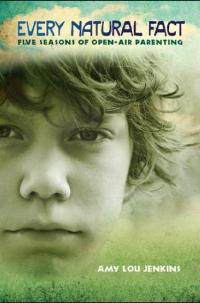 Amy
Lou Jenkins is the award-winning author of
Every Natural Fact: Five Seasons of Open-Air Parenting Amy
Lou Jenkins is the award-winning author of
Every Natural Fact: Five Seasons of Open-Air Parenting
"If you combined the lyricism of Annie Dillard, the vision of Aldo Leopold, and the gentle but tough-minded optimism of Frank McCourt, you might come close to Amy Lou Jenkins.Tom Bissell author of The Father of All Things
"Sentence by sentence, a joy to
read." —
Phillip Lopate
|
|||||||
|
Anthologies online participates in various affiliate programs and most links to books and products in articles/anthologies/author or any page offer some referral payment, pay for click or other reimbursement. The payment is generally pennies per click or purchase. Anthologies online also runs paid ads.The Anthologiesonline web site and newsletter are provided on an "as is" basis without any warranties of any kind and disclaim all warranties, including the warranty of merchantability, non-infringement of third parties' rights, and the warranty of fitness for particular purpose. No person or organization makes any warranties about the accuracy, reliability, completeness, or timeliness of the material, services, software text, graphics and links. Any communication is generally considered to be nonconfidential. See Privacy Policy. |
|||||||
|
|
|||||||


Awesome Endings
By: Lea Schizas
| Post Your Resume FREE to Job.com and receive a free resume evaluation and career consultation. |
| *This book became a best seller within four weeks of its release! As a new writer, I wanted to write short stories. I scoured the bookshops, but couldn’t find anything to teach me how to write them. I read gazillions of short stories and bought a ton of books on writing, but still couldn’t find anything specifically geared toward writing short stories. It was a hard slog; without even a little bit of guidance, I felt like I was drowning. Even today, there is virtually nothing available that focuses totally on short story writing.
After earning more
than $500 on the sale of
just one story,
I decided to write the book that I needed back in
those early days. –An interactive workshop for writers– |
Bungee jumping, sky diving, secret mission, Indy 500: how do
these events compare to the art of fiction writing? Each one
brings to its ‘doer’ an element of anticipation, exhilaration,
unfamiliarity, and adventure. A pure adrenaline rush. And as a
writer of fiction, this is the plateau you want your reader to
experience.
Straying from the anticipated ending to a twist makes for good
reading, pleasing the editor, and upping your chance of getting
accepted. But be wary. Your twist should conform along the lines
of the story you have crafted thus far. Not an easy task to
accomplish, but plausible.
For example: fifteen-year-old John stole the answers to his exam
from his teacher’s desk. Throughout the storyline, John has been
portrayed as a ‘bully’ but every so often the writer has offered
either flashbacks or little inconspicuous hints into John’s
childhood. The reader assumes that John will either get away
with it, or get caught and suspended. The author has gripped the
reader into continuing the book to see where this will end up.
Here comes the twist.
Because of these rare flashback insights, we’ve seen another
side to John, although subtle, it’s still there. So when John
ends up placing the answers back with no one being the wiser,
the reader is stunned, surprised, but content with this twist
ending because it has been subliminally build into the plot.
If the writer’s portrayal of John had been exclusively
‘bullish’, mean-spirited, unfriendly throughout then the
reader’s reaction would have been stunned, surprised and
obviously, left cheated with an ending that holds no basis with
the rest of the storyline.
This is called character reversal, when the character reacts
different than what the reader expected. And to pull it off, you
must have planted subtle seeds along the way.
Does this affect your plot down the line? In certain
circumstances, yes. For example:
Bruce is a studious clean-cut senior high school student. He’s
portrayed as the ‘geek’ for most of the story, not a main
character at all. Then the writer decides to spruce things up
and throws a dare at Bruce. Bruce accepts. He takes his friend’s
ID and goes to a ‘Rave’. Big mistake, but a twist for the
reader. The ‘Rave’ is raided, Bruce ends up in jail because his
friend is wanted by the police and he’s holding the fake id. He
escapes and now tries to clear his name that somehow has crept
into the police files. A sedate YA high school book has now
turned into a suspense novel all because of a character
reversal.
|
Learn M ore in our How to Write Series How to make money writing about your hobbies How to become a freelance article writer How to Sign With a Literary Agent How to get published in the glossies How to write believable characters How to repair your short story How to find writing inspiration
|
or Buy New $15.63
|
When writing up your character(s) sketch, try to include
opposite reactions, as well. By doing this, you can easily plot
foreshadowing more convincingly ahead of the game.
Remember that fiction is often, if not all the time, crafted out
of real people, real situations or real events. So think of a
‘real’ person and envision his reaction to several possible
finales to a ‘dilemma’. Then start crafting the ending with one
of these ‘reactions’ while dropping subtle hints to a totally
different ending than what your reader is expecting. Try to use
this character reversal for a completely out of this world
‘awesome ending.’
Make sure your story propels forward, making your reader want to
turn the page. Bungee jump them out of a plane into a secret
path that will drive them to the finish line.
About the author:
Author’s Bio: Lea Schizas is Founder and Co-founder of 2 Writer’s Digest 101
Best Writing Sites of 2005
and recipients of the Preditors and Editors Award: Apollo’s Lyre and The
MuseItUp Club. For more information on Lea Schizas, link here: http://leaschizasauthor.tripod.com