|
|
|||||||
  /_derived/Amy_Lou_Jenkins_htm_cmp_blank110_vbtn.gif) /_derived/Writers%20Wanted_htm_cmp_blank110_vbtn.gif)          /_derived/Featured_Writers_htm_cmp_blank110_vbtn.gif)  |
|||||||
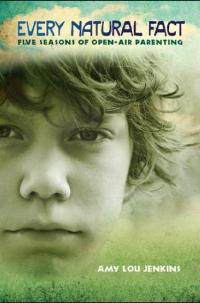 Amy
Lou Jenkins is the award-winning author of
Every Natural Fact: Five Seasons of Open-Air Parenting Amy
Lou Jenkins is the award-winning author of
Every Natural Fact: Five Seasons of Open-Air Parenting
"If you combined the lyricism of Annie Dillard, the vision of Aldo Leopold, and the gentle but tough-minded optimism of Frank McCourt, you might come close to Amy Lou Jenkins.Tom Bissell author of The Father of All Things
"Sentence by sentence, a joy to
read." —
Phillip Lopate
|
|||||||
|
Anthologies online participates in various affiliate programs and most links to books and products in articles/anthologies/author or any page offer some referral payment, pay for click or other reimbursement. The payment is generally pennies per click or purchase. Anthologies online also runs paid ads.The Anthologiesonline web site and newsletter are provided on an "as is" basis without any warranties of any kind and disclaim all warranties, including the warranty of merchantability, non-infringement of third parties' rights, and the warranty of fitness for particular purpose. No person or organization makes any warranties about the accuracy, reliability, completeness, or timeliness of the material, services, software text, graphics and links. Any communication is generally considered to be nonconfidential. See Privacy Policy. |
|||||||
|
|
|||||||


Publish or
Perish: It's Not Only for Academia, Part 1
By Emily Hanlon
|
|
|
 Writer's Dreamkit 4.0
A step-by-step fiction writing system
Structure your plot logically
Spot the weak points in your work
Shepherds you from concept to completed story
Create and track every dramatic element |
|
|
|
|
More Articles About Writing Fiction Understanding Theme and Premise In The Beginnings, Capture your Editors Attention A COMMON PITFALL: EXPOSITORY DIALOGUE
FIVE STEPS TO CONCRETE CREATIVE FICTION Read more about How to make money writing about your hobbies How to become a freelance article writer How to get published in the glossies How to create believable characters |
I am the daughter of an obsessed writer. My father, a math teacher by vocation, a writer by avocation, brought me up believing that writing is a fine passion and that the highlight of a writer's life is being published. He gave me his love of the English language, great literature and great writers. He instructed me on the importance of realistic dialogue, creating characters we remember, and good plot twists. I was drawn to his typewriter before I could spell. In fact, one of our memorable photographs is of me at about age three, kneeling on a chair at the table where he wrote. My little hands are poised above the keys of his sturdy, black Underwood. My expression is thoughtful and fixed. By the side of the Underwood is a bottle of Schaefer beer.
When I was a child, I breathed in my father's passion for his own writing and
| the precious envelope in one hand and his hand in my other, walked to the mail box where together we slid the envelope into the slot. Then the wait began, ever hopeful |
being published. Before I was old enough to read his stories, I filled the
manila envelopes with his manuscripts (the onion skin carbon copies
ceremoniously filed away), pasted on the stamps and, holding the precious
envelope in one hand and his hand in my other, walked to the mail box where
together we slid the envelope into the slot. Then the wait began, ever hopeful,
for the news that his story had been accepted. I'm not sure I knew what would
happen when it was accepted, but I knew it would make him, and thus me very,
very, very happy. Invariably, what happened, of course was that the manuscript
was returned. I felt his dejection as if it were my own.
"Don't worry, Daddy," I remember telling him. "When I grow up, I'm going to put
all your stories into a book and publish them myself." It was a palpable dream
for me.
When my father died, he left suitcases filled with short stories, only two of
which had been published, both in Esquire. In addition, he'd written three
novels about a private eye named Michael Oliver O'Toole, who remained his
companion during his final years in a nursing home. Even when my father couldn't
remember who I was, he talked about Michael Oliver O'Toole.
This durable friendship with Michael Oliver O'Toole is one of my favorite
memories of my writing father, and I have come to the conclusion that it is
better to have a friend like Michael Oliver O'Toole than the memory of signing a
fat publishing contract.
I wonder if Dad would agree with me.
I'm not so sure he would. He wanted so desperately to be well-published. He
wanted fame and fortune and, I believe, felt terribly despondent for not having
had them. He was a victim of the 'publish or perish" syndrome as surely as if
he'd been a college professor.
I am as much heir to those longing as I am the recipient of his love of writing.
The disparity between these two inheritances has made for a lot of angst in my
own obsessive drive to be "well" published.
I did publish, often, well and once very, very well. I was thrilled that my
father was still alive when I sold my novel Petersburg to Putnam for a lot of
money. I usually don't talk about the money I have received for my books, and
surely doing so seems antithetical to a column such as this; however, the memory
of what happened because of the sale is vital in my memory and cannot be told
without reference to the dollar amount
of the sale of Petersburg. For as if by the kindness of the Muse herself, even
though my father lay lost in a fog of dementia, I was able to make him
understand. Leaning over his bed in the nursing home, I said over and over,
"Dad, I did it. I sold my book for $250,000!"
Finally, he turned to me, his blue eyes more vibrant than I had seen them for a
long time. He opened them wide to show delight and his mouth formed a big O
shape. "A quarter of a million dollars! OHHH!" His smile was wonderful. For that
moment, I had my father back--he'd even, amazingly, translated $250,000 into a
quarter of a million! But the light soon vanished, the O of his mouth deflated
and he turned away. He was gone, lost behind the shroud of Alzheimer's Disease.
I was ecstatic though. I'd gotten through to him. He'd understood. I'd done it!
For me and for him. Fame and fortune were on the way. Nothing was going to stop
me now.
But it did. Several months later,
I proposed my next book to my editor, a novel set in the Middle Ages and she
said, " Don't write this book, Emily. You don't want to follow up Petersburg
with something like this. It will never sell. No one wants to read a book set in
the Middle Ages."
I wrote it anyway. It was a book waiting to be born. In one
way--commercially--it has been difficult. Although I had a couple of near sales,
I haven't yet been able to sell the novel. (Although I now have an agent who is
very excited about its sale) Were these rejections difficult for me?
Anguishingly so. Am I sorry I wrote the novel? Absolutely not. Mistress of the
Labyrinth had to be written. For me. I would be sad if I had never written
Petersburg; however, I would not be the person I am today--a person I am very
glad I uncovered!--if I had not
written Mistress of the Labyrinth. (I further explore my experiences with
Mistress of the Labyrinth in my book, The Art of Fiction Writing.)
Through the journey I am taking with Mistress of the Labyrinth, I have come to
understand that a far truer aphorism than "publish or perish" is "write or
perish". Am I free of "publish or perish"? Not completely, I still have days
when I cannot face going into bookstores or bear to read a highly regarded best
seller. There are days when I lament, "Why me? Why isn't my book published?" But
those days are increasingly more rare. In my
heart and my gut--it is my mind that sometimes has trouble with this--I feel
that the journey I take in being a writer is far more exciting and valuable than
the experience of being published. Which is not to say that I believe it is
unimportant to be published. When one of my students completes a story or book,
I do everything I can to help her or him find a publisher. And I still hope that
Mistress of the Labyrinth as well as the
novel I am currently writing will be published. However, I no longer fear, as I
once did, that I will give up writing and fall into hopeless depression if this
doesn't happen.
If being published were the main reason that we write, then very few of us would
be writing. (It is my suspicion that today writers far outnumber readers.) Yet
many writers are haunted by the feeling that the only way to gain validation as
a writer is to be published.
"If only I were published, my husband, wife, children, I myself, the world, my
high school English teacher, college
roommate, ex-boyfriends, etc. etc. would take me seriously." "If only I
were published, I would quit my job and write full time."
"If only I were published, I would ___________." (You fill in the blank.)
And when we are published, as exciting as it can be, the experience rarely lives
up to our expectations. As Anne Lamott says in Bird By Bird, "I tell you, if
what you have in mind is fame and fortune, publication is going to drive you
crazy. If you're lucky, you will get a few reviews, some good, some bad, some
indifferent. Don't get me started on places where one is neglected..."
To this, I would add: When we hand over our validation as a writer to the
industry of publishing (which today is,
by-in-large, hopelessly incompetent both as judges of good writing and as
business people) we hand over our creative passion, and are in mortal danger of
losing our connection to the joy of the journey.
Part 2: The Journey of Being a Writer Is the
Biggest Payoff of All!
About the author:
Emily Hanlon is a writing coach who works with writers all over the world on the
telephone. She is the author of 8 books of fiction, including Petersburg,
translated into several languages and reached the best sellers list in England.
She leads writing retreats for women and workshops in this country and abroad.
Her
websites are:
http://www.thefictionwritersjourney.com and
http://www.awritersretreat.com