|
|
|||||||
  /_derived/Amy_Lou_Jenkins_htm_cmp_blank110_vbtn.gif) /_derived/Writers Wanted_htm_cmp_blank110_vbtn.gif)          /_derived/Featured_Writers_htm_cmp_blank110_vbtn.gif)  |
|||||||
 Amy
Lou Jenkins is the award-winning author of
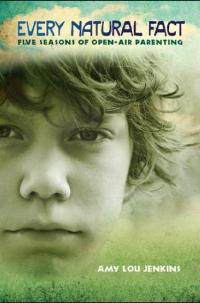
Every Natural Fact: Five Seasons of Open-Air Parenting Amy
Lou Jenkins is the award-winning author of
Every Natural Fact: Five Seasons of Open-Air Parenting
"If you combined the lyricism of Annie Dillard, the vision of Aldo Leopold, and the gentle but tough-minded optimism of Frank McCourt, you might come close to Amy Lou Jenkins.Tom Bissell author of The Father of All Things
"Sentence by sentence, a joy to
read." —
Phillip Lopate
|
|||||||
|
Anthologies online participates in various affiliate programs and most links to books and products in articles/anthologies/author or any page offer some referral payment, pay for click or other reimbursement. The payment is generally pennies per click or purchase. Anthologies online also runs paid ads.The Anthologiesonline web site and newsletter are provided on an "as is" basis without any warranties of any kind and disclaim all warranties, including the warranty of merchantability, non-infringement of third parties' rights, and the warranty of fitness for particular purpose. No person or organization makes any warranties about the accuracy, reliability, completeness, or timeliness of the material, services, software text, graphics and links. Any communication is generally considered to be nonconfidential. See Privacy Policy. |
|||||||
|
|
|||||||


Sylvia Plath, Featured Poet
PLATH
The legacy of the poet who
died at 30.
As an English professor who teaches the literature of the Beat Movement at the
University of Massachusetts in Lowell, I spend a lot of time thinking about Jack
Kerouac, our fair city's most famous native son. Never has this been more true
than this year, when Lowell is hosting an exhibit of Kerouac's original scroll
manuscript of On the Road. But even though I sometimes feel like Kerouac is my
shadow, or I am his, he is not the only New England author who occupies my mind
and heart.
In recent months, I have found myself turning again and again to the poetry of
Sylvia Plath, whose 75th birthday will be commemorated this year. Sivvie, as her
friends sometimes called her, was born in Boston on October 27, 1932, to parents
of German and Austrian descent. After four years in Jamaica Plain, her family
moved to Winthrop to be close to Plath's maternal grandparents. In 1942, two
years after the death of her father, a professor of entomology who also taught
German, Sylvia and her mother and brother moved to Wellesley. There, Sylvia
excelled at her studies and earned an academic scholarship to Smith College in
Northampton.
A preternaturally gifted young woman, Plath was destined to write some of the
greatest poems of the 20th century. Who can forget "Daddy," the poem she wrote
both as an elegy for the father whose death she had never fully accepted and as
an angry rebuke of the husband from whom she separated after seven years of
marriage? The poem begins:
You do not do, you do not do
Any more, black shoe
In which I have lived like a foot
For thirty years, poor and white,
Barely daring to breathe or Achoo.
The poem ends on this note of searing, triumphant rage:
There's a stake in your fat black heart
And the villagers never liked you.
They are dancing and stamping on you.
They always knew it was you.
Daddy, daddy, you bastard, I'm through.
"Daddy" and its companion poem "Lady Lazarus" are Plath's two most famous works,
but they only begin to tell the story of her artistic range. This time of year,
I am drawn irresistibly to "Poppies in October," which Plath wrote in London
near the end of her brief life of 30 years. In a few spare lines, the poem
juxtaposes the startling beauty of the poppies with an oppressive urban scene.
An ambulance is picking up a woman under ominous skies as men walk by, their
eyes "Dulled to a halt under bowlers." Then comes the sudden, martyred cry of
the conclusion:
O my God, what am I
That these late mouths should cry open
In a forest of frost, in a dawn of cornflowers.
In these lines, Plath revels in a paradise not quite lost. Her unanswerable
question tellingly ends with a period rather than a question mark. We are left
in our private forests to contemplate the poem's epiphany.
Of all the poems in the collected edition of Plath's work, the one I consider
her crowning achievement is "Three Women," subtitled "A Poem for Three Voices."
Plath wrote it as a verse play, and it aired on the BBC. The poem imagines the
thoughts of three unnamed women who are all pregnant: one who will bear and keep
her child, a second who will suffer a miscarriage, and a third, a university
student, who will give up her child for adoption. The simplicity of the setup
belies the emotional complexity of the poem.
The three women's musings reveal just how conflicted they are about the holy
office of motherhood. Here, for instance, is the First Voice speaking near the
end of the poem after the birth of her son:
How long can I be a wall around my green property?
How long can my hands
Be a bandage to his hurt, and my words
Bright birds in the sky, consoling, consoling?
It is a terrible thing
To be so open: it is as if my heart
Put on a face and walked into the world.
In her most moving poems, Sylvia Plath gives voice to the emotions that exist in
the fine interstices between the more obvious feelings of love and fear, anger
and sorrow.
Here in his hometown of Lowell, Jack Kerouac is a voice to be reckoned with. But
sometimes I hear Plath's voice breaking through, traveling to me from the
various places she lived in Massachusetts and from her final home in London. As
readers, as human beings, we need her, as we need all great poets, to say for us
what we could not or would not say on our own. And for that she deserves both
our gratitude and our vigilant attention.
Hilary Holladay is a Professor of English at the University of Massachusetts,
Lowell, where she teaches African American Literature, Literature of the Beat
Movement, and Modern Poetry. She is the author of Ann Petry and Wild
Blessings: The Poetry of Lucille Clifton.
© 2007 by Hilary Holladay. All rights reserved.
Distributed by the Poetry Foundation at poetryfoundation.org.