|
|
|||||||
  /_derived/Amy_Lou_Jenkins_htm_cmp_blank110_vbtn.gif) /_derived/Writers%20Wanted_htm_cmp_blank110_vbtn.gif)          /_derived/Featured_Writers_htm_cmp_blank110_vbtn.gif)  |
|||||||
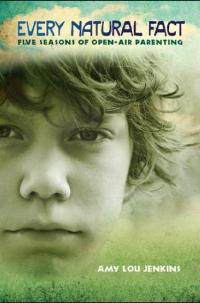 Amy
Lou Jenkins is the award-winning author of
Every Natural Fact: Five Seasons of Open-Air Parenting Amy
Lou Jenkins is the award-winning author of
Every Natural Fact: Five Seasons of Open-Air Parenting
"If you combined the lyricism of Annie Dillard, the vision of Aldo Leopold, and the gentle but tough-minded optimism of Frank McCourt, you might come close to Amy Lou Jenkins.Tom Bissell author of The Father of All Things
"Sentence by sentence, a joy to
read." —
Phillip Lopate
|
|||||||
|
Anthologies online participates in various affiliate programs and most links to books and products in articles/anthologies/author or any page offer some referral payment, pay for click or other reimbursement. The payment is generally pennies per click or purchase. Anthologies online also runs paid ads.The Anthologiesonline web site and newsletter are provided on an "as is" basis without any warranties of any kind and disclaim all warranties, including the warranty of merchantability, non-infringement of third parties' rights, and the warranty of fitness for particular purpose. No person or organization makes any warranties about the accuracy, reliability, completeness, or timeliness of the material, services, software text, graphics and links. Any communication is generally considered to be nonconfidential. See Privacy Policy. |
|||||||
|
|
|||||||


Theme and Premise
Understanding
Theme
and
Premise
by
Susan
J.
Letham

Find links to more articles on fiction writing at the end of this article
Holly Bayling-Fields asks: My writers' group is working on the basic fiction
writing topics like plot, setting,
theme,
and premise.
I'm still confused about
theme
and premise.
Can you explain them and outline the differences for me?
Response: Relax, Holly! Many writers have the same problem you do when it comes
to understanding
theme
and premise.
Writers have an insider "craft" language and use terms in very specific ways
that can differ from the ways laypeople use them. The confusion you feel about
theme
probably stems from this difference in
understanding.
Premise
can be confusing, because it's a term that most folks don't use in their daily
conversation, so for many writers,
premise
is an "empty shell" word: you see it, but it's hollow. You can read it, but you
don't really know what it means. What you need is a simple explanation of both
points in writer's terms, so let's see if we can give it to you here.
-------------------------------------
Theme
-------------------------------------
I know you're American, so let' take an example from your life: You celebrate
Thanksgiving each year. You may also go to Fourth of July celebrations and
Valentine Day parties.
These celebrations revolve around what most of our laypeople would call a
theme.
They'd say, the themes were:
- Thanksgiving
- Fourth of July, and
- Valentine's Day.
What the people are actually naming is the expression of the
theme,
the story if you like. They are talking about the particular way a
theme
is expressed in a specific case.
When we talk about
theme in connection with writing,
we mean something different--something more fundamental.
Let's go back to our celebrations, because each one has a real
theme,
the kind of theme
we talk about in writing, too.
To find the theme
of each celebration, ask yourself what it is you actually honor on each of these
days. What is the celebration (or the story) about? What's the issue? You may
then decide that:
- the underlying
theme of Thanksgiving is
gratitude,
- the underlying
theme of July Fourth is
independence, and
- the underlying
theme of Valentine's Day is love.
The clothes, songs, flags, food, rituals, parades and all the other celebration
props are what you use to express the
theme--what
you use to tell the specifically American version of your story about gratitude,
independence, and love. People in other countries also celebrate feasts with the
themes of gratitude, independence, and love, though the
way they do it, the props and rituals they use, may differ considerably from
those you know in America. The same is true in fiction: many stories are about
the same theme,
but each story has a different setting, other characters, objects and an
individual way of looking at the topic.
-------------------------------------
Activity Break:
Theme
-------------------------------------
Here are some events. What do you think is the
theme
of each of these events? (Some events can have more than one
theme.)
- Easter
- Christmas
- Halloween
- Your birthday
- Kwanzaa
- Diwali
- Chanukah
- Pessach
- Spring equinox
- Winter solstice
- Singing your national anthem with a crowd
- University Graduation
- Wedding
Though you may start off with a sentence to describe what you see as the meaning
behind the feast, keep going, and reduce your
theme
to one word, as I did above with
gratitude, independence, and love.
After a few stabs at the activity, you may discover that
theme
is almost always an ideal: an abstract noun.
An abstract noun is the name of a quality, state, action or emotion. The thing
named cannot be seen, heard, tasted, or touched in the real or everyday sense,
though you do experience its effects on your life.
Some examples are: wisdom, truth, justice, talent, love, belief, faith, envy,
courage, dignity, beauty, compassion, hunger, joy, responsibility, wealth,
poverty, and nobility.
In short, the theme
is the underlying idea, the event or story is the individual expression of that
idea.
-------------------------------------
Premise
-------------------------------------
Now you've got a handle on
theme,
let's see if we can get to grips with
premise
as well. We can use our celebration days for that, too. We've already agreed on
the themes of each of our celebrations. To get at the
premise,
all you need to do is ask yourself about the specific message attached to the
theme
(gratitude, independence, love) in each case. What kind of gratitude,
independence, and love are we talking about in each case? What value judgment do
people make about them? What do people believe about
theme
in each story or
celebration context?
Fill in the blanks in the following:
- The underlying
theme of Thanksgiving is
gratitude for _(this)_. Being grateful for _(this - same as before)_ leads to
_(effect)_.
- The underlying
theme of July Fourth is
independence in the sense of _(this)_. Independence in the sense of _(this -
same as before)_ leads to _(effect)_.
- The underlying
theme of Valentine's Day is
_(this kind of)_ love between _(these people)_. (This kind of) love between
(same people as before) leads to _(effect)_.
The second statement in each case is a
premise.
A premise
is a declaration of belief. It usually says or at least implies that one
specific thing leads to or causes another specific thing:
- With love, anything is possible.
- Faith can work miracles.
- Trust in yourself and you're sure to succeed.
-------------------------------------
Premise
as a takeaway message in fiction
-------------------------------------
In fiction, the story you write will illustrate the way in which your
premise
turns out to be correct. Each story will leave the reader with the
premise
you created as a takeaway message.
Premises can also take the form of sayings. In fact, many of the fables and
parables we heard as children existed simply to teach us the way in which the
story message was true.
Theme:
Pride
Premise:
Pride comes before a fall.
Theme:
Honesty
Premise:
Honesty is the best policy.
Theme:
Wealth
Premise:
Wealth spoils the character.
-------------------------------------
Activity Break:
Premise
-------------------------------------
Here are some themes. Write down a
premise
(statement) you
believe to be true about each
theme.
Examples:
Premise:
The wages of SIN is ...
Premise:
Without LOVE there can be no...
Premise:
Where GRACE is present, all
Premise:
BEAUTY is in the eye of the...
Theme:
beauty
Premise:
Theme:
brotherhood
Premise:
Theme:
compassion
Premise:
Theme:
courage
Premise:
Theme:
dignity
Premise:
Theme:
envy
Premise:
Theme:
faith
Premise:
Theme:
hunger
Premise:
Theme:
joy
Premise:
Theme:
justice
Premise:
Theme:
love
Premise:
Theme:
nobility
Premise:
Theme:
openness
Premise:
Theme:
poverty
Premise:
Theme:
questing
Premise:
Theme:
responsibility
Premise:
Theme:
sin
Premise:
Theme:
talent
Premise:
Theme:
truth
Premise:
Theme:
wealth
Premise:
Theme:
wisdom
Premise:
-------------------------------------
The value of defining
theme
and premise
-------------------------------------
The value of defining
theme
and premise
before you write is that knowing them will help you keep your story on track. If
you know the message you want to share (premise)
and the background against which you want to make it (theme),
you'll
be able to feel confident about the focus and direction of your writing.
-------------------------------------
Activity Break:
Theme
and Premise
-------------------------------------
1. Below are some themes.
2. Create 2-3 premises for each
theme.
3. Write some sentences to show how you'd tackle each story.
Example theme:
Love
Example premise
1: Love conquers fear
Example storyline: Carly is afraid of flying. Tom, the love
of her life, is on a business trip halfway around the world.
He has an accident and is in coma. Carly must take a plane
so she can pull him back from death's door in time.
Example premise
2: Love is eternal
Example storyline: Romeo and Juliet go through incarnation after incarnation on
a search for each other. Most lives are near misses: they know the other is or
was there in the same lifespace, but don't meet up. Finally, in 4003, they find
each other again and are granted joint incarnation rights for the rest of
eternity.
Theme:
Love
Premise
1:
Storyline:
Premise
2:
Storyline:
Premise
3:
Storyline:
Theme:
Freedom
Premise
1:
Storyline:
Premise
2:
Storyline:
Premise
3:
Storyline:
Theme:
Independence
Premise
1:
Storyline:
Premise
2:
Storyline:
Premise
3:
Storyline:
Theme:
Truth
Premise
1:
Storyline:
Premise
2:
Storyline:
Premise
3:
Storyline:
Theme:
Justice
Premise
1:
Storyline:
Premise
2:
Storyline:
Premise
3:
Storyline:
Try out a few theme
and premise
exercises to get a feel for the issues. When you've done that, see if you can
explain what you've learned to your writers' group. Doing that will help all
this gel in your mind.
© 2002,2003 Susan
J.
Letham ham
More Articles About Writing Fiction
In The Beginnings, Capture your Editors Attention
A Common Pitfall: Expository Dialogue
Five Steps to Concrete Creative Fiction
Susan
J.Letham
is a British writer and Creative Writing lecturer. Visit Inspired2Write for
articles and prompts and creative writing courses:
http://www.Inspired2Write.com/
Subscribe to Inspired2Write Newsletter (published monthly) mailto:Inspired2Write_Newsletter-subscribe@yahoogroups.com