|
|
|||||||
  /_derived/Amy_Lou_Jenkins_htm_cmp_blank110_vbtn.gif) /_derived/Writers%20Wanted_htm_cmp_blank110_vbtn.gif)          /_derived/Featured_Writers_htm_cmp_blank110_vbtn.gif)  |
|||||||
 Amy
Lou Jenkins is the award-winning author of
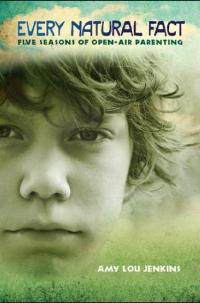
Every Natural Fact: Five Seasons of Open-Air Parenting Amy
Lou Jenkins is the award-winning author of
Every Natural Fact: Five Seasons of Open-Air Parenting
"If you combined the lyricism of Annie Dillard, the vision of Aldo Leopold, and the gentle but tough-minded optimism of Frank McCourt, you might come close to Amy Lou Jenkins.Tom Bissell author of The Father of All Things
"Sentence by sentence, a joy to
read." —
Phillip Lopate
|
|||||||
|
Anthologies online participates in various affiliate programs and most links to books and products in articles/anthologies/author or any page offer some referral payment, pay for click or other reimbursement. The payment is generally pennies per click or purchase. Anthologies online also runs paid ads.The Anthologiesonline web site and newsletter are provided on an "as is" basis without any warranties of any kind and disclaim all warranties, including the warranty of merchantability, non-infringement of third parties' rights, and the warranty of fitness for particular purpose. No person or organization makes any warranties about the accuracy, reliability, completeness, or timeliness of the material, services, software text, graphics and links. Any communication is generally considered to be nonconfidential. See Privacy Policy. |
|||||||
|
|
|||||||


Featured Anthology
Beloved on the Earth: 150 Poems of Grief and Gratitude
 by Jim Perlman, Deborah Cooper, Pamela Mittlefehldt, and Mara Hart |
Every human must face loss.
Poetry has the potential to exist within that same transcendent sphere.
That place of truth holds more than pain and more than grief. This art
touches complex reality with the comfort of community and remembrance.
Beloved on the Earth fulfills its potential with poetry about grief and gratitude. These poems give voice and meaning to the complexities of loss. Everyone who opens themselves to the verse of Beloved on the Earth will connect to the most difficult reality of humanity by way of poetry's "*concise clarity." *from the preface by Pamela Mittlefehldt |
Interview with Jim Perlman, Co-Editor of Beloved on the Earth: 150 Poems of Grief and Gratitude and Founding Editor and Publisher at Holy Cow! Press
Why did you and your co-editors choose
to connect the words
grief and gratitude in your title?
*Grief and gratitude seem like the two necessary and healthy
perspectives to hold while moving through the loss of a
loved one. We feel sadness but perhaps that loss gains a
better balance when we also recognize the gratitude we feel
for having experienced another person's close relationship.
I also like the music of the phrase, "grief and gratitude,"
as if the near rhyme reveals that the two viewpoints can go
hand in hand.
How did the compilation of this anthology, and the reading
and review of so many poems about loss, affect your personal
journey with grief?
*By reading and meditating on the poems, I came to
understand that I wasn't alone in my grieving. I gained
profound insights into the mysterious realm between living
and dying. We were deeply moved by the myriad responses to
grief and gratitude, and the unique ways people wrote about
this. We were also impressed by the powerful dynamic between
personal experience and poetic expression that allowed grief
and gratitude to be shared.
Who do you envision as an audience for Beloved on the
Earth?
*This poetry anthology has many potential readers: those who
are moving through grief and loss; health care workers in
the field of hospice and grief support; doctors and
physicians; clergy who look for meaningful readings for
memorial and funeral services; readers of contemporary
poetry.
With several co-editors you must have dealt with differences
of
opinion in some of the selections. What factors guided you
in making your final selections?
*As expressed in Pamela's preface, we strove to select poems
that moved us emotionally without excessive sentiment, that
allowed the reader to easily enter the poem, and that were
written out of love and respect for whomever the poem
addressed. For us, there was a remarkable lack of difference
of opinion or tension in the selection process--in large
part because of the quality of the poems that were selected.
The poems themselves seemed to resolve almost all
differences of opinion, thus making the decisions for us.
What is the relationship between poetry, grief, and
gratitude?
*This is a very complicated question. I think that the best
poetry, with its subtle use of language, image, music, and
emotion, can explore the relationship between grief and
gratitude in ways that are both profound and mysterious.
What question do you wish I would have asked?
*Why are almost all the poems written by poets of our
particular time frame? Why not include writing of more
traditional poets like Dickinson, Millay,
Shakespeare, et al?
Then I must ask: how you would answer?
We wanted a contemporary chorus of voices and we wanted to stay away from poems that have already become familiar.
Thank you Jim.