

Reviews
“Niloufar Talebi’s accomplishment in gathering the poetry of the
Iranian diaspora is unprecedented and breathtaking. It is as if she
has, by force of commitment and vision, and by way of cultural hunger,
bequeathed a new literary heritage to Iran and the world. Here is a
lyric symphony of utterance in the voices of exiles, immigrants,
refugees, and expatriates. That Talebi assembled such an extraordinary
collection is impressive enough—that she translated most of these
poems herself is nothing short of remarkable.”
—Carolyn Forché, editor of Against Forgetting: Twentieth Century
Poetry of Witness
“In Belonging, with literary skill and passion, Niloufar Talebi
has made a major contribution to the recognition of contemporary
Iranian literature in the West, to the appreciation of diaspora poetry
by Persian speakers everywhere, and to the important project of
producing good translations from rich but underrepresented literary
canons for the anglophone reader.”
—Nahid Mozaffari, editor of the PEN Anthology of Contemporary
Iranian Literature
“Poetry is a world art because of brilliant editors and translators
like Niloufar Talebi ... Here are the poets, in all their power,
defiance, dignity, wildness, and lyric grace, scattered across the
earth, yet united in this book. Here is proof that poetry humanizes:
now contemporary Persian culture has a face, and the Persian tongue a
voice, for those of us in the English-speaking world, and we are all
richer for it.”
—Martín Espada, Pulitzer Prize nominee and author of The Republic
of Poetry
“Niloufar Talebi has accomplished the ultimate magic trick in her
clean and modern translation. She has made the work of modern Persian
poets read like original English ... an unparalled contribution.”
—Willis Barnstone, author of With Borges on an Ordinary Evening in
Buenos Aires
|
|
|||||||
  /_derived/Amy_Lou_Jenkins_htm_cmp_blank110_vbtn.gif) /_derived/Writers Wanted_htm_cmp_blank110_vbtn.gif)          /_derived/Featured_Writers_htm_cmp_blank110_vbtn.gif)  |
|||||||
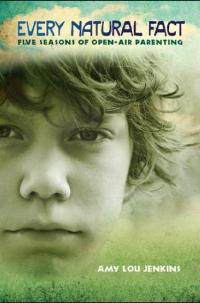 Amy
Lou Jenkins is the award-winning author of
Every Natural Fact: Five Seasons of Open-Air Parenting Amy
Lou Jenkins is the award-winning author of
Every Natural Fact: Five Seasons of Open-Air Parenting
"If you combined the lyricism of Annie Dillard, the vision of Aldo Leopold, and the gentle but tough-minded optimism of Frank McCourt, you might come close to Amy Lou Jenkins.Tom Bissell author of The Father of All Things
"Sentence by sentence, a joy to
read." —
Phillip Lopate
|
|||||||
|
Anthologies online participates in various affiliate programs and most links to books and products in articles/anthologies/author or any page offer some referral payment, pay for click or other reimbursement. The payment is generally pennies per click or purchase. Anthologies online also runs paid ads.The Anthologiesonline web site and newsletter are provided on an "as is" basis without any warranties of any kind and disclaim all warranties, including the warranty of merchantability, non-infringement of third parties' rights, and the warranty of fitness for particular purpose. No person or organization makes any warranties about the accuracy, reliability, completeness, or timeliness of the material, services, software text, graphics and links. Any communication is generally considered to be nonconfidential. See Privacy Policy. |
|||||||
|
|
|||||||
 This
featured anthology page includes an original interview with Editor
Niloufar Talebi This
featured anthology page includes an original interview with Editor
Niloufar Talebi |
 |
Featured Anthology
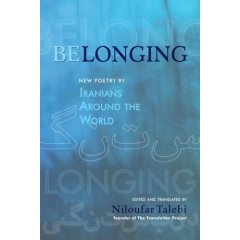
Belonging: New Poetry by Iranians Around the World
by Niloufar Talebi (Editor)
Recent political developments, including the shadow of a new war, have obscured the fact that Iran has a long and splendid artistic tradition ranging from the visual arts to literature. Western readers may have some awareness of the Iranian novel thanks to a few breakout successes like Reading Lolita in Tehran and My Uncle Napoleon, but the country's strong poetic tradition remains little known. This anthology remedies that situation with a rich selection of recent poetry by Iranians living all around the world, including Amir-Hossein Afrasiabi: “Although the path / tracks my footsteps, / I don’t travel it / for the path travels me.” Varying dramatically in style, tone, and theme, these expertly translated works include erotic divertissements by Ziba Karbassi, rigorously formal poetry by Yadollah Royaii, experimental poems by Naanaam, powerful polemics by Maryam Huleh, and the personal-epic work of Shahrouz Rashid. Eclectic and accessible, these vibrant poems deepen the often limited awareness of Iranian identity today by not only introducing readers to contemporary Iranian poetry, but also expanding the canon of significant writing in the Persian language. Belonging offers a glimpse at a complex culture through some of its finest literary talents.
|
Read the Interview ALJ Amy L Jenkins / NT Niloufar Talebi
ALJ Please tell our
readers how this project came about.
NT In 2002, I had the pleasure of discovering a passion for translation, which lead to my questioning why more contemporary Iranian writers were not celebrated worldwide and whether I could help bring them international readership. That's when I founded The Translation Project www.thetranslationproject.org and began to work on an anthology, which ultimately shaped into BELONGING.
ALJ Why are these
poems important and who should read them?
NT They reflect the Iranian of today, and that is important because at this point in history, Iran is a misunderstood culture. Communicating the complexity and nuances in a misunderstood people serves to bridge people. Both American and Iranian-American readers can connect to the poems in BELONGING, which is bilingual and can be useful as a textbook as well. We hope poetry has the power to inspire, educate, connect, and change the world. It has at different points in history, and maybe it will now as well.
ALJ Can you explain
a bit about the translation process?
NT Translation is linguistic problem solving. I first draw up a literal, word-by-word translation draft of a poem, in the same word order as the original language determines, even if (and it does) read funny in English. Then I go from there, draft by draft, making decisions as to word choices, substitutes (if any) for metaphors and idioms, etc. Each poem requires attention to different things, some have sound as their main focus, some have tone, and others have form, so in translating them, I pay attention to their corresponding strengths and features.
Here is a link to
a talk I did on the process of translation at the Orange County Poetry
Festival: <http://www.poetry.la/page100.html>. It
goes to three short Youtube segments.
ALJ Can poetry and
specifically the poetry in Belonging span
cultural divides?
NT That's my wish, of course. In BELONGING, I've deliberately selected accessible poems that don't require a higher degree in Persian literature to be understood or enjoyed. In addition, the poems are also culturally accessible--despite being told from the Iranian perspective, they convey universal experiences, which should elicit emotional impact in anyone, thereby spanning cultural divides.
ALJ What question
do you wish I had asked?
NT I'm very excited about the multimedia work we've done, bringing the poems in BELONGING to life. Drawing from the Iranian tradition of Naghali (which is the ancient tradition of story-telling. Naghals, or story-tellers, dramatically recite stories from the Shahnameh, or the Book of Kings, by Ferdowsi, which contains the myths and epics of the Persian people), giving it new content (new Iranian poetry) and fusing it with western dramatic elements, we create multimedia pieces that bring this poetry, and the stories of contemporary Iranians to life. The shows we have created so far are, "Four Springs" (2004), "Midnight Approaches" (2006), and "ICARUS/RISE" (2007). ICARUS/RISE connects the myth of Icarus with the migration of Iranians. Our next theatrical piece is due to premier in 2010, and it will focus on the multiplicity of identity in immigrants, told from the Iranian point of view. You can watch clips of our projects on our Youtube channel: <www.youtube.com/translationproject> ALJ Thank You, and congratulations on the publication of your book and the great reviews it has already received. |
|