|
|
|||||||
  /_derived/Amy_Lou_Jenkins_htm_cmp_blank110_vbtn.gif) /_derived/Writers%20Wanted_htm_cmp_blank110_vbtn.gif)          /_derived/Featured_Writers_htm_cmp_blank110_vbtn.gif)  |
|||||||
 Amy
Lou Jenkins is the award-winning author of
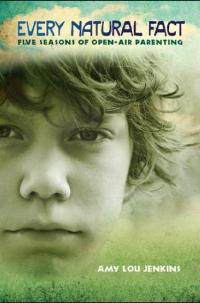
Every Natural Fact: Five Seasons of Open-Air Parenting Amy
Lou Jenkins is the award-winning author of
Every Natural Fact: Five Seasons of Open-Air Parenting
"If you combined the lyricism of Annie Dillard, the vision of Aldo Leopold, and the gentle but tough-minded optimism of Frank McCourt, you might come close to Amy Lou Jenkins.Tom Bissell author of The Father of All Things
"Sentence by sentence, a joy to
read." —
Phillip Lopate
|
|||||||
|
Anthologies online participates in various affiliate programs and most links to books and products in articles/anthologies/author or any page offer some referral payment, pay for click or other reimbursement. The payment is generally pennies per click or purchase. Anthologies online also runs paid ads.The Anthologiesonline web site and newsletter are provided on an "as is" basis without any warranties of any kind and disclaim all warranties, including the warranty of merchantability, non-infringement of third parties' rights, and the warranty of fitness for particular purpose. No person or organization makes any warranties about the accuracy, reliability, completeness, or timeliness of the material, services, software text, graphics and links. Any communication is generally considered to be nonconfidential. See Privacy Policy. |
|||||||
|
|
|||||||


| Featured
Writer Nicole Bland by N. Bland A Caribbean breeze blows over Anthologies Online. /lookdown.gif) |
| This article sponsored by: |
/a.gif) |
|
Nicole Bland is a 1998 Honors Graduate (accelerated program) in Film and Sociology from Smith College. Currently based on the Caribbean island of Trinidad, she balances these ventures with a full time freelance writing, web design and copywriting business. In her free time she enjoys scriptwriting, and at one point self-published a monthly zine entititled ŒKalypso¹. Nicole is also the webmaster of Trinidad-Online.org and station manager of Underwire, a critically acclaimed Trinidadian and Caribbean music internet radio station.
Educate Yourself
March 1999 – Kalypso
In today¹s world it has become increasingly fashionable to feign indifference and to be blasé, even ignorant, about world, national, or even domestic affairs and concerns, in the pursuit of self-comfort and material acquisition. Such narcissism and apathy has probably played its part in the decline of the secular popularity of calypso and the rise of soca. Attention was paid to last year¹s "High Mas" because it was the exception to what has become an increasingly banal norm.
I have no problem with a repetitive bassline, infectious rhythm or bawdy lyrics but I do have a problem with what is becoming an increasingly throwaway musical culture. 1997¹s tunes are anticipated, relished and then spat out as 98¹s are released (change the color of the rag, steal a melody from a different nursery rhyme). These tunes too are dismissed as Œold hat¹ in the wake of 99¹s releases and so on, ad infinitum. I would have no problem with this though if I felt it only affected the soca sub-genre, however I worry about the heavier fare that calypsonians have composed, deliberated upon and presented to audiences. You know, those compositions that encapsulate history first-hand as it happens. History on the visceral level. What happens to those tunes, sung in the tents one year, two years, three years, even ten, after they have been performed?
It¹s crazy when you think about it. Calypso is one of the few living musical and cultural forms that records history for people as it happens. No obscure documents, no official government releases, it¹s music for the people, about the people, by the people. What a resource we have for future and current generations to learn about our future and our past, before revisionist textbooks and governments have put their spin on them! If we actually wanted to encourage critical thought in our youth we could supplement our history classes with the works of these griots who had been there as the events, we can now only read about in one-sided textbooks and observe in blurred photographs, unfolded.
Alas, because of the disposability with which we often view out cultural products after the Carnival season is forgotten, many of these recordings were either never made, lost if they were, or not rereleased after their original shelf life had expired. It is with great irony that I note that hundreds of books exist on the history of Carnival and Calypso within my college¹s library system in Massachusetts along with CDs of kaiso from the 20¹s and 30¹s. How many of you reading this are aware that the ARChive of Contemporary Music in New York has built an extensive library and computerized database of Œlost¹ Calypso recordings. Or that a high school in Norway is using the lyrics of "Little Black Boy" to not only compare our dialect with Standard English but also to analyze post-colonial societal structures? Countries are using and appropriating our music to educate themselves, when will we regard it highly enough to use it to educate ourselves?
Visit Nicole Bland’s online at
http://www.nicole-katherine.com
http://www.TaurusWebdesigns.com
Email: Info@tauruswebdesigns.com