|
|
|||||||
  /_derived/Amy_Lou_Jenkins_htm_cmp_blank110_vbtn.gif) /_derived/Writers%20Wanted_htm_cmp_blank110_vbtn.gif)          /_derived/Featured_Writers_htm_cmp_blank110_vbtn.gif)  |
|||||||
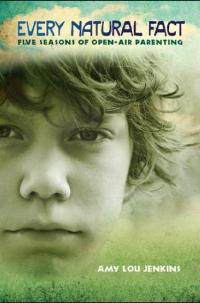 Amy
Lou Jenkins is the award-winning author of
Every Natural Fact: Five Seasons of Open-Air Parenting Amy
Lou Jenkins is the award-winning author of
Every Natural Fact: Five Seasons of Open-Air Parenting
"If you combined the lyricism of Annie Dillard, the vision of Aldo Leopold, and the gentle but tough-minded optimism of Frank McCourt, you might come close to Amy Lou Jenkins.Tom Bissell author of The Father of All Things
"Sentence by sentence, a joy to
read." —
Phillip Lopate
|
|||||||
|
Anthologies online participates in various affiliate programs and most links to books and products in articles/anthologies/author or any page offer some referral payment, pay for click or other reimbursement. The payment is generally pennies per click or purchase. Anthologies online also runs paid ads.The Anthologiesonline web site and newsletter are provided on an "as is" basis without any warranties of any kind and disclaim all warranties, including the warranty of merchantability, non-infringement of third parties' rights, and the warranty of fitness for particular purpose. No person or organization makes any warranties about the accuracy, reliability, completeness, or timeliness of the material, services, software text, graphics and links. Any communication is generally considered to be nonconfidential. See Privacy Policy. |
|||||||
|
|
|||||||


Featured Anthology:
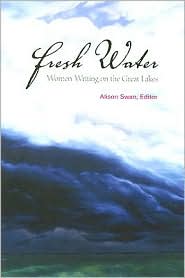 Fresh
Water: Women Writing on the Great Lakes is a collection of nonfiction
works by women writers. These works focus on the Midwest: living with the
five interconnected freshwater seas that we know as the Great Lakes.
Contributing to this collection are renowned poets, essayists, and
fiction
writers, all of whom write about their own creative streams of
consciousness, the fresh waters of the Great Lakes, and the region's many
rivers: Loraine Anderson, Judith Arcana, Rachel Azima, Mary Blocksma, Gayle
Boss, Sharon Dilworth, Beth Ann Fennelly, Linda Nemec Foster, Gail Griffin,
Rasma Haidri, Aleta Karstad, Laura Kasischke, Janet Kauffman, Jacqueline
Kolosov, Susan Laidlaw, Lisa Lenzo, Linda Loomis, Anna Mills, Stephanie
Mills, Judith Minty, Anne-Marie Oomen, Rachael Perry, Susan Power, Donna
Seaman, Heather Sellers, Gail Louise Siegel, Sue William Silverman, Claudia
Skutar, Annick Smith, Leslie Stainton, Kathleen Stocking, Judith Strasser,
Alison Swan, Elizabeth A.Trembley, Jane Urquhart, Diane Wakoski, and Leigh
Allison Wilson. Fresh
Water: Women Writing on the Great Lakes is a collection of nonfiction
works by women writers. These works focus on the Midwest: living with the
five interconnected freshwater seas that we know as the Great Lakes.
Contributing to this collection are renowned poets, essayists, and
fiction
writers, all of whom write about their own creative streams of
consciousness, the fresh waters of the Great Lakes, and the region's many
rivers: Loraine Anderson, Judith Arcana, Rachel Azima, Mary Blocksma, Gayle
Boss, Sharon Dilworth, Beth Ann Fennelly, Linda Nemec Foster, Gail Griffin,
Rasma Haidri, Aleta Karstad, Laura Kasischke, Janet Kauffman, Jacqueline
Kolosov, Susan Laidlaw, Lisa Lenzo, Linda Loomis, Anna Mills, Stephanie
Mills, Judith Minty, Anne-Marie Oomen, Rachael Perry, Susan Power, Donna
Seaman, Heather Sellers, Gail Louise Siegel, Sue William Silverman, Claudia
Skutar, Annick Smith, Leslie Stainton, Kathleen Stocking, Judith Strasser,
Alison Swan, Elizabeth A.Trembley, Jane Urquhart, Diane Wakoski, and Leigh
Allison Wilson.
|
Fresh Water: Women Writing on the Great Lakes
This October, President Bush and presidential candidates Obama and McCain all agreed on one thing. They all agreed that the Great Lakes are a treasure that must be protected, and they supported the Great Lakes Compact: a bill designed to keep the water of the great lakes within the watershed. With 20 percent of all fresh water on earth flowing through these lakes, protection of this natural resource is a biological imperative. Although many argue that the Great Lakes Compact does not offer all the protections that health of the lakes call for, most supporters are relieved that after nearly a decade-long struggle, some protections are now in place.
For the many poets, essayists, and fiction writers whose Great Lakes words are collected in the award-winning Fresh Water: Women Writing on the Great Lakes, Lakes Superior, Michigan, Huron, Erie, and Ontario are more than five big vessels of drinking water. For these writers, the water of the Great Lakes flows through their lives, informing their personal identity as well as their relationships with the places they call home.
An Original Interview with Editor Alison Swan
|
ALJ: Amy L Jenkins |
AS: Alison Swan |
|
|
|


ALJ: Congratulations on the success of Fresh Water. Your anthology has garnered rave reviews and been named A Michigan Notable Book.
AS: Thanks. I do think the book is full of excellent and interesting writing. I always feel like it’s okay to brag a little about this collection since most of the words aren’t mine!
ALJ: Can you explain the genesis of Fresh Water?
AS:Fresh Water was inspired by several things almost at once, but the very first nudge was supplied by a beautiful book about the Colorado River called Writing Down the River which I found at the Elliot Bay Book Company in downtown Seattle. I remember standing in that book lover’s paradise on a rainy April day and reading the contributors’ names: Annick Smith, Susan Zwinger, Teresa Jordan . . . Gretel Ehrlich wrote the forward. These Westerners are some of my literary heroes. “What we need is a book like this on the Great Lakes,” I said to my husband David. This was 2000 when there were few books on the lakes. (There still are not enough!) David was probably occupying our not-yet-one-year-old daughter Sophia—who by the way is now nine, which gives you idea how long these projects take!--as he often did when she was still so small so I could read or write or, just as often, sleep.
I began to research the idea immediately. My research confirmed what I suspected: there were few books about the Great Lakes and almost none that had received national attention. This has since changed, and I’m glad for that!
ALJ: Why is it important to write and read about the Great Lakes?
AS: The Great Lakes region is very large—eight states and two provinces border the lakes--10% of the US’s population gets its water from the Great Lakes and 25% of Canada’s. The shores of Lakes Superior, Michigan, Huron, Erie, and Ontario hold boreal forests, concrete cities and everything in between. Everyone is familiar with the statistic that the Great Lakes hold almost 20% of the world’s surface fresh water, but many people don’t know that they hold fully 95% of the US’s surface fresh water.
The diversity and complexity of the lakes’ various ecosystems, which are inseparable from the lakes’ health and well-being, are also widely unknown and unconsidered, especially outside the region. Every Great Lakes native has their story: The person in Seattle who thought the whole region was “pretty much like Detroit, right, I mean, industrialized?” The person from the East Coast who thought Lake Michigan might be small enough to walk around in an afternoon.
ALJ: Why did you decide on a collection by Women?
AS: Writing Down the River—the Colorado River book--is a book by women. Especially while I was immersed in mothering, I liked the idea of working with mothers and other women on a book that pay homage to our home landscape: the Great Lakes basin.
I think the differences between men and women, whether they are nature or nurture, or a blend of both, are overemphasized in ways that are simply not useful and probably harmful. However, a person’s perspective on anything will be informed by her life experiences, and let’s face it, many women’s lives are still very different from their male peer’s.
The literature we’re taught in school is most often written by men and so, as children growing up, we don’t read enough stories and ideas that reflect a woman’s experience of the world. The long-term consequences of this have yet to be fully measured. Fresh Water is my small contribution toward shifting the balance. We all, men and women, boys and girls, for so many reasons, need to read more about the experiences of women and girls.
There were times in the process of editing Fresh Water when I wished I’d solicited the writings of men, too—there are many men writers I admire!-- but in the end I’m glad the book has been a project by women. In the 1960s a Great Lakes reader appeared which contained 58 men authors and 7 women. Even a decade ago, something like 88% of books published were written by men—I don’t know if this has changed, but I do note that the majority of reviews in, for example, the New York Times Book Review are written by men about books written by men.
ALJ: Many of our readers are also writers. Can you explain, as an editor, how a particular piece of writing called to you? How do you decide what to accept/reject?
AS: After years of reading, writing, and teaching literature and writing, a person develops a pretty effective good-writing detector. It’s somewhat subjective, of course, but only somewhat. As I read submissions I was looking for accomplished writing—interesting diction, well-constructed sentences and paragraphs, effective and affecting figurative language, agility with the elements of narrative, and so on. I was also looking for originality in terms of stories and ideas. The majority of my training, experience, and publication history has been poetry and creative nonfiction prose, and I often say, only half jokingly, that I’ve learned everything I know about editing--from line editing to structuring a book--from writing and reading poetry. It is such a precise, uncompromising genre. Poets literally consider every single word.
I received just about a hundred more pages of excellent writing than the publisher allowed me to include. In the end, I trimmed pages based on which lake and what ideas, hoping to include as much different subject matter as I could. You’ll note that Lake Michigan pages outnumber other Great Lakes pages. I received about five time more submissions on Lake Michigan than the other lakes. Writers and editors, I hope you’ll read that as opportunity.
ALJ: Some of your authors come from areas far removed from the great lakes region, Anna Mills from California, and Rasma Haidri, from Norway. Why are these “distant” voices important to Fresh Water?
AS: Both Anna Mills and Rasma Haidri know at least a part of one lake intimately, Anna because she visited Lake Superior and paid close attention. Rasma because she used to live near Lake Michigan. We’re a mobile society, arguably we’ve always been—people pass through as well as settle and both experiences of place matter. Leigh Allison Wilson’s piece about Lake Ontario is particularly affecting on this point. She grew up in Tennessee and she clearly does not take the unique qualities of the Great Lakes for granted. I wanted Fresh Water to reflect as wide a range of women’s experiences of the lakes as it could. Fresh Water needed the writing of women who hail from somewhere else in the world and women who moved away from the lakes.
ALJ: Thank you Alison, for the interview and the literary celebration of the essential.
| Alison Swan is an award-winning environmentalist whose work Fresh Water won a 2007 Michigan Notable Book award. Her writing has appeared in Peninsula, Essays and Memoirs from Michigan (MSU Press), plus many literary journals and environmental publications, including The Bellingham Review, the Red Cedar Review, and the Detroit MetroTimes. | ||||