|
|
|||||||
  /_derived/Amy_Lou_Jenkins_htm_cmp_blank110_vbtn.gif) /_derived/Writers%20Wanted_htm_cmp_blank110_vbtn.gif)          /_derived/Featured_Writers_htm_cmp_blank110_vbtn.gif)  |
|||||||
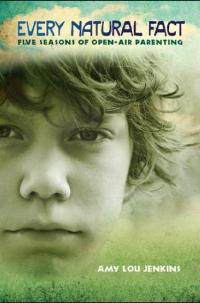 Amy
Lou Jenkins is the award-winning author of
Every Natural Fact: Five Seasons of Open-Air Parenting Amy
Lou Jenkins is the award-winning author of
Every Natural Fact: Five Seasons of Open-Air Parenting
"If you combined the lyricism of Annie Dillard, the vision of Aldo Leopold, and the gentle but tough-minded optimism of Frank McCourt, you might come close to Amy Lou Jenkins.Tom Bissell author of The Father of All Things
"Sentence by sentence, a joy to
read." —
Phillip Lopate
|
|||||||
|
Anthologies online participates in various affiliate programs and most links to books and products in articles/anthologies/author or any page offer some referral payment, pay for click or other reimbursement. The payment is generally pennies per click or purchase. Anthologies online also runs paid ads.The Anthologiesonline web site and newsletter are provided on an "as is" basis without any warranties of any kind and disclaim all warranties, including the warranty of merchantability, non-infringement of third parties' rights, and the warranty of fitness for particular purpose. No person or organization makes any warranties about the accuracy, reliability, completeness, or timeliness of the material, services, software text, graphics and links. Any communication is generally considered to be nonconfidential. See Privacy Policy. |
|||||||
|
|
|||||||


|
Writing Contest -- NO FEE By Erika Dreifus /a.gif) Looking
for a writing contest that offers real prizes, will look impressive on your resume,
and doesn't require a fee? Writing contests can be a boost to your
writing career, and a source of writing inspiration. Looking
for a writing contest that offers real prizes, will look impressive on your resume,
and doesn't require a fee? Writing contests can be a boost to your
writing career, and a source of writing inspiration.
Join the writing contest group Free http://groups.yahoo.com/group/WritingContestgroup/ Offers fee
writing contests
and no fee writing contest listings. Also find writing contests in this listing. |
Also see: Entering and Winning Writing Contests |
/lookdown.gif)

Fee-Free Writing Contests, Grants, And More!
By Erika Dreifus
|
|
Excerpted from:
FREE EXPRESSION: 101 Fee-Free Contests, Competitions, and Other Opportunities
for Resourceful Writers!
"What do you all think about contests?" one of my colleagues asked our online writing group. "Do you think you get a better read when you actually pay a reading/entry fee?" No one responded to that query (publicly, at any rate).
Although I've entered many literary competitions, my colleague's question is not one I can answer, either. I've never administered or judged a contest, and frankly, there are just too many competitions out there for anyone to issue any generalizations about their inner workings. There are, however, some wonderfully useful articles in print and on the web that offer a variety of individual ideas about what prospective entrants might consider in evaluating potential competitions and preparing to submit work. You'll find some of these listed within the references included near the end of my book,
FREE EXPRESSION: 101 Fee-Free Contests, Competitions, and Other Opportunities for Resourceful Writers.What I can tell you is that I've discovered many benefits that came with participation in writing competitions even when my work didn't "win." I've found some truly remarkable writing in the journal subscriptions that have accompanied some of those fees, for instance. In one case I was asked to participate in a public reading of my story - that possibility hadn't even been publicized in the contest guidelines. In other situations contest submissions have led to correspondence with other writers, and other assignments from editors.
But I think that my colleague's question about the reading fees itself unwittingly overlooks a crucial point: many contests that lead to publication - and similar opportunities for writers such as grants, fellowships, residencies, and retreats - don't require "reading" or "entry" or "processing" fees at all. Some writers believe they shouldn't have to pay such fees. Some just can't afford them. And still others perhaps simply prefer knowing that the "fee-free" option exists.
The first literary contest I won - a short story competition - was one of these fee-free competitions. (In fact, the year I won it was the second year I'd entered it - the fee-free contest can easily become a habit!) The success encouraged me to seek out additional opportunities, and to let others know about them as well.
Soon I was finding so much information about prizes and grants and fellowships - and telling so many people about them - that it just seemed to make sense to compile everything in one place. It wasn't very long before I found I had so much material there was enough, literally, for a book.
So what will you find in Free Expression? You'll find contests and competitions - that don't charge reading, entry, or other administrative fees - that lead to publication of novels, short story collections, poetry collections, books of nonfiction ("creative" and "scholarly"), and children's literature. You'll find grants to help facilitate development of new work, completion of work-in-progress, and other professional opportunities. You'll find fellowships that will offer you time and space in artistic communities, at residencies and retreats, conferences and colonies. You'll find opportunities for student writers, undergraduate and graduate. And you'll even find a few places to turn in cases of financial emergency.
But if you still haven't found enough, that final reference chapter of Free Expression points you to additional sources for information on opportunities for writers that I hope will prove helpful in the future. In the appendices there's even space to jot down a few thoughts, plans, and projects you might wish to pursue right away.
There are some things you won't find in the pages of my book. For instance, you won't find competitions that require you to be a fee-paying member of an organization before allowing you to participate. You won't find awards offered by journals and reviews - for the best poem or story the journal has published in a given year. In fact, you won't, in general, find competitions or award programs intended specifically to recognize previously published work. Supporting new work (and quite often, new writers) is the main point here, which is why research and other opportunity grants feature so prominently, too.
Virtually every competition offers a cash award. Many also offer publication. Two exceptions I could not resist including - the Faux Faulkner and Imitation Hemingway contests, which feature impressive travel packages and publication in an international magazine, United Airlines' Hemispheres, for their winners. I've exercised authorial license here!
In the end, you may still choose to check out the costlier competitions. But at least now you'll have some choices as you seek to express yourself - in print.
Fee-free listings in the book are categorized by:
|
David Dornstein Memorial Creative Writing Contest for Young Adult Writers Open to writers between the ages of 18 and 35, this contest welcomes unpublished short stories of up to 5,000 words on "a Jewish theme or topic." It honors David Dornstein, who was a CAJE Conference Assistant killed in the December 1988 Pan Am plane that crashed in Lockerbie, Scotland. Awards include cash prizes and publication in Jewish Education News. If three winning stories are selected, prize money is divided $700/$200/$100; if two stories win, money is divided $750/$250. No identifying information beyond the story title should appear on the manuscript, but a cover sheet with the author's name, address, phone number and story title is required. Entrants must also include a copy of a driver's license or other document to prove age, and a signed statement attesting that the story has never been published. |
Andres Montoya Poetry Prize
Francisco Aragón, Coordinator
Institute for Latino Studies
230 McKenna Hall
University of Notre Dame
Notre Dame, IN 46556
Tel. 574.631.2882
faragon (at) nd.edu
Co-sponsored by the Institute for Latino Studies and the Creative Writing Program at the University of Notre Dame, this competition is open to any Latino/a poet "who has yet to publish a full-length book of poems." Awards a $1000 prize and publication by University of Notre Dame Press. Call or write for further information.
The Humanist Essay Contest
1777 T Street, NW
Washington DC 20009-7125
Tel. 202.238.9088
info (at) thehumanist.org
For those under the age of 25 who "have thoughts on humanity and the future." Awards a first prize ($1,000), second prize ($400) and third prize ($100). Honorable Mention winners receive certificates. Manuscripts should be under 2500 words. See guidelines for suggested topics. Two notes: this contest administers categories for writers ages 13-17 and 18-24, with ages determined as of the entry deadline of December 1 each contest year. "If you cite a teacher, librarian, dean, or other education adviser (with mailing address) as instrumental to your having entered an essay, and if you are a winner, that individual will be recognized with a special award of $50."
Barbara Savage "Miles from Nowhere" Award
The Mountaineers Books
1001 SW Klickitat Way
Suite 201
Seattle, WA 98134
Tel. 206.223.6303
mbooks (at) mountaineersbooks.org
A memorial award honoring Barbara Savage, whose Miles from Nowhere chronicled the two-year, 25,000-mile round-the-world bicycle trip she and her husband Larry shared, this prize offers a $3,000 cash award, a $12,000 advance against royalties, and publication by The Mountaineers Books. "The winning manuscript will be a compelling non-fiction account of a personal outdoor adventure." See website for further details on subject matter and submission guidelines.
Highlights for Children Fiction Contest
803 Church Street
Honesdale, PA 18431
Tel. 570.253.1080
For 2004, the fiction contest welcomes stories up to 800 words "that begin with the words ‘I have a problem.'" Note that "beginning reader" stories should be 500 words, maximum. "No crime, violence, or derogatory humor." Three prizes of $1,000 each; winning stories will be published in Highlights. No entry form.
Good luck with your writing, and of course, with your Free Expression!
Erika Dreifus (Ed.M., Ph.D., Harvard University; M.F.A. Queens University of Charlotte, NC) contributes frequently to print and online publications on the craft and business of writing. She has won numerous grants, fellowships, and awards, including residencies at the Kimmel Harding Nelson Center for the Arts and the Vermont Studio Center. Read more about FREE EXPRESSION: 101 Fee-Free Contests, Competitions, and Other Opportunities for Resourceful Writers at: http://www.writersweekly.com/books/1453.html
Find more contests and markets
