Writers: Subscribe
and
send in your brief bio and your best writing sample (up to 1200 words
total) to
apply to become a featured writer. Find free articles and
markets to help you get published. Readers: Find your favorite
author, anthologies, and great reading. Editors,
send in your calls for manuscripts. Find writers and manuscripts to
fill your anthologies.








|
Writing
Magazines
Write
a query
Entering and Winning Writing Contests
Software for Writers
Books for Christian
Writers
Updated
Learn
to Be a Travel Writer
Writing
Inspiration
MFA
Reading List
Music to Write By
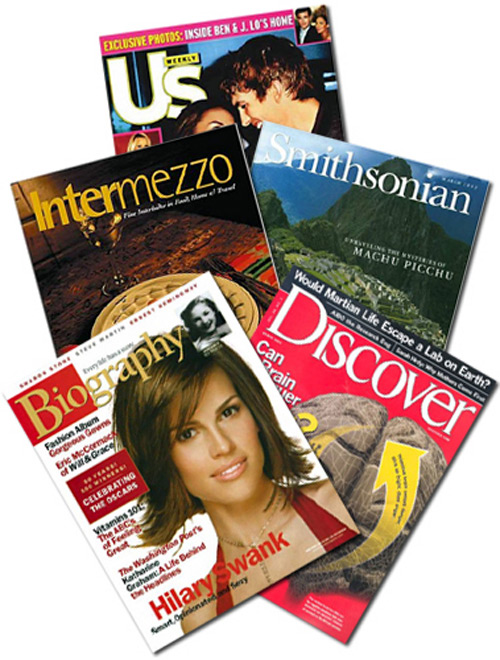
Writing for Magazines
|
|
Start training now for a
rewarding career as a
Freelance Writer. In
as little as nine months, you could be writing articles and stories for
magazines, newspapers, and more — and making money doing it.
|
|
Get a Free Online Web Store, Free Listings, Millions Buyers - LiveDeal.com |
|

|
| Instant
Access to Hundreds of Work-at-Home Jobs
The Best Place to
Find Freelance Jobs Online Today
Just imagine...working from home, earning a high
income, working around your personal schedule, selecting only projects
that interest you...doesn't the life of a freelancer sound great? For
many millions of people, this kind of lifestyle is already a reality.
Countless people have fired their boss, moved to where the quality of
life is better and started having fun through a work-at-home freelance
career.
And the great news is, you can do the same - and you can start today.
Whatever your skills and expertise, you can be sure that there is a
demand for them in the freelance market. But where would you find the
jobs and projects you need to succeed? And where can you find the
advice, information and support you need to get started?
Recommended Site - Freelance Work Exchange
No problem. There are a number of web sites that specialize in helping
freelancers to find work and make money. We've reviewed the best of
them, and have no hesitation in recommending Freelance Work Exchange.
This site has been established for a number of years, and has a great
record of matching freelancers with projects. Wherever you are in the
world, you can apply for jobs and projects, most of which can be
undertaken remotely from your home location.
Hundreds of Fresh Jobs and Projects
Just check out the jobs database, and you will find hundreds of fresh
freelance jobs to choose from, plus a wealth of advice and information.
As an example, take a look at the most recent additions to the Freelance
Work Exchange jobs database:
All these jobs and many more are available for you to
apply for right now. Believe it or not, you can sign up for membership
for just $2.95, and get instant access to all the jobs and resources at
Freelance Work Exchange. Compare that to the hundreds of dollars charged
by other sites - the value is exceptional.
Guaranteed Success
Best of all, your trial subscription is guaranteed, so
you've nothing to lose. And of course, a company can only offer that
kind of guarantee if it's level of service is second to none.
So to kickstart your work-at-home career today, just
click here to get instant access to hundreds of freelance jobs.
|
|
| |
Taming The Book Proposal
by Jill Nagle
The Basics Oh, that most maddening of documents! For so many of us eager to move
forward with our
nonfiction projects, it looms large like a guard at the queen’s castle, blocking
the path to publication. Its perfection eludes us yet it stands there teasing,
“Complete me, or your manuscript will never see the light of day.”
In truth, that’s a lie. Every author has the option of
self-publishing. However, there are advantages to writing a book
proposal instead of a whole book.
One advantage is that it usually takes less time than writing a
whole book. Two, it creates the possibility of getting paid to
write your book, perhaps just a few thousand dollars, perhaps
tens or even hundreds of thousands. Three, it forces you to get
clear about what you’re doing with your book, on a number of
levels.
Even if you want to self-publish, a book proposal serves as a
sort of business plan for your book. The time and energy spent
on research, evaluation and comparison of your ideas at the
outset pays off down the line many times over. After all,
wouldn’t you rather find out now that someone else has said
similar things more eloquently and have a chance to amend your
manuscript, than publish the darn thing only to read terrible—or
worse—no reviews?
The process of polishing your book proposal is also an exercise
in discipline and focus. It brings the purpose of your book, its
scope, depth and message into sharp relief. It will get your
thinking muscles into the best shape ever to produce the most
marketable book of which you are capable. However, you must
dedicate the necessary time and energy to educate yourself, move
through multiple drafts and polish this behemoth of a document
to perfection, or else hire someone who knows how to do just
that.
Here are some answers to questions you may be asking right now:
What is a book proposal? A book proposal is a document intended
to sell a publishing staff on publishing a particular nonfiction
book. It is the way most nonfiction books get published by major
publishers. It reads very much like a business plan about the
book proposed. It can be anywhere from 10-100 double-spaced,
12-point 8 1/2 X 11 pages—most are 20-60 pages, including sample
chapters. It generally uses a very specific format and
specialized language to make its case.
What does the book proposal do? It answers a series of typical
questions that different departments of book publishing
companies need answered when deciding which tiny handful of
proposals, out of hundreds, to take a chance on. It acts on your
and your book’s behalf to answer questions like, Why this book
over all the others in its class? Why now? Why this author?
Who sees my book proposal first, an agent or a publisher? It
depends on whether you choose to have an agent represent you, or
go directly to publishers. Many publishers will not accept
unagented material, so make sure you check a given publisher’s
guidelines first.
What does the book proposal contain? Generally, a book proposal
contains a cover sheet, table of contents, along with the
following sections: overview, author bio, author’s marketing
plan, market analysis of buyers, comparative and/or competing
books, outline, sample chapters.
The overview contains a hook, or means of enticement, draws the
editor in, and gives a general summary of the book’s purpose.
It’s sort of like an article about the book. It should make you
want to read the whole thing!
The author bio puts any and all of your experience related to
writing the book, in its best light. It’s different from a
resume or CV. It looks a lot like the “about the author” blurbs
you see in the back of published books, below the author’s photo.
The author’s marketing plan, or “what the author will do to
promote the book,” shows the publisher that you know what it
takes to sell your book, and details how you plan to do it.
These days, ironically, publishers don’t put much money into
publicity, unless you’re already famous. An author with a
well-thought-out marketing plan will stand out from most of the
others who pay far less attention to this section, thinking
instead that the publisher will take care of it.
The complementary and competing books section identifies and
describes books that both directly compete with and also that
complement the proposed book. The purpose of this section is to
show the editors what has been done before, and how your book
fits in. The reason for this section is twofold: One, many
editors are too busy to keep up-to-the-minute records of what’s
being done in every field, and so rely on the author to educate
them about what else is out there. Two, just as many editors
know exactly what’s out there, and want to know how your work
purports to compare.
There’s a paradox here: On the one hand, you want to point to X,
Y and Z books as evidence that this topic you’re writing on is
really hot. On the other hand, you want to make a strong case
that yet another book—namely yours—is still necessary, and why.
So you have to point out strongly yet tactfully—you never know
| |
Jeff Herman is a leading New York literary agent who has
represented best-selling authors and has helped thousands of new writers
launch successful careers. This latest annual edition of the classic
writer's directory provides everything working writers need to find the most
receptive publishers, editors and agents for their work. Each entry presents
an overview of the publisher, including its history and current lines,
followed by the names of specific editors, their areas of interest, and
complete contact information. It also features listings for over 150 top
literary agencies, along with their agents, what they represent and how to
contact them. Finally, this important reference includes expert guidance on
such valuable topics as how to pitch a book, prepare a winning query and
proposal, negotiate a contract, and much more.
|
| |
" Chock-full of delicious, wise, witty, and often
laugh-out-loud quotes about the writer's life, the editor's life,
the agent's life.... It's absolutely the last word on literary
agents." —Richard Curtis, Richard Curtis Associates
"Snappy, nuts-and-bolts guide to the world of literary agents,
with lots of practical tips." —Library Journal
"Larsen's useful guide provides needed understanding of the world
of literary agents."—Booklist
In this revised and expanded edition of his acclaimed guide,
veteran literary agent Michael Larsen gives you an illuminating,
insider's look into the world of literary agents. Here are all the
facts you need to find and work with the one that can launch your
writing career, including:
- How to contact an agent
- Why agents are so important in
today's publishing world
- How agents transform writers into
authors
- What you can do to make yourself
irresistible to agents and publishers
- How agents make money for authors
- How to decipher agency agreements
and book contracts
- When it's time to change agents—and
how to do it
|
|
what relationship the person reading your proposal bears to your
competition— what yours will do that others haven’t.
The market analysis makes the case for the size of the book's
audience. It usually covers a broad view of current interests
and buying patterns in the larger culture that bode favorably
for the book. It may include recent movies, documentaries on
television, facts about memberships in organizations or clubs,
social or ethnic groups whose constituents would be likely
buyers of the book. For example, a book with an exercise theme
might cite the circulation of major fitness magazines,
membership in health clubs or recent TV shows on related topics.
This approach can be adapted to whatever the subject: parenting,
cancer, gardening, dogs, mental illness, business, or
entrepreneurship.
The chapter outline tells chapter by chapter what your book
contains, and the sample chapters, usually about 30 pages worth,
represent the best samples of your writing.
Why are so many book proposals rejected? Most book proposals are
rejected because the ideas presented in them fail to convince
the publisher that the author has a worthwhile (read:
marketable) project. Making a project appealing to a publisher
is a specialized skill, very different from creating the project
itself.
In my experience, authors, whether of fiction or nonfiction are
by nature creative people. If you’re reading this, chances are
at some point in your life, you became enamored of an idea or
ideas, and felt the urge to move your thoughts into the world in
book form. Your mind is alive. You have something to say.
A successful book proposal, on the other hand, is a specialized
marketing document that follows a particular form, and answers
very specific questions in a way that gets a “Yes!” from
publishers. Unless your field is marketing, and in particular,
the marketing of books to publishers, chances are you don’t have
expertise in creating a book proposal. And why should you? It’s
nowhere near as much fun for most authors as working and playing
with their own ideas.
The majority of my clients who give me book proposals to review,
even those who have read books I’ve recommended and claim to
have followed them, give me proposals almost certainly slated
for rejection. An excellent book proposal is a tough document
for most authors to produce on their own. However, help abounds!
If you are determined to write your book proposal on your own,
can really, truly follow directions, and have the patience it
takes to polish your work with dozens or hundreds of revisions,
I recommend Michael Larsen’s book, How to Write a Book Proposal,
and Jeff Herman’s Write the Perfect Book Proposal. Read them,
study them, write your proposal, rewrite it several dozen times
(no, I’m not joking) and have it professionally reviewed by
someone who really knows what they are doing. Polish it to
perfection—in this business, in which 99% of all proposals will
get rejected, good enough simply isn’t.
Then, if you want an agent, make sure you find one with a
successful track record of selling work like yours, otherwise
your polished proposal may gleam, twinkle and shimmer for
unappreciative and unqualified eyes. Unless the agent has
specified otherwise, query them first via a one- to
one-and-a-half page letter. For the query, read and study John
Wood’s How to Write Attention-Grabbing Query and Cover Letters.
Then have at it. Spend at least three weeks on this query
letter, and get feedback from at least three people, at least
one of whom truly knows the field.
Want to get started (or move further along) on your book
proposal RIGHT NOW? Check out our classes.
All the best to you in your journey, and keep me posted!
You are welcome to reprint this article any time, anywhere with
no further permission, and no payment, provided the following is
included at the end or beginning:
Author Jill Nagle is founder and principal of GetPublished,
http://www.GetPublished.com, which provides coaching,
consulting, ghostwriting, classes and do-it-yourself products to
emerging and published authors. Her most recent book is How to
Find An Agent Who Can Sell Your Book for Top Dollar
http://www.FindTheRightAgent.com.
|