|
|
|||||||
  /_derived/Amy_Lou_Jenkins_htm_cmp_blank110_vbtn.gif) /_derived/Writers%20Wanted_htm_cmp_blank110_vbtn.gif)          /_derived/Featured_Writers_htm_cmp_blank110_vbtn.gif)  |
|||||||
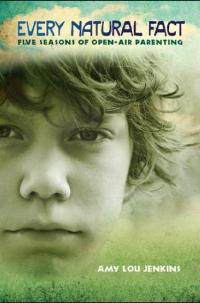 Amy
Lou Jenkins is the award-winning author of
Every Natural Fact: Five Seasons of Open-Air Parenting Amy
Lou Jenkins is the award-winning author of
Every Natural Fact: Five Seasons of Open-Air Parenting
"If you combined the lyricism of Annie Dillard, the vision of Aldo Leopold, and the gentle but tough-minded optimism of Frank McCourt, you might come close to Amy Lou Jenkins.Tom Bissell author of The Father of All Things
"Sentence by sentence, a joy to
read." —
Phillip Lopate
|
|||||||
|
Anthologies online participates in various affiliate programs and most links to books and products in articles/anthologies/author or any page offer some referral payment, pay for click or other reimbursement. The payment is generally pennies per click or purchase. Anthologies online also runs paid ads.The Anthologiesonline web site and newsletter are provided on an "as is" basis without any warranties of any kind and disclaim all warranties, including the warranty of merchantability, non-infringement of third parties' rights, and the warranty of fitness for particular purpose. No person or organization makes any warranties about the accuracy, reliability, completeness, or timeliness of the material, services, software text, graphics and links. Any communication is generally considered to be nonconfidential. See Privacy Policy. |
|||||||
|
|
|||||||


Print On Demand
Copyright 2001, Michael LaRocca
| This article sponsored by: |
 |
|
|

|
|
|
|
The purpose of this article is to consider
Print-On-Demand
publishing as an alternative for the aspiring author. It has its strengths and
its weaknesses. You may well wonder as you begin reading this, but in the end
I'm going to say some good things about it.
To a large extent, the title explains the technology. The way that literature
has traditionally been printed involved running many copies simultaneously in
order to bring the price per copy down. Smaller print runs, such as advertising
brochures or concert programs, cost more per copy because they are small print
runs. Printing a single book was all but unthinkable.
In the case of novels, the traditional print publisher begins by publishing
several thousand copies. His goal is to run off the smallest number of copies he
can while getting the best possible price per copy. These books are then sent to
bookstores, whichtend to prefer something along the lines of what has succeeded
before. The remainder sits in a warehouse somewhere. Perhaps to be shipped as
the orders come in, perhaps to be joined by any "remaindered" copies the
bookstores couldn't move. This represents an investment on the part of that
publisher, hence his paranoia about experimenting with new formats or (more
importantly) new authors.
Print-On-Demand (POD), as the name implies, uses a completely different process.
The end result is, the price per copy on a small run is much lower. How small of
a run? Try one book. Zero inventory. The book is economically produced when the
reader orders it, not before.
This technology was probably invented for sales literature. Then someone
realized it might be a pretty cool way to get ARCs (Advance Review Copies) out
to the book reviewers before the book was actually available. Finally, someone
decided to get it into the mainstream of authors.
Why is it so much cheaper to publish a single book via POD? The reasons really
aren't relevant to this article, besides which they'd probably bore you. But if
you care, the first link below spells it all out.
http://www.jdwrite.com/writing/pod_01.htm
http://www.jdwrite.com/writing/pod_02.htm
http://www.jdwrite.com/writing/pod_03.htm
http://www.jdwrite.com/writing/pod_04.htm
http://www.jdwrite.com/writing/pod_05.htm
I recommend reading (or at least skimming) all five of those, by the way. It's
quite a comprehensive analysis of how. Then come back to this article to
determine why. Or if.
So why would an author publish in the POD format instead of the traditional
print format? Anyone using a POD publisher will find himself or herself with
zero marketing and zero editing.
Have you ever heard of the author who self-published and wound up with a
best-seller? They do exist!
Now look at all the self-published authors who couldn't do that. They're the
vast majority. The author who uses POD could be facing similar longshot odds.
(Keep reading. I'll say good things about POD eventually.)
POD has a definite advantage over self-publishing, in that you don't wind up
with a few hundred copies of a book you can't sell in your basement. But neither
option will ever bring you the readership that you'll get from a successful book
from a traditional print publisher.
I have self-published. I went down to the local bookshop back in the pre-POD
days, ran off 80 copies at $3 a copy, and sold them to local bookstores for $6 a
copy. Lots of fun, and lots of learning, but I didn't get rich. My wage per hour
stunk, but that was fine with me because I honestly didn't care. I broke even.
Most of us, though, just don't have that kind of time. And even if we do, why
bother? Take the money you'd have invested and buy some Microsoft stock, then
take the time you'd have invested and write more books. You'll be happier and
you'll make more money.
Having said all that, why am I recommending POD at all? In my case, it's because
I've written some books that no print
publisher will ever pick up. That's my honest appraisal. If I were a mercenary
type, I'd follow that up with something like "Why'd you even write those books
then?" But if you are a REAL writer, you know the answer. It's always about
writing first, marketing second. Two different hats. I'm assuming you already
did the writing and now are wondering what the heck to do with it.
As an example, my EPPIE 2002 finalist is too short. I wrote it back when print
publishers wanted 40,000 words. Now they want 50,000. But it doesn't take 50,000
words to tell that particular story, and I'm not padding it. Even if I were
willing, it'd stink and nobody would buy it. Give the publishers some credit.
They know padding when they see it. The same goes for the readers. It's not an
option.
As another example, consider my short story collection.
Critically acclaimed and selling well, but no traditional
publisher wants short story collections from unknown authors.
It's just that simple.
So, I simultaneously published these books in ebook form and POD form. Ebooks
are cheaper and more environmentally friendly, but the paperback option is still
there for those who can't or won't ever read an ebook.
(Daddy is in that group, by the way. How about your family?)
(If you want to know more about ebooks and why I recommend
publishing in that format first, send a blank email to
electronicpublishing@s... As I write this article, I'm
assuming you've read that one.)
Straight POD publishing has one glaring weakness. Anyone who
thinks he/she can write has access to it. This gives it a
credibility problem that's not going away.
As an author, your goal is to write what's in your heart, find people who like
to read what you like to write, and get it out to them. (That's my goal,
anyway.) If your name happens to be John Grisham, that equals many readers. But
that's simply luck of the draw.
Many of us don't have such mass appeal. Possibly you're the sort of writer who
knows exactly where you stand in that respect. But many don't, and they're
flooding the POD market with stuff that most readers just plain don't want. Add
to that the badly edited stuff, and the credibility problem with POD is
understandable.
Ideally, what you want is for your epublisher to simultaneously release your
book in both ebook and POD formats without charging a POD setup fee. That way,
you can direct all your promotional efforts at that single URL. My list of
epublishers, in the aforementioned article, includes some who do exactly that.
I've had good experiences with Novel Books Inc, Zumaya Publications and Hard
Shell Word Factory.
Taking advantage of the POD option will also do this for your ebook. Many
reviewers just plain won't touch an ebook. If you've done the POD bit, in
addition to being able to tell all your friends and family "Look at this, I'm a
real author because here's the paperback," you'll be able to send review copies
via POD to those book reviewers.
If you find yourself with an epublisher who doesn't do this,
you've got to do some shopping for a POD publisher. As you do this, remember
this. If a publisher makes all its money from writers, it doesn't need to sell a
single book to a single reader to stay in business.
No matter how much praise they send your way, that's the bottom line. Writing is
a calling, but publishing is a business. Those authors who won't distinguish
between the two are what keep the opportunists in business. Ever see anything by
Vantage Press in a bookstore or a library? I haven't. And yet, they were getting
US$5000 from many aspiring writers when I was starting out over 20 years ago and
they're getting even more today.
Some POD places are no more than thinly veiled vanity (or
subsidy) presses. No, on second thought, ALL POD places are
like that. They have a valuable role to serve, but let's be
honest. They do no editing, and they don't care. They're not
making a massive profit from your setup fees, but they're making enough to stay
in business. Even if you don't sell any books to anyone except your Gramma.
My previous article recommends epublishing before print
publishing for the free editing you'll receive. If you're
going with POD, consider it mandatory. Either that, or pay an editor. The author
who can write a mistake-free manuscript does not exist. It's just that simple.
Still interested in POD publishing? I've done it, by the way, and it worked out
well. Here are the questions you should ask yourself when you select a POD
publisher:
Sale price of each book:
* Who decides what it is?
* Will readers pay that much for your book?
Profit per sale vs. your setup cost:
* How many copies must you sell to break even?
* Knowing all promotion is on your shoulders, can you sell
that many?
As a rule, US$99 or less setup cost is good and US$800 is very bad. The latter,
no matter how much publicity they promise you, is a vanity press. You will not
sell enough books to recoup that $800 unless you are a real marketing machine.
If you are a marketing whiz, then you probably already know better than to pay
that $800 up front. Pay $99 or less and then go sell hundreds or thousands of
books.
A comprehensive list of POD publishers can be found on-line at
http://www.published.com/list/PublishYourBook.html
No, that site's not mine. A
bit of hype from the POD publishers themselves, but worthwhile in spite of that.
One that isn't mentioned is Digital Print Australia, at
http://www.digitalprintaustralia.com. I have used them before. My setup cost
was AUD$35 (roughly US$18), which compares rather favorably to those listed
below. Their price per copy is also excellent. The quality is at least as good
as what you'll find in the bookstores. If you've ever bought a paperback from
Writers Exchange E-Publishing, you've seen it already. If not, Digital Print
will send you a free sample.
Two problems you may have with them, though, are shipping
charges from Australia if that's not where your readers are
located, and the fact that they don't offer a way to sell the books on their
site.
For selling the books, I used the Book Store feature of
AuthorsDen at http://www.authorsden.com,
which is free. It
offers a secure server. I know some authors who I trusted enough
to send money to without a secure server. But I suspect that
most of your prospective readers won't know you that well. In fact, they won't
know you at all.
If the POD place only prints "trade paperbacks," which are the larger ones, your
cost per book (and sale price per book) will be higher than if you can print
"mass-market paperbacks." The choice is yours, but whatever you decide, visit
the local bookstores and price similar-sized books. If you write like Stephen
King but charge twice as much per book, readers are going to buy the author
they've heard of, and that's probably not you. Yet...
Read more about POD publishing
