Writers: Subscribe and send
in your brief bio and your best writing sample (up to 1200 words
total) to
apply
to become a featured
writer. Find free articles and markets to help you get
published. Readers: Find your favorite authors, anthologies,
and other books.
Editors,
send in your calls for manuscripts. Find writers and manuscripts
to fill your anthologies.
"If you combined the lyricism of Annie Dillard, the vision of
Aldo Leopold, and the gentle but tough-minded optimism of Frank
McCourt, you might come close to Amy Lou Jenkins.Tom Bissell
author of The Father of All Things
"Sentence by sentence, a joy to
read." —Phillip Lopate, Author of
Waterfront
Anthologies online participates in various affiliate programs and most links
to books and products in articles/anthologies/author or any page offer some
referral payment, pay for click or other reimbursement. The payment is
generally pennies per click or purchase. Anthologies online also runs paid ads.The
Anthologiesonline web site and newsletter are provided on an "as is" basis
without any warranties of any kind and disclaim all warranties, including
the warranty
of merchantability, non-infringement of third parties' rights, and the
warranty
of fitness for particular purpose. No person or organization makes any
warranties about the accuracy, reliability, completeness, or timeliness of
the material, services, software text, graphics and links. Any communication is generally considered to be
nonconfidential. See
Privacy Policy.
WHO NEEDS
TO HEAR A QUAGGA’S VOICE?
Poet Sarah Lindsay tells us what we didn’t know we were missing.
By Daisy
Fried
Poetry Media Services
Twigs & Knucklebones, by Sarah Lindsay. Copper Canyon Press.
$15.00.
Twigs & Knucklebones is a rare thing in poetry—a very good read.
Fans of Sarah Lindsay's previous books, National Book Award finalist
Primate Behavior (1997) and Mount Clutter (2002), will find
here what they found there, only more so: freaks of nature and freakish
nature, far-flung and underexplored places, things scientific and sci-fi,
real things that seem invented, imaginary things that seem real. Orchids
that grow underground. The introduction of starlings to America. Cities of
the dead. Life on Jupiter's moon.
Lindsay's poems are as narrative as poems can get—they tell elaborate
stories—but aren't at all confessional. Lindsay uses the word "I" to refer
to herself or a poet-speaker in very few poems. Her voice in Twigs &
Knucklebones is omniscient yet intimate, superliterate and flawlessly
graceful, like a really good lecturer who knows how to entertain an audience
while speaking on complex subject matters. In a sense these are "research
and development" poems: one suspects Lindsay reads an article, for example,
about a species of extinct zebra, then writes "Elegy for the Quagga." But
the R&D never overwhelms insight or music. "Krakatau split with a blinding
noise," writes Lindsay of the volcanic island's 1883 explosion. "Fifteen
days before, in its cage in Amsterdam, / the last known member of Equus
quagga, / the southernmost subspecies of zebra, died." A little later, "Who
needs to hear a quagga's voice?"
The poet does, and by the end of the poem, so does the reader—and can't. It
feels like a kind of wound:
Even if,
when it sank to its irreplaceable knees,
when its unique throat closed behind a sigh,
no dust rose to redden a whole year’s sunsets,
no one unwittingly busy
two thousand miles away jumped at the sound,
no ashes rained on ships in the merciless sea.
This isn't
your standard alas-the-endangered-owl poem, trying too hard to pull the
heartstrings. The very name of Lindsay's extinct beast is alien, and comical
enough to have built-in resistance to simplistic resolutions. Also: "no dust
. . . no one . . . no ashes." No apocalypse. The Krakatau imagery has plenty
of resonance with atom bomb tests. The world didn’t end with the extinction
of the quagga—or the invention of the bomb. But Lindsay's poem gets at that
secret worry that we’re waiting for the other shoe to drop. "Elegy for the
Quagga" is about our own inevitable extinction, individually and as a
species, and our sense—terrible, freeing—that maybe, after all, we don't
matter.
What does matter? The lightheartedly doomy Lindsay is obsessed by this
question. The book's middle section, long enough to stand on its own as a
slim volume, is a series of poems titled "The Kingdom of Nab," an ancient
and vanished civilization that Lindsay invents out of whole cloth. Nab is
fertile ground for Lindsay’s recurring theme, the ephemeral nature of all
things, including great empires. Sometimes too recurring, maybe. But as
delivered by the capable, unsentimental, secular-seeming Lindsay, the poems
feel political: if you write about a vanished civilization, even an invented
one, you’re writing allegory about contemporary power and empire.
No poem in Twigs & Knucklebones is a bad one, and virtually all are
remarkable for their sheer interestingness. Lindsay's delight in imaginary
and unknown worlds, her compulsion to write exactly what she doesn't know,
removes her poems completely from the tired confessional anecdotalism of so
much narrative poetry. But the I-less Lindsay needs to find some other way
to make her poems perform as poems rather than as (invented) encyclopedia
entries or nature feature articles beautifully written in medium-length
lines. A few poems suffer from excessive good-idea-ism, by which I mean that
the motivating idea is too visible, as in "The Museum of Damaged Art: Audio
Guide."
But Lindsay's best poems are those that allow for some readerly
identification beyond the spectator sport of Lindsay's ingenuity. In the
sci-fi poem "Valhalla Burn Unit on the Moon Callisto," maimed patients on
Jupiter's satellite "come / and linger in the courtyard, / with its soothing
views of a thoroughly fireproof world," and doctors are "qualified for this
post by the loss / of an irreplaceable love; / they aren’t homesick for an
Earth they could ever go back to." There’s a post-apocalyptic feel here, but
no explanation of the nature of the apocalypse. Instead, the poet makes the
impersonal account achingly personal:
No
atmosphere. That's why the sky is black
all day, which does tend to bother the nurses,
the aides, the kitchen staff, the housekeeping crew,
all of whom are encouraged to miss their planet,
and when they cry, are to do so hunched
over sterile vials meant to preserve
the healing proteins found in common tears.
Guggenheim
Fellow Daisy Fried lives in Philadelphia; her latest book, My Brother Is
Getting Arrested Again, was a finalist for the National Book Critics
Circle Award. This article originally appeared in Poetry magazine.
Distributed by the Poetry Foundation. Read more about Sarah Lindsay, and her
poetry, at poetryfoundation.org.


/_derived/Amy_Lou_Jenkins_htm_cmp_blank110_vbtn.gif)
/_derived/Writers%20Wanted_htm_cmp_blank110_vbtn.gif)







/_derived/Featured_Writers_htm_cmp_blank110_vbtn.gif)

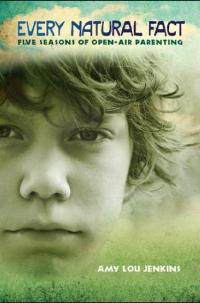 Amy
Lou Jenkins is the award-winning author of
Every Natural Fact: Five Seasons of Open-Air Parenting
Amy
Lou Jenkins is the award-winning author of
Every Natural Fact: Five Seasons of Open-Air Parenting