|
|
|||||||
  /_derived/Amy_Lou_Jenkins_htm_cmp_blank110_vbtn.gif) /_derived/Writers%20Wanted_htm_cmp_blank110_vbtn.gif)          /_derived/Featured_Writers_htm_cmp_blank110_vbtn.gif)  |
|||||||
 Amy
Lou Jenkins is the award-winning author of
Every Natural Fact: Five Seasons of Open-Air Parenting Amy
Lou Jenkins is the award-winning author of
Every Natural Fact: Five Seasons of Open-Air Parenting
"If you combined the lyricism of Annie Dillard, the vision of Aldo Leopold, and the gentle but tough-minded optimism of Frank McCourt, you might come close to Amy Lou Jenkins.Tom Bissell author of The Father of All Things
"Sentence by sentence, a joy to
read." —
Phillip Lopate
|
|||||||
|
Anthologies online participates in various affiliate programs and most links to books and products in articles/anthologies/author or any page offer some referral payment, pay for click or other reimbursement. The payment is generally pennies per click or purchase. Anthologies online also runs paid ads.The Anthologiesonline web site and newsletter are provided on an "as is" basis without any warranties of any kind and disclaim all warranties, including the warranty of merchantability, non-infringement of third parties' rights, and the warranty of fitness for particular purpose. No person or organization makes any warranties about the accuracy, reliability, completeness, or timeliness of the material, services, software text, graphics and links. Any communication is generally considered to be nonconfidential. See Privacy Policy. |
|||||||
|
|
|||||||


Five Ways To Boost
Your Initiative FAST!
Copyright © 2003
by Angela Booth
| This article sponsored by: |
 |
|
|
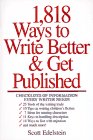 A concise point-blank instructional book perfect for
those of us who need step-by-step guidance and instruction on writing better.
Includes chapters on overcoming writer's block and ways to find the right agent
for your work. I highly recommend this one for the beginning or seasoned writer.
1,818 Ways to Write Better & Get...
A concise point-blank instructional book perfect for
those of us who need step-by-step guidance and instruction on writing better.
Includes chapters on overcoming writer's block and ways to find the right agent
for your work. I highly recommend this one for the beginning or seasoned writer.
1,818 Ways to Write Better & Get...
|
|
|
|
The educational system in the western world has a lot to answer for. It crushes
the initiative right out of people. We get many questions from people who come
to our Digital-e site. They want
to work for themselves, or set up as a freelancer, or write a book. Our answers
to these questions can be summed up by: "Use your initiative. Get creative.
Anything you do will give you feedback, and then you can do another thing, and
another."
For example, I've had several people request more info about writing proposals
in response to my proposal-writing article: "How To Write A Proposal To Get
Freelance Work" ---
http://www.digital-e.biz/art_writing8.html
The word "proposal" sounds official. Surely there are rules to writing
proposals? People want to know what the rules are, so they can do it right.
Here's a response I sent recently:
>>
Don't get hung up on the word "proposal". The mini-proposals I describe in the
article are LETTERS first and foremost.
Like---
Dear person at this business
Your business would be greatly enhanced and you would make much more money if
---X. (Or you have this problem that needs fixing.)
I can do this for you.
You can get in touch with me at/ by ---Y.
See?
No big deal. Send a letter. :-) It should take you all of 10 mins, max to create
one of these things.
>>
Here's a partial dictionary definition of "initiative":
1. The power or ability to begin or to follow through energetically with a plan
or task; enterprise and determination.
2. A beginning or introductory step; an opening move: took the initiative in
trying to solve the problem.
From:
http://dictionary.reference.com/
Success begins when you take the initiative. Here's how to boost your initiative
FAST:
=> Tactic One: Realize there are no rules
In business, there's one rule: "whatever works". As long as you don't break any
laws, you get to make up your own rules as you go along.
In the writing field, it seems as if there are a hundred and one rules for
manuscript formatting, for approaching markets, for this and for that. You can
safely ignore ALL of the writing rules
--- you're an individual. Do it your way.
For example, there's a no-simultaneous-submissions rule which book publishers
espouse. This is a problem for writers because book publishers will take
anywhere from one month to one year (or even longer) to respond to any book
proposal you send them. Since you might have to make 20 submissions before you
get a publisher,this rule does not work for writers, so you can ignore it.
Professional writers become professionals by ignoring junk rules like this, and
what's more, publishers expect them to ignore these so-called rules.
When you want to do something like send a proposal, just figure out how you want
the other party to respond, and then work out how you might get that response.
Then DO something. Once you've
done something, you'll get feedback, and you can go on from there.
=> Tactic Two: Keep learning
Learn something new every year. Take courses. The Internet has made this easy
--- you can learn from the comfort of your office chair. Take the time to learn
how professionals do the things that you're puzzling about.
For example, on Digital-e we've got several email courses that have been well
received:
http://www.digital-e.biz/ecourses.html
We've even got FREE courses.
Many, many other sites have courses which will help you along the road to
success. Every course you take will give you insights and knowledge. If you're
serious about living your life well and
achieving success, you must keep learning.
Do you read? All successful people read constantly. Reading's a painless way to
learn. Anyone, no matter how busy they are, has time to read.
=> Tactic Three: Get creative. Make lists of things to TRY then WORK the list
Ask yourself questions, like: "How might I do this?"
Then make a list of things you could try. Strive for creativity.
I love this story in Inc about an ice-cream seller who hires
based on how creative potential staffers can get with a white
paper bag:
http://www.inc.com/articles/marketing/market_methods/grassroots/
11375.html
(You may need to paste this long URL into your browser.)
Keep listing until you have at least 20 things you could try. Then use your
intuition to pick one item from your list and do it.
=> Tactic Four: Rely on feedback
When you work your list, you will get feedback. (You can’t get feedback unless
you do something.) Feedback is merely guidance. It will show you which areas are
productive, and which are not.
=> Tactic Five: He/ she who hesitates gets run over by a truck --
- ASK
This is another way of saying "work your list". Ask people who can directly help
you. If you want to sell something to a company based on a proposal, call the
company and say: "I'd like to send you a proposal to do X. What should I include
in the proposal?"
Or perhaps you want to sell images to an image library. Call an image library.
Pick up the phone and tell the person on the other end what you want to do. That
person will pass you on to another
person. And maybe another. But you'll find out how you do it. Then, just do it.
If you're a writer, and you want to write a children's book, pick up the phone
and call the publisher of a book you enjoyed reading. You may get voice mail. If
so, leave a message. If you
don’t get a response within a week or two (people are always busy, so don’t take
it personally) send a email message, or a letter or a fax. Persist.
Try the above five tactics. If you try even ONE of them, I promise you that your
life will change.
Digital-e: For writers and creatives.
Ebooks, free ezines, Creatives Club.
Love to write?
Turn your talent into a business!
http://www.digital-e.biz/
