|
|
|||||||
  /_derived/Amy_Lou_Jenkins_htm_cmp_blank110_vbtn.gif) /_derived/Writers%20Wanted_htm_cmp_blank110_vbtn.gif)          /_derived/Featured_Writers_htm_cmp_blank110_vbtn.gif)  |
|||||||
 Amy
Lou Jenkins is the award-winning author of
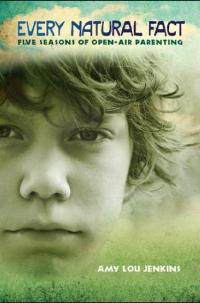
Every Natural Fact: Five Seasons of Open-Air Parenting Amy
Lou Jenkins is the award-winning author of
Every Natural Fact: Five Seasons of Open-Air Parenting
"If you combined the lyricism of Annie Dillard, the vision of Aldo Leopold, and the gentle but tough-minded optimism of Frank McCourt, you might come close to Amy Lou Jenkins.Tom Bissell author of The Father of All Things
"Sentence by sentence, a joy to
read." —
Phillip Lopate
|
|||||||
|
Anthologies online participates in various affiliate programs and most links to books and products in articles/anthologies/author or any page offer some referral payment, pay for click or other reimbursement. The payment is generally pennies per click or purchase. Anthologies online also runs paid ads.The Anthologiesonline web site and newsletter are provided on an "as is" basis without any warranties of any kind and disclaim all warranties, including the warranty of merchantability, non-infringement of third parties' rights, and the warranty of fitness for particular purpose. No person or organization makes any warranties about the accuracy, reliability, completeness, or timeliness of the material, services, software text, graphics and links. Any communication is generally considered to be nonconfidential. See Privacy Policy. |
|||||||
|
|
|||||||


Debra Gwartney, Barry Lopez, Home Ground, Anthology
Featured Anthology:
Home Ground: Language for an American Landscape
|
|
Barry Lopez asked 45 poets and writers to define terms that describe
America’s land and water forms — phrases like flatiron, bayou, monadnock,
kiss tank, meander bar, and everglade. The result is a major enterprise
comprising over 850 descriptions, 100 line drawings, and 70 quotations from
works by
Willa Cather |
|
|
/Home%20Ground_files/image001.gif) ,
,
An Interview with Co-editor Debra Gwartney
by Amy L Jenkins
Home Ground might be the most American book ever written. America is first a ground, a place, yet we didn't have a comprehensive record of our specific landforms. How can we know who we are without a common and precise language for the characteristics of our home ground? These authors have given us much more than a reference book; it's American literature. We now have our account of language and literature binding place to culture and history. Many of best authors of literature-of- place join Barry Lopez and Debra Gwartney in creating an anthology like no other. This is one of those books you just have to own, have to feel its 480 pages of weight, history, and immediacy in your hands.
The Interview
|
ALJ
|
Part literary anthology, part reference, and part history of the landscape of America, Home Ground is a compilation unlike any I’ve ever seen. What was the genesis of the idea for Home Ground? |
|
DG
|
The genesis of the book was actually a trip Barry (Lopez) made to the University of Oregon library. He was there to look up the definition for the term "blind creek," and ended up surprised by the lack of references/resources for this and other distinctly North American landforms. He left the library that night thinking it would be helpful to both writers and readers to create a book that explored the scientific, regional, and folkloric meanings of our country's land and water forms. Shortly after, he approached me about working with him as co-editor, and we began to imagine how it might take shape. We came close to signing a contract with Scribner to do the book, but eventually decided to publish the book with Barbara Ras at Trinity University Press. |
|
ALJ |
What instructions or guidelines did you give the authors to complete their entries? |
|
DG
|
The writers received a fairly large packet in the mail once they'd agreed to participate. The packet included, most importantly, the twenty terms assigned to that writer, as well as a few pages of research and literary quotations regarding the terms as we thought that might be helpful to starting the rather long process of research and writing. The packet included a letter from Barry discussing the larger goals of the project, and another from me, describing the logistics of the project. We asked writers not to use the first person or personal anecdotes, and to please avoid writing about a specific place-- "Bridal Veil Falls" in Oregon, for instance--but instead to concentrate on the generic term, "bridal veil falls," using the falls in Oregon as an example of the term. We also sent writers a long list of good reference books, including such works as George R. Stewart's Names on the Land and Stephen Pyne's Fire and scientific reference books such as the Dictionary of Geography, and many others. The packets also included prototype definitions written by Bill McKibben and John Daniel--as in, here's how two other writers approached this assignment. |
|
ALJ |
How did the two of you (Barry Lopez and Debra Gwartney) work together to complete this project? |
|
DG
|
I worked as the day-to-day editor for the first two-and-a-half years. That is, I was in direct touch with the writers, helping as I could with research and other questions and working through the edits of their twenty definitions, and then also seeking guidance from our board of scientific advisers (geographers, geomorphologists, landscape architect, folklorist) to ensure accuracy of each and every definition. That doesn't mean Barry wasn't involved--he was, of course. He invited the writers and kept track of the larger issues pertaining to the book. When I finally had a complete manuscript, which I gave to him and to our publisher, Barry stepped in to edit the entire book, beginning to end. We worked together on that last edit, though he was the main force behind it. At the same time, I started to pull together the literary quotes found in the side margins--reading dozens of books and asking others (graduate students at U of Oregon mostly) to read books, as well, seeking the best quotations we could find in American literature. We decided to use an author only once in the side margins, so sometimes we were faced with tough choices. |
|
ALJ |
Who do you see as the audience for Home Ground? |
|
DG
|
In discussing this question years ago, Barry and I imagined an eleven-year-old girl going to bed at night with Home Ground, swept up in the different voices of the book. That was our fantasy reader. I think anyone who feels connected to his or her place, or who longs to feel connected to his or her place, will relate to this book. I also think it's a great resource to writers and readers--to those who resonate with American literature and a distinctly American vernacular. |
|
ALJ |
Were there any surprises along the way as you worked on the book? Did it turn out as expected? |
|
DG
|
Sure, we had plenty of surprises, and most of them were happy ones. For instance, we had a strong notion of what we wanted this book to be, but none of us (if I can speak for everyone else) could have imagined its power and scope when it all came together. One astonishing moment for me personally was when I started alphabetizing the first fifteen or so sets of definitions. I did the work, printed out the pages, and was delighted and amazed by what I found there: the mix of voices and approaches to the work, the science and folklore and etymology all woven together. I called Barry right away and told him how fortunate we were, I thought, to have had a publisher who didn't insist on focus groups or meetings with the writers. Because we didn't overplan the execution of this book, it really had its own organic evolution, and, in my opinion, is a much better reading experience because of that. |
|
ALJ |
Thank you Debra. |
Read:
Essay by Debra Gwartney
Explore other books Debra Gwartney has contributed to:
|
|
|
|
|
Read: Introduction by Barry Lopez
Explore Books by Barry Lopez: