|
|
|||||||
  /_derived/Amy_Lou_Jenkins_htm_cmp_blank110_vbtn.gif) /_derived/Writers%20Wanted_htm_cmp_blank110_vbtn.gif)          /_derived/Featured_Writers_htm_cmp_blank110_vbtn.gif)  |
|||||||
 Amy
Lou Jenkins is the award-winning author of
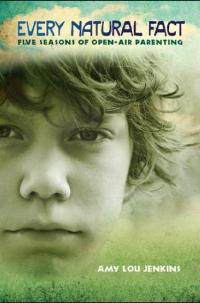
Every Natural Fact: Five Seasons of Open-Air Parenting Amy
Lou Jenkins is the award-winning author of
Every Natural Fact: Five Seasons of Open-Air Parenting
"If you combined the lyricism of Annie Dillard, the vision of Aldo Leopold, and the gentle but tough-minded optimism of Frank McCourt, you might come close to Amy Lou Jenkins.Tom Bissell author of The Father of All Things
"Sentence by sentence, a joy to
read." —
Phillip Lopate
|
|||||||
|
Anthologies online participates in various affiliate programs and most links to books and products in articles/anthologies/author or any page offer some referral payment, pay for click or other reimbursement. The payment is generally pennies per click or purchase. Anthologies online also runs paid ads.The Anthologiesonline web site and newsletter are provided on an "as is" basis without any warranties of any kind and disclaim all warranties, including the warranty of merchantability, non-infringement of third parties' rights, and the warranty of fitness for particular purpose. No person or organization makes any warranties about the accuracy, reliability, completeness, or timeliness of the material, services, software text, graphics and links. Any communication is generally considered to be nonconfidential. See Privacy Policy. |
|||||||
|
|
|||||||


Featured Anthology
/mentors.jpg) |
Mentors, Muses & Monsters: 30 Writers on the People Who Changed Their Lives
Edited and with a contribution by Elizabeth Benedict
Essays by: Elizabeth Benedict * Robert Boyers * Jay Cantor * John Casey * Maud Casey * Christopher Castellani * Alexander Chee * Michael Cunningham * Jonathan Safran Foer * Julia Glass * Mary Gordon * Neil Gordon * Arnon Grunberg * Samantha Hunt * Denis Johnson * Margot Livesey * Dinaw Mengestu * Sigrid Nunez * Joyce Carol Oates * ZZ Packer * Caryl Phillips * Carolyn See * Jim Shepard * Anita Shreve * Jane Smiley * Martha Southgate * Cheryl Strayed * Evelyn Toynton * Lily Tuck * Edmund White
|
About 80 percent of adults in the United States
say they want to write a book, according to
Jenkins Group.
Yet agents and publishers say they accept less than 1% of submissions.
When writers who do publish, win literary awards, and gain vast readerships
share inspirational details about the mentors who helped them break through,
writers would do themselves a favor by attending to these words. Written as
an act of thanks to literary mentors, contributors accessed a full measure
of their writing prowess. Perhaps each entry reads so well, because the
"student" writing stars knew that the quality of their prose was as
important to the "thank-you" as the story itself.
It's not hard to benefit from these 30 generous anthology contributions when each essay reads like an transformative story--because that's just what it is. How does a writer grow into being an artist? How does this happen? Wouldn't you like to know. 30 great writers on 30 great writers offers exponentially vast possibilities for every aspiring writer. Mentors come in kind and crusty packages. Most writers never have the opportunity to sit in classrooms with these top teachers and writers. Most have never seen their work recede beneath a flood of red critical ink that pushed them to better writing. Yet everyone who cracks the spine and enters the prose of Mentors, Muses and Monsters can place themselves in those very privileged situations. |
||
|
Most of these encounters happened when the writers were young, impressionable, and uncertain have a sweet aching quality, and nearly all of them express abiding gratitude. in n about their identities and capabilities. That youthfulness provides MENTORS, MUSES & MONSTERS, these writers look back at themselves at a tender age when something powerful happened to them, a moment when their wobbly lives changed direction and they knew, in a way they hadn’t before, where they were headed. In “The Snow Globe,” Jonathan Safran Foer asserts that if he had not gone to Yehuda Amichai’s reading as a high school student visiting Israel, he might never have become a writer. Anita Shreve is certain that had she not read Alice McDermott’s novel, That Night, at the moment she did, she “would not be a novelist.” When Joyce Carol Oates describes her public-rivalry-turned-wary-professional acquaintance-eship with Donald Barthelme, we are privy to the fascinating sight of one of today’s most important writers being directly, personally affected by another influential writer. When Sigrid Nunez reveals what it was like to be Susan Sontag’s protégé, we get a glimpse into the private life and working philosophy of a formidable public intellectual. And when Jane Smiley describes her first year at the Iowa Writers’ Workshop in 1974, she offers an intimate portrait of a literary milieu of enduring significance for American literature. Rich, thought-provoking, and often impassioned, MENTORS, MUSES & MONSTERS illuminates not only the anxiety but the necessity of influence — and also the treasures it yields. By revealing themselves as young men and women in search of direction and meaning, these artists explore the endlessly varied path to creative awakening and literary acclaim. About the Author Elizabeth Benedict is the author of five novels, including the bestseller Almost: A Novel and the National Book Award-shortlisted Slow Dancing, and The Joy of Writing Sex: A Guide for Fiction Writers . She has been a frequent guest on such national programs as NPR’s Fresh Air and All Things Considered, and her work has appeared in outlets including The New York Times, Boston Globe, AARP, Huffington Post, Allure, Esquire, Harper’s Bazaar, Tin House, and Salmagundi. Benedict is currently on the faculty of the Columbia University MFA program and has taught writing at Princeton, the Iowa Writers’ Workshop, and Swarthmore College. She lives in New York City and Boston. |
Quotes from essays in Mentors, Muses & Monsters: 30 Writers on the People Who Changed Their Lives Elizabeth Benedict, “’Why Not Say What Happened?’ Remembering Miss Hardwick” “[Elizabeth Hardwick] liked but did not love what I wrote. There was not enough there to love, neither enough skill nor life experience. I was working on a small scale, pecking out very short stories whose modest length she remarked on humorously from time to time…. She was very jolly, and had a ready laugh and an easy smile. She talked about her daughter fondly and made cracks now and then about not having enough money. Her languid Kentucky drawl was intoxicating, and her offhand remarks were a kind of performance art. She was different from other teachers; the idea was to study her, not a particular subject.” 13 Alexander Chee, “Annie Dillard and the Writing Life.” “If I’ve done my job, she said in the last class, you won’t be happy with anything you write for the next ten years. It’s not because you won’t be writing well, but because I’ve raised your standards for yourself. Don’t compare yourselves to each other. Compare yourself to Colette, or Henry James, or Edith Wharton.” 68
|
|