|
|
|||||||
  /_derived/Amy_Lou_Jenkins_htm_cmp_blank110_vbtn.gif) /_derived/Writers%20Wanted_htm_cmp_blank110_vbtn.gif)          /_derived/Featured_Writers_htm_cmp_blank110_vbtn.gif)  |
|||||||
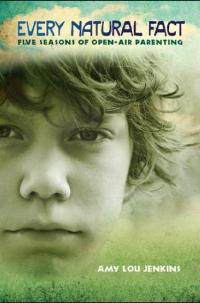 Amy
Lou Jenkins is the award-winning author of
Every Natural Fact: Five Seasons of Open-Air Parenting Amy
Lou Jenkins is the award-winning author of
Every Natural Fact: Five Seasons of Open-Air Parenting
"If you combined the lyricism of Annie Dillard, the vision of Aldo Leopold, and the gentle but tough-minded optimism of Frank McCourt, you might come close to Amy Lou Jenkins.Tom Bissell author of The Father of All Things
"Sentence by sentence, a joy to
read." —
Phillip Lopate
|
|||||||
|
Anthologies online participates in various affiliate programs and most links to books and products in articles/anthologies/author or any page offer some referral payment, pay for click or other reimbursement. The payment is generally pennies per click or purchase. Anthologies online also runs paid ads.The Anthologiesonline web site and newsletter are provided on an "as is" basis without any warranties of any kind and disclaim all warranties, including the warranty of merchantability, non-infringement of third parties' rights, and the warranty of fitness for particular purpose. No person or organization makes any warranties about the accuracy, reliability, completeness, or timeliness of the material, services, software text, graphics and links. Any communication is generally considered to be nonconfidential. See Privacy Policy. |
|||||||
|
|
|||||||


Featured Anthologies for February
Give them love and laugher with
The New Oxford Book of Romantic Period Verse
|
Humor Writers from the New Yorker |
and
Disquiet, Please!: More Humor Writing from The New Yorker
The poets whom we call the Romantics--Wordsworth,
Coleridge,
Burns,
Blake,
Byron,
Shelley, and
Keats--belonged to an age in which many other kinds of poetry written
and published as well. In this new volume, Jerome McGann explores the full
range of verse that was published in Britain between the years of 1785-1832,
one of the most fertile periods for English writing. Selections from all the
major and minor Romantic poets are included, as well as important political
and satiric verse of the period, "sentimental" verse, regional and dialect
verse, and verse in translation. Organizing the material by date of first
appearance, and not by author grouping, McGann calls attention to the
historical and cultural contexts in which the poetry is embedded. Another
important feature of the volume is the space devoted to woman poets who
include Felica Dorothea Hemans, Ann Yearsley, Laeticia Elizabeth Landon, and
Mary Tighe, all distinguished writers who were previously given short
shrift.
|
The New Yorker is, of course, a bastion of superb essays,
influential investigative journalism, and insightful arts criticism. But
for eighty years, it’s also been a hoot. In fact, when Harold Ross
founded the legendary magazine in 1925, he called it “a comic weekly,” and
while it has grown into much more, it has also remained true to its
original mission. Now an uproarious sampling of its funny writings can be
found in a hilarious new collection,
Disquiet, Please!.
As satirical and witty,
misanthropic and menacing, as the first, Fierce Pajamas. From the
1920s onward–but with a special focus on the latest generation–here are the
humorists who set the pace and stirred the pot, pulled the leg and pinched
the behind of America. |
||