|
|
|||||||
  /_derived/Amy_Lou_Jenkins_htm_cmp_blank110_vbtn.gif) /_derived/Writers Wanted_htm_cmp_blank110_vbtn.gif)          /_derived/Featured_Writers_htm_cmp_blank110_vbtn.gif)  |
|||||||
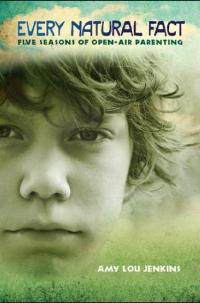 Amy
Lou Jenkins is the award-winning author of
Every Natural Fact: Five Seasons of Open-Air Parenting Amy
Lou Jenkins is the award-winning author of
Every Natural Fact: Five Seasons of Open-Air Parenting
"If you combined the lyricism of Annie Dillard, the vision of Aldo Leopold, and the gentle but tough-minded optimism of Frank McCourt, you might come close to Amy Lou Jenkins.Tom Bissell author of The Father of All Things
"Sentence by sentence, a joy to
read." —
Phillip Lopate
|
|||||||
|
Anthologies online participates in various affiliate programs and most links to books and products in articles/anthologies/author or any page offer some referral payment, pay for click or other reimbursement. The payment is generally pennies per click or purchase. Anthologies online also runs paid ads.The Anthologiesonline web site and newsletter are provided on an "as is" basis without any warranties of any kind and disclaim all warranties, including the warranty of merchantability, non-infringement of third parties' rights, and the warranty of fitness for particular purpose. No person or organization makes any warranties about the accuracy, reliability, completeness, or timeliness of the material, services, software text, graphics and links. Any communication is generally considered to be nonconfidential. See Privacy Policy. |
|||||||
|
|
|||||||


/Poem I Turn.jpg)
The Poem I Turn To With Audio CD Edited by Jason Shinder Advisory editors Michael O'Keefe and Lili Taylor
Read the favorite poems of over forty actors including:
Jane Fonda Carrie Fisher Daryl Hannah Philip Seymour Hoffman John Lithgow Walter Mosley Stanley Tucci Alfre Woddard |
HEAR and
Read 30 poems on one audio CD:
Adam Arkin reads Alan Arkin reads Rilke’s “The Man Watching” John Landis reads Mark Twain's The War Prayer Michael O’Keefe reads Ezra Pound’s “In a Station at the Metro” Mary Louise Parker reads Mark Strand’s “Keeping Things Whole” Lili Taylor reads Robert Frost's 'The Road Not Taken" And Many More |
Featured Anthology
(Including an Original Interview with Advisory Editor Michael O'Keefe):
The Poem I Turn To
The Poetry Behind the Performances: Top Actors Talk Inspiration
With Audio CD: Actors and Directors Present Poetry That Inspires Them
Edited by Jason Shinder / Advisory editors Michael O'Keefe and Lili Taylor
We often watch movies and wonder what the actors were thinking when they performed a scene. What went into preparing for a role that reached out from the screen and touched us. More often than most audiences know…the answer is poetry.
Cinema has influenced and inspired poets since its inception a century ago. Hundreds of poets have written about movies including Delmore Schwartz on Marylyn Monroe, Jack Kerouac on Harpo Marx and Maya Angelou on Gone With the Wind, among many others. Actors and poets share a connection.
Poet, Jason Shinder was struck by the searching and shifting nature of actors. These are also traits of poets and poetry lovers. The Poem I Turn To illuminates the nature of seeking, of being human, entwining the actor, the poet, and the reader. Shinder dedicated the book, in part, to the memory of actor David Coleman Dukes.
Proceeds will support the David Coleman Dukes Memorial Theatre Scholarship Fund at the University of Southern California and the Fund for Young Writers at the American Academy of Poets.
I didn't know Shinder well, although I studied at the Creative Writing Seminars at Bennington College where he taught poetry. I know that he always hushed the room with his gentle voice and emotionally feral verse. When I first saw him, bespeckeld, thin, with a nerdy handsomeness (many women will understand this), he was on his way to the dance floor at a graduation celebration. I can't recall the woman he followed to the floor and danced with; his elegance outshined her. He moved with rhythmic vitality and grace. He was beautiful; it was as if his soul couldn't contain his beautiful prowess. Over the years of my graduate studies, he grew ill. I never saw that full complement of energy again, but I did feel it in his poetry. He died April 25th, 2008 after living with cancer for several years.
Losing Jason Shinder
only two weeks after the release of this anthology, makes this collection even
more poignant. He knew he was sick, yet
poetry remained a central focus of his life. So much so, that he gave
much of his waning
vitality to
this anthology project and to writing and teaching poetry.
/OKeefe.jpg) Michael
O'Keefe has been a professional actor for over thirty years and has
moved between film, TV, and theater. He's been nominated for both the
Golden Globe Award and the Academy Award. In 1980 he won the Theatre World
Award. Over the years he has appeared in numerous feature films including
"The Great Santini," "Caddyshack," "Ironweed," "The Pledge," and "Michael
Clayton." Michael
O'Keefe has been a professional actor for over thirty years and has
moved between film, TV, and theater. He's been nominated for both the
Golden Globe Award and the Academy Award. In 1980 he won the Theatre World
Award. Over the years he has appeared in numerous feature films including
"The Great Santini," "Caddyshack," "Ironweed," "The Pledge," and "Michael
Clayton."In addition to acting, O'Keefe has written poetry and lyrics all his life. He's written lyrics with and for Bonnie Raitt and Irish singer/songwriter Paul Brady. Discover more about O'Keefe at www.michaelokeefe.com |
Michael O’Keefe worked with Shinder as an advisory editor to create this celebration of poetry and has graciously agreed to share some insights about this collection.
An Interview With Actor, Lyricist, and Poet,
Michael
O'Keefe
Michael O' Keefe MO / Amy L Jenkins AJ
AJ How did you get involved in the anthology project The Poem I Turn To?
MO When I was a student at the Creative Writing Seminars at Bennington College Jason Shinder was teaching there. Though I never had Jason as a teacher he was very supportive of my poetry work. A genuine friendship developed and after I graduated we began to work on the book in earnest.
AJ In your experience, how does poetry inform performance?
MO Ezra Pound said, "Poetry is news that stays news." Another way to put it is that the art of poetry reveals a life on the page that reflects the life we are living. The actor's job, and directors and producers' job as well, is to replicate life in an artistic way. So, as actors we are always looking for ways to enhance our insight into the little mystery we live everyday called, "Life." William Carlos Williams said something that addresses this same topic. "While it is difficult to get the news from poetry, people die miserable deaths every day from lack of what is found in its pages." And for you sticklers out there, those two quotes do not contradict each other but form a paradox that empowers those who know how to read poetry and derive more than meaning or understanding from its contents.
AJ Many of the contributors, including you, have recorded a reading of their selected poems on CD, included as a part of the anthology. Why do you believe that reading these works aloud is an important part of sharing these poems?
MO
While it's important that poetry sustain a life on the page it can also be
perceived and received when read aloud. Sometimes this is the
preferable method for communicating what poetry has to offer. Jason often
spoke of the book, Poetry Speaks as an inspiration when we worked on
The Poem I Turn To. In the former, poets read their own work and
the power of that voice heard aloud combined with the voice on the page is a
powerful experience. By asking the actors to read their selections we were
hoping to provide another path to the poem for the reader. Besides, we're
all hams and love the sound of our own voices. It was fun to do.
AJ Who do you see as the audience for this book?
MO
Lovers of poetry, film, television and theater will find a fine collection of
favorite poems from actors, directors, and producers in the know who want to
spread their connection to poetry around.
AJ In your response to Denis Johnson's work you refer to the “dark side of transcendence.” Are you and most poets drawn to this dark side? Is there also a lighter side with the same depth of meaning?
MO
To
transcend means to go beyond dark and light. Denis Johnson's work often
progresses from a darker world view to its transcendence. Contrast that with
Mary Oliver or Coleman Barks and Stephen Batchelor's translations of Rumi and
you find poetry initiated from a side of life that may emanate more light at
times. However, these distinctions are not mutually exclusive. Both Oliver and
Rumi have darkness lurking at the borders of their pages and Johnson has a
lighter touch at times. So, to answer your questions: Yes, some, but not all
poets are drawn to transcendence and some choose darker means. Others choose a
more well lit path. Great poets go beyond all distinctions of dark and light to
a deeper place where those distinctions are at once eliminated and made clear.
As for myself, I don't know anything about transcendence except that I do know
you don't have to leave home to find it. Anyone who's watched, "The Wizard of
Oz" knows that.
AJ What question do you wished I had asked?
MO I wish you had asked me what it was like to work with Jason Shinder up until his recent death. Further, I wish I could convey the depth of my respect for his skills as a poet and editor and the inspiration he provided through his resiliency while facing mortality. But to attempt that would strain the form of this interview. While we're on the topic of wishing, I wish that I could have spent more time with Jason before he died, but the demands of my career and his kept us on separate coasts. Finally, I wish you'd asked if I think this anthology could convey a hint of the power of poetry to address this issue of death and the life we lead up until it claims us. I would have replied, "Yes, yes. Yes, it certainly can convey that and much more. Just ask Jason Shinder. And if you can't hear his reply read his poetry. He has a great deal to say on the matter."
Thank You, Michael!
Jason Shinder's other anthologies include Lights, Camera Poetry, Tales from the Couch: Writers on Therapy, Best American Movie Writing, The Poem That Changed America: "Howl" Fifty Years Later, Divided Light: Father and Son Poems, and Best American Movie Writing. His poetry includes Every Room We Ever Slept in, Among Women and a forthcoming collection from Greywolf Press. Read his poem "Crime" in Agni.
Listen to Shinder and Mark Doty talk about "Howl" on WBUR.org.Read his poem "One Day I Will Die "at Pif
2008 Amy L Jenkins