|
|
|||||||
  /_derived/Amy_Lou_Jenkins_htm_cmp_blank110_vbtn.gif) /_derived/Writers%20Wanted_htm_cmp_blank110_vbtn.gif)          /_derived/Featured_Writers_htm_cmp_blank110_vbtn.gif)  |
|||||||
 Amy
Lou Jenkins is the award-winning author of
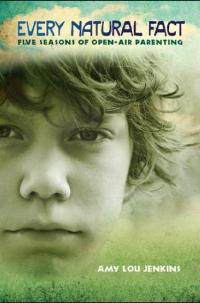
Every Natural Fact: Five Seasons of Open-Air Parenting Amy
Lou Jenkins is the award-winning author of
Every Natural Fact: Five Seasons of Open-Air Parenting
"If you combined the lyricism of Annie Dillard, the vision of Aldo Leopold, and the gentle but tough-minded optimism of Frank McCourt, you might come close to Amy Lou Jenkins.Tom Bissell author of The Father of All Things
"Sentence by sentence, a joy to
read." —
Phillip Lopate
|
|||||||
|
Anthologies online participates in various affiliate programs and most links to books and products in articles/anthologies/author or any page offer some referral payment, pay for click or other reimbursement. The payment is generally pennies per click or purchase. Anthologies online also runs paid ads.The Anthologiesonline web site and newsletter are provided on an "as is" basis without any warranties of any kind and disclaim all warranties, including the warranty of merchantability, non-infringement of third parties' rights, and the warranty of fitness for particular purpose. No person or organization makes any warranties about the accuracy, reliability, completeness, or timeliness of the material, services, software text, graphics and links. Any communication is generally considered to be nonconfidential. See Privacy Policy. |
|||||||
|
|
|||||||


Featured Anthology
Jewish American Voices for Peace
In the October
2008 issue of The Sun
Magazine, acclaimed Israeli author David Grossman says:
"It is important that Jewish Americans who oppose the occupation communicate
their point of view here, because we mainly hear from the right-wingers, who are
much more vocal and sure of themselves...If
they are silent, if they do not make their opinions heard here, Israel will
believe that all Jewish Americans support Israel’s occupation of Palestine...If
U.S. Jews...allow only the right-wingers in American Jewry to express their
opinions, they actually support the deterioration of Israel."
This anthology is our opportunity to communicate our point of view, and to do so
with beautiful prose, not ugly rhetoric, with stories of love, not hate. The
essays collected thus far touch on the heartbreaking personal stories of the
authors: from activism in the refugee camps and visits to friends in the
Territories to conversations with courageous Israeli “refuseniks” and
contemplations on the Jewish capacity for suffering and inflicting pain.
We are still seeking a handful of high quality creative nonfiction, personal
essays, literary true stories that together provide a pro-peace Jewish-American
perspective on the Israel-Palestine conflict. The stories themselves can be as
unique as each of our voices: from essays directly related to experiences in
Israel/Palestine to elsewhere with Israelis and Palestinians, to tales of peace
work here in the U.S., or narratives about personal insight or transformation
regarding the occupation and the Arab-Israeli conflict. (a deadline extension
will be announced soon)
Although we welcome the widest variety of submissions, each must be pro-peace
and/or in opposition to the Israeli occupation and oppression of the Palestinian
people. It must be free of prejudice or hateful language. Our goal is to engage,
inform, and provide a forum for Jewish-American voices on peace.
Please send questions or submissions to:
submit2wakenowdiscover@gmail.com
More information is available at: http://wakenowdiscover.weebly.com/peace-anthology-submissions.html
We have recently formed a FaceBook group at: http://www.facebook.com/group.php?gid=76485486755
Excerpts:
1. From “How a Boy Became My Hero,” a portion of a piece called “Addressing the Taboo: The Jewish Capacity for Inflicting Pain”, by Osie Gabriel Adelfang
“…I must have been 14 that summer, at the Jerusalem Hilton Hotel pool with my 10-year-old cousin, Haim. As we dressed to leave the pool, I was still blown away that the little kid I'd never much noticed had gone along with my "let's sneak in without paying" scheme as though he did that kind of thing all the time. I threw a skirt and tank top over my swimsuit, and Haim put on shorts and a t-shirt, using his left hand to do the work that his right arm, injured at birth, could not do. I noticed, but did not comment, on the fact that he did not replace the yarmulke he had taken off to swim. I had a sudden thought, which I remember as clearly today as if I were still sitting on that plastic pool chair on that hot, dusty Jerusalem afternoon. The thought was: "He's going to be my favorite, forever. And he's going to be a rebel--and no way religious." Haim thinks this is a funny story, because he remembers the pool but does not remember the yarmulke incident (which ends badly, when his teacher from the ultra-religious private school he attends happens to board the bus and catches his bare head sitting next to an immodestly dressed 14-year-old girl, and he reaches that good left hand into his shorts pocket fast as lightning and throws the yarmulke on). He did not, himself, know he was going to end up living a secular life, or rebel in a truly meaningful way, until many years later.
When he gave up the yarmulke for good, he was serving as a tank commander in the Israeli Defense Force (IDF). Because of the arm, the military did not want to put him into combat when he was drafted. But the kid, a proud Israeli boy raised on the tradition of service and self-defense, wanted to serve where it counted. He wanted to protect his country. He fought the system, and hard, for his right to do so. He won. Haim served during the (first) Intifada, and by our next meeting, in 1996, he was not a boy at all, but a 26-year-old man. Over drinks, cigarettes, and calamari (in a Jerusalem bar! On Shabbat! How times change!), he told me about his service and about the Intifada. My body warmed by glasses of red wine, I felt my heart fill with pride and love for him as he talked about the growing peace movement. He was so passionate and optimistic. He told me the Intifada was like Israel's Viet Nam, that it had taught the country that occupation would not work, that the youth peace movement would make all the difference. He had already refused to serve his twice-yearly reserve duty in the territories, refused to shoot rubber bullets at children. I felt his enthusiasm for the near-end of the occupation, his belief in the coming peace. I remember that Jerusalem night brightly, too, his steady arm around me as we walked home through ancient streets, I remember thinking: "I was right about him, all those years ago!” Neither of us with the slightest idea of what was coming next.
2. From “Heresies in Pursuit of Peace: Thoughts on Israel/Palestine”, by Starhawk
In the ruins of Jenin, an old friend of mine is digging bodies out of the rubble where Israeli bulldozers flattened houses, burying people alive. Blackened, maggot riddened corpses, unearthed from the rubble, are displayed to anguished relatives for identification. A teenage girl unearths an infant's arm and wonders what to do with it. A Palestinian father cries over the dark smears of flesh that once were his two little daughters. Another Jewish friend leaves an anguished message on my cell phone: "I'm in downtown Washington DC. There's a huge, pro-Israel rally going on. I don't understand it. How can Jews support this? I know you must have something inspirational to say. Send me what you write."
She doesn't know that for weeks I've been trying unsuccessfully to write something about the situation. I'm overwhelmed with accounts of the atrocities. Yet I am also haunted by images of bodies shattered at a Seder meal, at a café, a Passover drenched in a new plague of blood. I'm frightened and saddened by the real resurgence of anti-Semitism, by swastikas carried in peace marches, synagogues attacked.
3. From “Tel Aviv to Al-Jalzoon Refugee Camp: 30 Miles but a World Away,” by Tomi Laine Clark
It took me five buses and four hours to get roughly 30 miles from Tel Aviv to the Jalazun refugee camp north of Ramallah. The first leg involved taking an Egged bus from the central train station in Tel Aviv to Jerusalem. From the main bus station in Jerusalem, I took another bus to Jaffa Gate, just outside of the Old City. I knew I had to get to the Arab bus station near Damascus Gate, which I discovered was about halfway around the wall of the Old City. I walked, and as I did I noticed the passerby slowly begin to change form. In only a few minutes they were no longer short and t-shirt clad tourists or kipa-wearing Torah readers. They were women in long coats and scarves, pulling children along in the sweltering heat. They were dark-skinned men in polo shirts and leather sandals yelling boisterously at each other from across the street. They were sellers of trinkets and refreshments whose wares were simply stacked on the sidewalk and available for one or two shekels. Upon reaching Damascus Gate, I asked some men how to get on a bus to Ramallah. They responded with the utmost courtesy, giving me directions in excellent English and in great detail, down to how many meters I should walk. The bus station in East Jerusalem was markedly different from its counterparts in both Tel Aviv and West Jerusalem. There was trash everywhere, there was no shade, and there was certainly no air-conditioned waiting area. Absent, too, was the neatly ordered queue I was used to. Here, one needed to flag down one’s bus as it exited the station. It slowed to a crawl, but did not stop. I grabbed the door, jumped on, and attempted to ask how much the fare was, but was waved away as the bus lurched forward out of the station.
We were not stopped at the machsom when we entered the West Bank, but I noticed a sign as we passed through that said, in Hebrew, “No Israelis Allowed.” The scenery abruptly changed. The ubiquitous monolith known as “the security barrier” was still there, but now it was covered with graffiti of the “Free Palestine” variety. Also visible was “Zionism is Racism” and “I am not a terrorist.” My favorite was the 20-meter-wide “CTRL + ALT + DELETE.” Rubble was everywhere, as was barbed wire, garbage, and a healthy peppering of the downtrodden. They were trying to sell things to their fellow Palestinians while they waited in lines.