|
|
|||||||
  /_derived/Amy_Lou_Jenkins_htm_cmp_blank110_vbtn.gif) /_derived/Writers%20Wanted_htm_cmp_blank110_vbtn.gif)          /_derived/Featured_Writers_htm_cmp_blank110_vbtn.gif)  |
|||||||
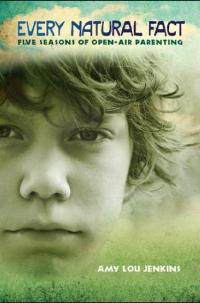 Amy
Lou Jenkins is the award-winning author of
Every Natural Fact: Five Seasons of Open-Air Parenting Amy
Lou Jenkins is the award-winning author of
Every Natural Fact: Five Seasons of Open-Air Parenting
"If you combined the lyricism of Annie Dillard, the vision of Aldo Leopold, and the gentle but tough-minded optimism of Frank McCourt, you might come close to Amy Lou Jenkins.Tom Bissell author of The Father of All Things
"Sentence by sentence, a joy to
read." —
Phillip Lopate
|
|||||||
|
Anthologies online participates in various affiliate programs and most links to books and products in articles/anthologies/author or any page offer some referral payment, pay for click or other reimbursement. The payment is generally pennies per click or purchase. Anthologies online also runs paid ads.The Anthologiesonline web site and newsletter are provided on an "as is" basis without any warranties of any kind and disclaim all warranties, including the warranty of merchantability, non-infringement of third parties' rights, and the warranty of fitness for particular purpose. No person or organization makes any warranties about the accuracy, reliability, completeness, or timeliness of the material, services, software text, graphics and links. Any communication is generally considered to be nonconfidential. See Privacy Policy. |
|||||||
|
|
|||||||


Poetic Devices in Poetry by Vivian Gilbert Zabel
| Search over 1.3 Million Jobs |
| Favorite Poets
|
Poetry has emotion, imagery, significance, beauty, dignity, rhythm, sometimes
rhyme, a different arrangement which can include inversion, and concreteness in
its images.
One way to attain the qualities so essential to making words poetic is through the use of poetry devices. We won't begin to cover all the known poetic devices or terms. Rather we'll discuss and use some of the more commonly known and used ones.
Below are the more commonly used poetic devices and terms. Hopefully, with the examples given, everyone can better understand some of the ways to make poetry, well, more poetic. The examples used are my own poetry and are copyrighted in my name.
Poetry devices (a major sampling):
alliteration: the repetition of a beginning sound.
Rain reigns roughly through the day.
Raging anger from the sky
Partners prattle of tormented tears
From clouds wondering why
Lightning tears their souls apart.
In the first two lines, the r sound is repeated. In the third line p starts two adjoining words.
allusion: a casual reference to someone or something in history or literature that creates a mental picture.
A Common Woman
No Helen of Troy she,
Taking the world by war,
But a woman in plain paper wrapped
With a heart of love untapped,
She waits, yearning for her destiny
Whether it be a he on a charger white
Or one riding behind a garbage truck.
Perhaps instead a room of students
Lurks in the shadows of her life
Needing her interest to be shown.
Yet other concerns may call
No, no Helen of Troy she,
But a woman set the world to tame
Wherever she may be.
Helen of Troy brings to mind a woman so beautiful that two countries went to war over her.
analogy: the comparison of two things by explaining one to show how it is similar to the other.
Day's Journey
The day dawns as a journey.
First one leaves the station on a train,
Rushing past other places
Without a pause or stop,
Watching faces blur through the window,
No time to say goodbye.
On and on the train does speed
Until the line's end one sees,
Another sunset down
Without any lasting memories.
The whole poem creates analogy, the comparison of a day and a train journey.
caesura: the pausing or stopping within a line of poetry caused by needed punctuation.
Living, breathing apathy
Saps energy, will, interest,
Leaving no desire to win.
All that's left are ashes,
Cinders of what might have been.
The punctuation within the lines (in this case, all commas) are the caesura, not the punctuation at the ends of the lines.
enjambement: the continuation of thought from one line of poetry to the next without punctuation needed at the end of the previous line(s).
Looking through the eyes
Of wonder, of delight,
Children view their world
With trust, with hope
That only life will change.
Enjambement is found at the end of lines 1, 3, and 4 because punctuation was not needed in those places.
hyperbole: extreme exaggeration for effect.
Giants standing tall as mountains
Towering over midgets
Bring eyes above the common ground
To heights no longer small.
Arms of tree trunks wrap
In comfort gentle, softness
Unthought of due to size,
Yet welcomed in their strength.
Giants aren't really tall as mountains, nor are arms tree trunks, but the use of the exaggeration helps create the image wanted.
metaphor: the comparison of two unlike things by saying one is the other.
Sunshine, hope aglow,
Streams from heaven's store
Bringing smiles of warming grace
Which lighten heavy loads.
Clouds are ships in full sail
Racing across the sky-blue sea.
Wind fills the cotton canvas
Pushing them further away from me.
In the first stanza, sunshine is compared to hope while in the second, clouds are compared to ships.
metonymy: the substitution of a word for one with which it is closely associated.
Scandals peep from every window,
Hide behind each hedge,
Waiting to pounce on the unwary,
As the White House cringes in dismay.
White House is used in place of the President or the government, and readers understand what is meant without exactly who is being directly addressed.
onomatopoeia: the sound a thing makes
Roaring with the pain
Caused by flashing lightning strikes,
Thunders yells, "Booooom! Craaaashhhh! Yeow!"
Then mumbles, rumbling on its way.
Grrrr, the lion's cry echoes
Through the jungle's den
Causing creatures small
To scurry to their holes.
Roaring, rumbling, cry are not examples of onomatopoeia, but are verb forms. Boooom, craaaashhh, yeow, and grrrrr are examples of onomatapoeia.
oxymoron: the use of contradictory terms (together) for effect.
Freezing heat of hate
Surrounds the heart
Stalling, killing kindness,
Bringing destruction to the start.
Freezing and heat are contradictory, opposites, yet the two together create a mental image.
personification: the giving of human traits to non-human things incapable of having those traits.
Anger frowns and snarls,
Sending bolts of fire from darkest night
That bring no brilliance,
Rather only added blackness of sight.
Frowning and snarling are human traits that anger cannot experience; however using them as traits for anger creates the imagery needed.
simile: the comparison of two unlike things by saying one is like or as the other.
Sunshine, like hope aglow,
Streams from heaven's sky
Bringing smiles of warming grace
On breeze whispers like a sigh.
Clouds are like ships in full sail
Racing across the sky-blue sea.
Wind fills the cotton canvas
Pushing them further away from me.
These two stanzas of poetry and those for metaphor are nearly identical. Both metaphor and simile are comparisons of unlike things, but metaphor states one thing is the other while simile says one is like the other, or as the other.
symbol: something which represents something else besides itself.
The dove, with olive branch in beak,
Glides over all the land
Searching for a place to light.
Storms of war linger on every hand,
Everywhere the hawk does fight.
The dove is a symbol of peace, and the hawk is a symbol of war. Using them in poetry gives an image without having to explain in detail.
Other terms:
elegy: a poem of lament (extreme sorrow, such as caused by death)
free verse: a poem without either a rhyme or a rhythm scheme, although rhyme may be used, just without a pattern.
blank verse: un-rhymed lines of iambic pentameter (ten syllables with all even numbered syllables accented)
imagery: the use of words to create a mental picture
mood: the emotional effect of a poem or a story
Understanding and using these devices and terms can help improve and
strengthen poetry. Imagery is essential for vivid poetry, and devices help
develop imagery.
About the Author
Vivian Gilbert Zabel taught English, composition, and creative writing for twenty-five years, honing her skills as she studied and taught. She is a author on Writers (http://www.Writing.com/), and her portfolio can be found at http://www.Writing.Com/authors/vzabel. Her books, Hidden Lies and Other Stories and Walking the Earth: Life's Perspectives in Poetry,
|
The
preparations outlines of
350-001 and
VCP-310
prepared by testking make
sure that you can continue with your
640-802 and
70-290 at a
self decided pace, and leisure to do anything in spare time, from movies to
reading and poetry.
|