|
|
|||||||
  /_derived/Amy_Lou_Jenkins_htm_cmp_blank110_vbtn.gif) /_derived/Writers%20Wanted_htm_cmp_blank110_vbtn.gif)          /_derived/Featured_Writers_htm_cmp_blank110_vbtn.gif)  |
|||||||
 Amy
Lou Jenkins is the award-winning author of
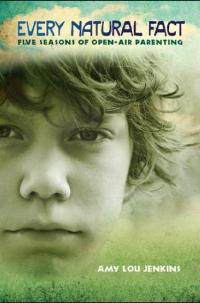
Every Natural Fact: Five Seasons of Open-Air Parenting Amy
Lou Jenkins is the award-winning author of
Every Natural Fact: Five Seasons of Open-Air Parenting
"If you combined the lyricism of Annie Dillard, the vision of Aldo Leopold, and the gentle but tough-minded optimism of Frank McCourt, you might come close to Amy Lou Jenkins.Tom Bissell author of The Father of All Things
"Sentence by sentence, a joy to
read." —
Phillip Lopate
|
|||||||
|
Anthologies online participates in various affiliate programs and most links to books and products in articles/anthologies/author or any page offer some referral payment, pay for click or other reimbursement. The payment is generally pennies per click or purchase. Anthologies online also runs paid ads.The Anthologiesonline web site and newsletter are provided on an "as is" basis without any warranties of any kind and disclaim all warranties, including the warranty of merchantability, non-infringement of third parties' rights, and the warranty of fitness for particular purpose. No person or organization makes any warranties about the accuracy, reliability, completeness, or timeliness of the material, services, software text, graphics and links. Any communication is generally considered to be nonconfidential. See Privacy Policy. |
|||||||
|
|
|||||||


write tight, craft of writing, writing technique
Go On A Word Diet
by Catherine Franz
| This
article sponsored by: l |
There are three ways to write a first draft.
One is to ink
whatever surfaces, in whatever order without regard to
grammar, spelling or staying on topic. After the free
write, the points, and message extracted for notes or an
outline. Time is its adversary and clarity chisels its way
forward slowly.
Or start with a plan that minimally includes a purpose,
description, chosen structure, word count, objective,
points, message, and possibly a mind map or outline.
Patience is its adversary and clarity the benefit.
Or you hold the pen, connect with your higher power, and
allow the recording session to begin. You become an
aqueduct for a message, usually to humanity or yourself.
Dr. Wayne Dyer, on his PBS show with the same name of his
book, says, "I connected with God and the book [Power
of Intention] seemed to write itself. I didn't know what
was going to appear nor did I do any planning." He
continues to explain how a very lose but clear outline
visually formed right before each writing session. It
became clearer while he created an outline. The water just
gushed afterwards and he could hardly keep up. Control is
its adversary and clarity and enlightenment forms after the
writing.
We frequently read that writing requires organization,
clarity, focus, and the discipline to write tight. Yet,
seldom provided are methods on how to leave out the lard
"before" the ink scratches the page--saving editing time.
Organization also contributes to lard remove. Some writers
believe that organization stifles creativity while others
take an opposite viewpoint. There is a compromise --
organization with a twinge of discipline. High
productivity, a requirement of freelancers, requires
organization.
Here are four strategies on how you can eliminate excess
words and increase productivity before they hit the page:
1. Build massive creative steam before starting to write --
see and taste the words before you begin. Robert Fritz, an
expert and author on creativity, expands on this process
with progressive clarity through each of his three books.
Fritz explains how important it is to push the idea,
generating creative tension, until the last part of the
first stage of creativity. He continues to explain how
important it is to carry this first energy through to the
second stage, which doesn't carry its own energy. He also
discusses how each of the three stages requires a separate
set of skills for writers. And why the two top reasons why
writers lose interest or drop projects--lost creative
tension and didn't have the skills for the second stage,
becomes frustrating, and gives up.
2. Dr. Stephen Covey says, "Begin with the end in mind"
when managing time. That same philosophy works just as well
for writing projects. First, fully define the project,
including purpose and goals, and your reader. "A 150-page
personal development self-help book for coaches on..." is an
example. Minimally include the word, page, and chapter
counts, publishing plans, and description paragraph.
Experts at the annual Maui writer’s conference, highly
recommend writing a 25-word description before you begin the
project.
3. Choose a structure that matches your writing style and
results desired. Just like articles has six basic writing
structures, so does fiction, science fiction, how-to, and
other genres. As a new writer, you might want to master one
structure at a time.
4. Outline and match to word count desired. The actual way
you outline does not matter. Be it a napkin or toilet
paper, mind map or clustering, computer or crayon. An
outline reduces lard and helps minimize tangents. Write
| Find more toolkits |
your project description at the top of the page, then,
sketch out the outline, keeping in mind the word count and
the reader. Next, reduce the number of items or branches to
match your defined result.
Getting the lard out of our writing before it indents a page
is like getting the lead out to exercise. Both require
conscious commitment and continuous dedication. Yet, just
like the pounds, both will get lighter.
(c) copyright Catherine Franz
Catherine Franz is a writing coach. Additional articles and
e-zines on writing, marketing and attraction can be found on
her web site and blog:
http://www.abundancecenter.com
blog:
http://abundance.blogs.com
 |
|
|
Web
www.anthologiesonline.com
|
More writing inspiration and exercises:
|
Inspiration for
a writer Write Your Way To New Possibilities
|
What to Write About
|
