|
|
|||||||
  /_derived/Amy_Lou_Jenkins_htm_cmp_blank110_vbtn.gif) /_derived/Writers%20Wanted_htm_cmp_blank110_vbtn.gif)          /_derived/Featured_Writers_htm_cmp_blank110_vbtn.gif)  |
|||||||
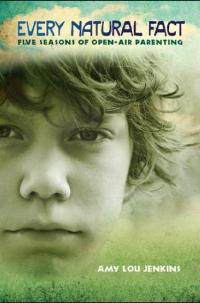 Amy
Lou Jenkins is the award-winning author of
Every Natural Fact: Five Seasons of Open-Air Parenting Amy
Lou Jenkins is the award-winning author of
Every Natural Fact: Five Seasons of Open-Air Parenting
"If you combined the lyricism of Annie Dillard, the vision of Aldo Leopold, and the gentle but tough-minded optimism of Frank McCourt, you might come close to Amy Lou Jenkins.Tom Bissell author of The Father of All Things
"Sentence by sentence, a joy to
read." —
Phillip Lopate
|
|||||||
|
Anthologies online participates in various affiliate programs and most links to books and products in articles/anthologies/author or any page offer some referral payment, pay for click or other reimbursement. The payment is generally pennies per click or purchase. Anthologies online also runs paid ads.The Anthologiesonline web site and newsletter are provided on an "as is" basis without any warranties of any kind and disclaim all warranties, including the warranty of merchantability, non-infringement of third parties' rights, and the warranty of fitness for particular purpose. No person or organization makes any warranties about the accuracy, reliability, completeness, or timeliness of the material, services, software text, graphics and links. Any communication is generally considered to be nonconfidential. See Privacy Policy. |
|||||||
|
|
|||||||


Research Writing Markets for Maximum Sales
by Pamela White
Write for Magazines.
I wish you could see my living room floor right
now. I have
seven piles of magazines covering most of the rug. Anyone
would say that I'm a packrat; it's true. But these magazine
piles are more than just a reluctance to part with any of my
possessions. They are my day's research into food writing
markets.
It matters not what your writing niche, or specialization,
may be, you need to include time for researching new and
changing publications throughout your work week. As food
writers, we are likely regular readers of the wisdom found
between the shiny covers of Bon Appetit, Saveur, Gourmet,
Food and Wine, and Gastronomica (if you are an American
writer/reader anyway).
Thumbing through past issues, I can see that aside from
celebrities, best selling authors, four- and five-star
chefs, and television personalities, these magazines provide
limited opportunities for most food writers although I am
not saying these are not places to send your work to
except as incentive to hone our craft.
Stumped about where else you can submit your food writing?
Wondering how to uncover markets for your work? Aside from
saving issues of magazines and building piles two-years-
worth high on your living room rug to occupy a Sunday
afternoon, there are several practical steps to follow when
looking for new food writing markets.
Start with Writers Market, the annual directory of magazines
and publishers. An alternate, or additional, choice could be
Writer's Handbook. Both list publications by a general
section, or topic. Lately writers I've talked with prefer to
skip the actual book and sign up with
Writer's Market online
at www.writersmarket.com
Take a field trip to the largest bookstores yWriter's
Handbook.ou can find. My
tendency is to be overwhelmed by the vast array of
international and national cookery magazines and special
issues. I overcome this fear of so many food covers by
picking up a few, finding a chair and skimming through each
one to see what its focus is. I also buy several, read them
as continuing education and deduct them as a business
expense when I do my taxes each April.
Go beyond magazines that are on the cooking and food
shelves. Make use of writer magazines: The Writer, Writer's
Digest and ByLine Magazine, among others include lists of
writing markets and what their editors are looking for.
Love that google! I go to www.google.com and type in a
variety of words and phrases: "guidelines + food +
articles," " 'writer's guidelines' & food," or "submissions
+ articles + cooking." Feel free to employ your own favorite
search engine when performing an internet search for
websites, magazines, newsletters and newspapers that accept
articles on food.
Speaking of online searches, track down food writers with
websites. Take the name of a food writer who pops up in
various magazines and do a search online for that person.
How does this help you find markets? Take note of the
author's bio at the end of articles or, if he has his own
website, scan his publishing credits or resume to compile
your own list of markets to research.
Once you've gathered up your list of markets, it's time to
do two more things: write to the publication for writer's
guidelines, and read (and study) back issues.
Writing for guidelines is a simple task. Look for the
publication's website and search for submission or writer's
guideline information posted online. Otherwise, type a short
note requesting that writer's guidelines be sent to you in
the enclosed self-addressed stamped envelope (SASE). Make it
easy on the editorial support staff by typing "re: Writer's
Guidelines" on the envelope in the right bottom corner. And
do include that SASE.
How can you study back issues? Go to the library. If you're
not sure they'll have the issues, call first. Bring a
notepad and write down notes about style (informal, cutting
edge, practical), types of articles (quick cooking, food
memories, profiles of celebrity cooks), and where to send
your letter pitching your article idea. If you are
interested in a magazine that is not in your local library
or in your bookstore, call or write the publisher to find
out how to purchase back issues, or look for free issue
offers on the magazine's website. Of course, when I take
advantage of the free trial issue promotions I usually
subscribe, then end up with another years worth of
 |
magazines dumped on my living room rug.
Now what? Research markets, query editors, write articles,
submit to magazines and enjoy your success!
Pamela White is the editor of "Food Writing," an online newsletter.
She is the author of Fabjob.com's "Become a Food Writer" and
continues to teach an online course on food writing. Visit
http://www.food-writing.com
to subscribe to the online newsletter.
Read more about Studying Magazine Markets
