|
|
|||||||
  /_derived/Amy_Lou_Jenkins_htm_cmp_blank110_vbtn.gif) /_derived/Writers%20Wanted_htm_cmp_blank110_vbtn.gif)          /_derived/Featured_Writers_htm_cmp_blank110_vbtn.gif)  |
|||||||
 Amy
Lou Jenkins is the award-winning author of
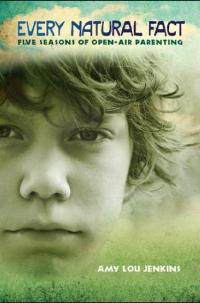
Every Natural Fact: Five Seasons of Open-Air Parenting Amy
Lou Jenkins is the award-winning author of
Every Natural Fact: Five Seasons of Open-Air Parenting
"If you combined the lyricism of Annie Dillard, the vision of Aldo Leopold, and the gentle but tough-minded optimism of Frank McCourt, you might come close to Amy Lou Jenkins.Tom Bissell author of The Father of All Things
"Sentence by sentence, a joy to
read." —
Phillip Lopate
|
|||||||
|
Anthologies online participates in various affiliate programs and most links to books and products in articles/anthologies/author or any page offer some referral payment, pay for click or other reimbursement. The payment is generally pennies per click or purchase. Anthologies online also runs paid ads.The Anthologiesonline web site and newsletter are provided on an "as is" basis without any warranties of any kind and disclaim all warranties, including the warranty of merchantability, non-infringement of third parties' rights, and the warranty of fitness for particular purpose. No person or organization makes any warranties about the accuracy, reliability, completeness, or timeliness of the material, services, software text, graphics and links. Any communication is generally considered to be nonconfidential. See Privacy Policy. |
|||||||
|
|
|||||||


My
Ten Best Writing Tips EVER
Copyright © by Angela Booth
Sponsored by:
|
|
Here in no particular order, are the ten best writing tips I've
discovered in 25 years of writing. They may work for you, too.
Try them
Tip One: Pay attention to images
http://www.jeanhouston.org/brain.html
Your right brain thinks in images, and when you write, you
translate images from your right brain into words. Usually this
process happens so quickly that you're unaware of it. If you can
make this process conscious, you can goose up your own
creativity. Stephen King calls this process "writing with the
third eye --- the eye of imagination and memory."
To get the hang of this, try Jean Houston's process, adapted from
her book, *The Possible Human*. (URL above.)
Tip Two: Making mud/ laying track
Your first draft of any piece of work is "mud" --- raw material.
Julia Cameron refers to your first draft as "laying track",
another term I like.
If the first draft's awful, great! It's meant to be. It's only
raw material. However, if you don’t create the first draft, or
you wait until you have a really great idea that's worth a first
draft, you won’t write anything. Write. Make mud.
Tip Three: Just write --- think on the page, or on
the screen,
NOT in your head
Thinking too much while you write is treacherous, because you can
spend two hours "writing" and end up with half a page of work.
Write-think. That is, think on the page, not in your head.
Tip Four: Grow your writing with lists
Listing is a form of brainstorming. It grows your writing, and
it's fun.
Listing is an excellent technique to use when you get stuck in
your writing, and it doesn’t matter what kind of writing you're
doing, whether it’s fiction or nonfiction. Listing also helps you
in the revision process, to add texture to your work.
Here's an excellent FREE software program to help you to produce
lists, and to save them:
http://www.flashpeak.com/slimlist/slimlist.htm
Tip Five: Use your magical thesaurus
Your most useful listing tool is ---- a thesaurus. Keep one on
your desk to kickstart your brain.
Your thesaurus and dictionary are perfect kickstarters. They're
also vital tools whenever you're revising.
Tip Six: Make writing the FIRST thing you do each
day
If you write at least page, by hand, as soon as you get up,
you'll find that writing comes more easily to you for the rest of
the day. You're also more focused and relaxed for the rest of the
day.
Tip Seven: Set WIG goals --- the best goals are always
unrealistic
Writer Martha Beck calls unrealistic goals WIGs: Wildly
Improbable Goals. In the September 2002 issue of Oprah magazine
she says: "… learning to invite and accept your own WIG can
awaken you to a kind of ubiquitous, benevolent magic, a river of
enchantment that perpetually flows to your destiny."
A WIG is exciting. Just thinking about a WIG will get your heart
pounding. Working toward your WIG (writing a book, writing a
screenplay, getting signed on as a contributor at a mass-market
magazine) takes hard work. Lots of hard work.
And at the end of that hard work, as Beck points out, you achieve
your goal, but there's a twist. You never achieve it exactly as
you envisioned it – you achieve something even better, something
you could never have imagined.
I'm a great believer in writing ABOUT your goals. This is because
when you write, you're using both sides of your brain, and are
accessing your unconscious mind as well. You live in your left
brain, which you regard as "you", but you have a silent partner,
your right brain, which is also you, and which communicates via
images and feelings.
Tip Eight: Separate writing and editing
Writing comes first, then editing. If you try to combine the two,
you will block.
Writing should come as easily to you as chatting to a friend. If
it doesn’t, you're trying to edit in your head before you get the
words on paper, or on the computer screen. If you're not aware of
the danger of combining writing and editing, you'll make writing
hard for yourself, when it should be easy. If you don’t have
trouble talking, how can you have trouble writing?
Tip Nine: It's good to struggle with your writing
In his new book The Breakout Principle, Dr Herbert Benson (who
also wrote The Relaxation Response) describes a struggle/ release
process that leads to a new level of awareness. When you
struggle, and then completely give up the struggle --- just give
up --- there's a chance that you can achieve a peak experience
which leads you to a new level of functioning.
How does this work in your writing? Let's say that you're writing
a novel. This work is hard for you. However, you keep at it
faithfully, working on your novel each day. You struggle with it
for weeks. Then you give up. Although you keep writing, you say
to yourself: "I don’t care any more what garbage I write. I'm
just going to do it. I'm just going to write."
This release leads to writing magic. Suddenly you're inspired,
and you finish the book in a rush. Although you will still
occasionally struggle with your writing (because struggle is a
part of life), you've broken through to a new level of
functioning in your work.
This new level would not, and could not, have happened without
the struggle.
Tip Ten: Good writing = truthful writing
Writing truthfully can feel like undressing in public, so many
beginning writers worry about sharing their writing.
Be compassionate. Firstly, to yourself. Write. Write for
yourself. All writing takes courage.
When you finally show your writing to others, you discover the
amazing truth that _no one cares_. In her book "Writing To Save
Your Life", Michele Weldon advises: "Get over yourself". No one
is judging what you write. So write.
More articles on how to write
| To read more articles by Angela
Booth, visit the Digital- e Web site--Information for writers and creatives. Ebooks, free ezines, Creatives Club. Love to write? Turn your talent into a business! http://www.digital-e.biz/ |
|
