|
|
|||||||
  /_derived/Amy_Lou_Jenkins_htm_cmp_blank110_vbtn.gif) /_derived/Writers%20Wanted_htm_cmp_blank110_vbtn.gif)          /_derived/Featured_Writers_htm_cmp_blank110_vbtn.gif)  |
|||||||
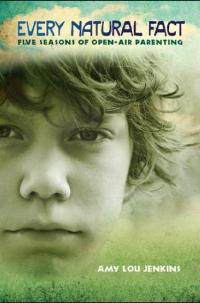 Amy
Lou Jenkins is the award-winning author of
Every Natural Fact: Five Seasons of Open-Air Parenting Amy
Lou Jenkins is the award-winning author of
Every Natural Fact: Five Seasons of Open-Air Parenting
"If you combined the lyricism of Annie Dillard, the vision of Aldo Leopold, and the gentle but tough-minded optimism of Frank McCourt, you might come close to Amy Lou Jenkins.Tom Bissell author of The Father of All Things
"Sentence by sentence, a joy to
read." —
Phillip Lopate
|
|||||||
|
Anthologies online participates in various affiliate programs and most links to books and products in articles/anthologies/author or any page offer some referral payment, pay for click or other reimbursement. The payment is generally pennies per click or purchase. Anthologies online also runs paid ads.The Anthologiesonline web site and newsletter are provided on an "as is" basis without any warranties of any kind and disclaim all warranties, including the warranty of merchantability, non-infringement of third parties' rights, and the warranty of fitness for particular purpose. No person or organization makes any warranties about the accuracy, reliability, completeness, or timeliness of the material, services, software text, graphics and links. Any communication is generally considered to be nonconfidential. See Privacy Policy. |
|||||||
|
|
|||||||


To learn more about food writing, find a link to another article about food writing at the bottom of the page.
SIX WAYS TO BREAK INTO FOOD WRITING
By Pamela White (c) 2003
| Sponsored by: |
 |
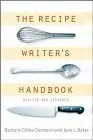 The Recipe Writer's Handbook, Revised and Updated
This guidebook is one of few aimed at its select audience (professional food
writers), but you don't have to be a pro to appreciate it. It's also a great
resource for all of those self-publishing cookbook authors out there. The Recipe Writer's Handbook, Revised and Updated
This guidebook is one of few aimed at its select audience (professional food
writers), but you don't have to be a pro to appreciate it. It's also a great
resource for all of those self-publishing cookbook authors out there. |
 Resource Guide for Food Writers Whether
you're writing about medieval food or salt, radishes or Balinese cooking,
you'll find an organization, publication, Web site, or other aid for your
research sandwiched between the covers of Gary Allen's Resource Guide for
Food Writers. Resource Guide for Food Writers Whether
you're writing about medieval food or salt, radishes or Balinese cooking,
you'll find an organization, publication, Web site, or other aid for your
research sandwiched between the covers of Gary Allen's Resource Guide for
Food Writers. |
|
|
These are the times that try writers' souls.
Publishers post guidelines for writers that require published
clips to be sent with query letters. Writers cannot get published
clips unless they've been published. The logic is just as
perplexing when writers try to break into new niches. Food editors
ask for food-related writing samples prior to assigning stories
to new writers. Never fear, there are ways to conquer that
old "Catch 22."
Here are six ways writers and chefs can break into food writing.
Some are sneaky roundabout ways; others make use of editors'
needs for new writers to pen essays and travel pieces. Combining
food with another writing niche is yet a third way to acquire
those valuable food writing clips.
One: Try a sneaky way to get a food writing clip.
Look at your
professional expertise. How does it connect with food? If you
are an architect or you've worked with one to design a kitchen,
use that to write an article for a handy man magazine. Include
tips on how to lay out a kitchen so that food lovers or amateur
chefs will be delighted with the results. Do you know a
professional party planner or are you known for your gatherings?
Write up a holiday event, including recipes, for your local
newspaper or a regional magazine. Love the outdoors? Write about
building a barbecue for a do it yourself magazine, or share tips
on fileting fish for the weekend fisherman.
Two: Write a personal essay about food. It's not
only professional
food writers that are writing essays about food memories, favorite
meals and picky eaters. Everyone has a tale to share about summer
fruit, Fourth of July cookouts or first bites of TV dinners. Who
is going to buy these essays? Read the food magazines. "Saveur"
runs expressive essays on everything from bread soaked in milk
to a first experience with a mango. "The Square Table," an
online, non-paying market, accepts essays on dining. "Woman's
Day" and "Family Circle" publish essays on food and its impact
on family, life and relationships. "Parents," "Parenting"
and "Child" publish advice regularly on getting picky eaters
to try new foods.
Three: Report on your vacation. But instead of
writing something
as banal as "what I did on my summer vacation," write a travelogue,
including short reviews of restaurant meals. Oh, you didn't travel
to Provence last June? Write about traditions at your family
reunion. Why not do a round up of five or six small barbecue
joints in Kansas City? Stayed close to home? Write about the
food at the water, amusement, or theme park - what was good,
bad, or healthy. If you did travel abroad, I hope you took
plenty of notes and photographs. Once you have your idea for
a travel and food piece in mind, start looking for markets.
Local newspapers in both the place you visited and where
you live are possible markets. Frugal-themed newsletters and
websites use articles on traveling and eating on the cheap.An article about how to dine well at amusement parks and
fairs would interest readers of parenting and women's magazines.
Four: Teach a cooking class; take a cooking class.
Write it
up as a publicity piece for the cooking school. Alternatively,
write up how to teach a cooking class as a home-based businessfor women's magazines or entrepreneur publications. Maybe you
live in a city that has food events, like Taste of..., wine
tastings, chili cook-offs, or baking competitions? Alternative
newspapers, weekly newspapers and regional magazines are
possible markets for articles on how to put on a baking,
or cooking, contest, the best in local wines, or which
restaurants offered the best bites at a large gathering.
Five: Combine food writing with another niche.
Write
about kitchen gardens, herbs grown in window boxes, winter
gardens, starting seeds. Interview organic gardeners, local
farmers, and who's selling at the farmer's market. Combine
camping, RV's and fishing with recipes and quick snacks to
pack that are easy to transport yet tasty. Think further
sports-minded magazines (don't forget dance and cheerleading
publications) can use recipes that provide quick energy
with minimal fuss. Health writers can write articles on
diets that help chronic conditions: pain, yeast infections,
migraines, arthritis.
Six: Pick a lesser known holiday and write it up
for fun.
St. Swithin's Day is an ongoing joke at our household. It
falls on July 15, so we claim St. Swithin to be the patron
saint of barbecue. You can pick an actual holiday -- something
that isn't done to death -- or write about a special holiday
your family has created.
These ideas are also starters for established food writers
looking to expand into other markets. Pick one, or mix and
match for your food writing success.
About the author:
Pamela White is the author of FabJob.com's "Become a Food Writer,"
and editor of Food Writing, an online newsletter. Visit her
website at www.food-writing.com .
Read More about:Writing the Recipie
