Anthologies Online, where editors, writers and readers converge.
http://www.anthologiesonline.com/
Meet here to get published and to create anthologies:
Writers: Subscribe and send in your brief bio and your best writing sample (up to 1200 words total) to apply to become a featured writer. Find free articles and markets to help you get published. Readers: Find your favorite author, anthologies, and great reading. Editors, send in your calls for manuscripts. Find writers and manuscripts to fill your anthologies.








 Christian Writers' Market Guide 2004
Do you
want to get your work published–or keep your work published–but you
don’t know where to start? Find current information on over 1,200 markets
for the written word.
Christian Writers' Market Guide 2004
Do you
want to get your work published–or keep your work published–but you
don’t know where to start? Find current information on over 1,200 markets
for the written word. |

2004 Writer's Market #1 tool for writers who want to get published. You'll find detailed listings for more than 8,000 editors who buy what you write. . |
 The
Writer's Handbook, 2004 (Writer's Handbook)
For
writers who want a reliable one-stop source of top-notch professional advice
and quality paying markets. Over over 1,000 pages of essential information,
how-to advice, and paying markets they won't find anywhere else! Find 3,000 quality book and magazine markets,
along with updated details and contact information, and much more. New to
this 2004 edition are dozens of "quick-look" checklists for writing,
selling, and organizing work more efficiently, as well as extensive sidebars
with tips for submitting work for publication, writing queries, and more. The
Writer's Handbook, 2004 (Writer's Handbook)
For
writers who want a reliable one-stop source of top-notch professional advice
and quality paying markets. Over over 1,000 pages of essential information,
how-to advice, and paying markets they won't find anywhere else! Find 3,000 quality book and magazine markets,
along with updated details and contact information, and much more. New to
this 2004 edition are dozens of "quick-look" checklists for writing,
selling, and organizing work more efficiently, as well as extensive sidebars
with tips for submitting work for publication, writing queries, and more. |
 How to Write Articles That Sell How to Write Articles That Sell
|
Telecommute: FREE report, FREE market tips, FREE bulletins |
| Start training now for a rewarding career as a Freelance Writer. In as little as nine months, you could be writing articles and stories for magazines, newspapers, and more — and making money doing it. |
| Take advantage of print on demand technology to see your book in print fast. We provide custom design, distribution. Discover how by clicking now. |
| New Writers Magazine: Committed to helping you get published |
| Beyond the Writers' workshop: New Ways to Write Creative Nonfiction |
| 2004 Christian Book Writer's Market Guide |
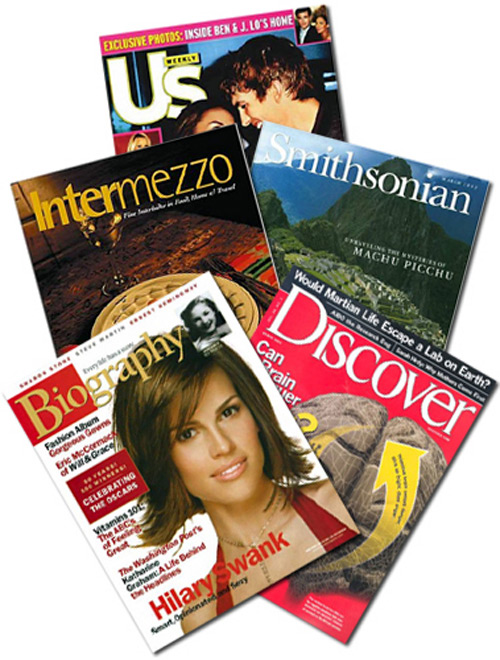  Magazine Samplers
--Most available for international delivery
Subscribe based on the types of markets you want to write for and get a
different magazine every month. Choose from
cooking,
parenting,
business,
health and more. A great way to study markets where you should be
be publishing. Magazine Samplers
--Most available for international delivery
Subscribe based on the types of markets you want to write for and get a
different magazine every month. Choose from
cooking,
parenting,
business,
health and more. A great way to study markets where you should be
be publishing. |
 Lexmark 4800 x 1200dpi All-In-1 Print/Copy/Scanner -- $129.95  |
|
Latest Freelance Jobs (new work-at-home jobs you can apply for now): To get instant access to these and hundreds
of other work-at-home freelance jobs, click here. |
Inkjet Cartridges starting at $3.99!!! All-Ink.com |
| Accents make your house and office yours, with CharlesKeath.com decorator accents and furniture. |


 ADVERB
Posters from Art.com
Yesterday, Raul sweated
profusely in his brand
spanking new dinosaur
costume as he and his
pet emu very rapidly
typed their extremely
overdue book reports.
|
Parts of Speech Posters from Art.com
Read about : Content available at Art.com
|
Adverbs are words that describe or modify
adjectives, verbs, and other adverbs.
Adverbs change or explain adjectives, verbs, and other adverbs, making them more
specific or more descriptive. They basically do the same thing that adjectives
do for nouns.
Putting an adverb next to an adjective, noun, or adverb helps to answer one of
several questions: When?, Where?, How?, and To What Extent? or How Much? For
example:
-When: It ends tomorrow.
-Where: She lived far away.
-How: I read quickly.
-To What Extent: It was perfectly round.
Most adverbs end in -ly, and this makes them easy to recognize. And you can
often make an adverb out of an adjective by adding -ly to the end. For example:
carefully, beautifully, hotly, crazily, and so on. But don't be fooled. Some
words ending in -ly are not adverbs; for example, the word "silly" is an
adjective. And many adverbs do not end in -ly.
