|
|
|||||||
  /_derived/Amy_Lou_Jenkins_htm_cmp_blank110_vbtn.gif) /_derived/Writers%20Wanted_htm_cmp_blank110_vbtn.gif)          /_derived/Featured_Writers_htm_cmp_blank110_vbtn.gif)  |
|||||||
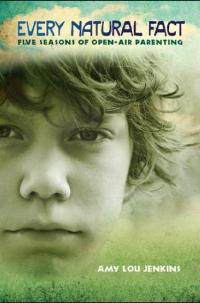 Amy
Lou Jenkins is the award-winning author of
Every Natural Fact: Five Seasons of Open-Air Parenting Amy
Lou Jenkins is the award-winning author of
Every Natural Fact: Five Seasons of Open-Air Parenting
"If you combined the lyricism of Annie Dillard, the vision of Aldo Leopold, and the gentle but tough-minded optimism of Frank McCourt, you might come close to Amy Lou Jenkins.Tom Bissell author of The Father of All Things
"Sentence by sentence, a joy to
read." —
Phillip Lopate
|
|||||||
|
Anthologies online participates in various affiliate programs and most links to books and products in articles/anthologies/author or any page offer some referral payment, pay for click or other reimbursement. The payment is generally pennies per click or purchase. Anthologies online also runs paid ads.The Anthologiesonline web site and newsletter are provided on an "as is" basis without any warranties of any kind and disclaim all warranties, including the warranty of merchantability, non-infringement of third parties' rights, and the warranty of fitness for particular purpose. No person or organization makes any warranties about the accuracy, reliability, completeness, or timeliness of the material, services, software text, graphics and links. Any communication is generally considered to be nonconfidential. See Privacy Policy. |
|||||||
|
|
|||||||


Just in case you forgot how searching other's bio's can help you to get published--here's a very specific article about using bio's to learn how you can get published.
| Find bios in our Featured Writers pages. | ||||
|
Gone Fishin'... in
Other Writers' Bios
By Jenna Glatzer
I’m going to let you in on a secret: I’m a bio hunter. No, it’s nowhere near as cool as being a vampire hunter, but it’s more lucrative. One of the ways I’ve found new markets to approach is by reading other writers’ bios.
|
|
If you needed another reason to read all the way to the end of an article—any article—this is it. If you’re reading a magazine or e-zine that runs bios at the end of its articles, you’ve potentially found yourself a goldmine.
The process is pretty simple: read articles on topics that interest you. My main current interest is health writing, so I read a lot of health articles. Now let’s say I came across an article about heart transplants, written by a person who doesn’t have “MD,” “PhD,” or any other such high credentials after his or her name. I read the article and it’s the kind of thing I could have written. So I immediately look for the bio.
Let’s have ourselves a look at this fictitious bio:
“Jill B. Louis is a freelance writer from New Mexico. She has written for numerous print and online publications such as Boy Am I Healthy, Here’s to Your Health, HealthIsMyLife.com, and HealthHealthHealth.com. Visit her website at www.jillthehealthwriter.com.”
Bingo. Jill starts out by telling us she’s a freelancer, so I can reasonably assume that all of the publications she lists use freelance writers. Like me. I start out with the easy ones—anything that’s a url. I go to HealthIsMyLife.com, make sure I like the content, and then hunt around for writers’ guidelines. They’re there, in the “contact us” section. O happy day.
Then I visit HealthHealthHealth.com, and to my dismay, don’t see any writers’ guidelines, or even an editor’s name. What to do? I find the best e-mail address I can find. Not the general e-mail box (like info@healthhealthhealth.com), if I can avoid it. Not the webmaster, unless that’s the only address listed. Instead, I’m looking for editor@, or news@, or someone whose name is actually listed. But, alas, I can find only the webmaster’s e-mail address, and I don’t even know his name.
Some writers would stop right there, figuring there’s no way to pitch an article. I say, get resourceful! Go ahead and write to that webmaster and endear yourself to him. I might write:
Hello,
I’m sorry that I don’t know your name. I hope you’ll forgive me, because I need a favor! I have a terrific article idea to pitch for HealthHealthHealth, and I don’t know where to send my query letter. Can you tell me who I should contact, or if there are writers’ guidelines I can request? I’m an experienced freelance writer and would love the chance to write for HealthHealthHealth. Thanks so much for your time.
Regards, Jenna Glatzer
Will he write back? It’s likely. And if he doesn’t, you have two options: you can go back to that site and hunt around some more—find another e-mail address, or a mailing address or (last resort) a fax number. If there’s a phone number, you can call and make the same kind of statement I made above. Mention you’re a writer, and you’d love to send a story pitch, and you’d like to know the editor’s name and where to send it. Second option (takes even more guts): write to Jill B. Louis.
Is it a little pushy to ask her for contact info? Yes, a little. It would be much more convenient if you could strike up a friendship with her first, so she doesn’t feel like you’re using her. But if time is of the essence, you might write her a letter like this:
Dear Ms. Louis:
I enjoyed your article about heart transplants in SomeHealthMag.com. It really opened my eyes about [the new procedure, the risks, whatever]. I hope you don’t mind, but I’m writing to ask you a favor. I’m a health writer, too (I’ve written for publications such as X, Y, and Z), and I have a story idea I’d love to send to HealthHealthHealth. I noticed that your bio mentioned you’ve written for them. Could you tell me who to contact there? I can’t seem to find an editorial address listed on their website. Thanks for your consideration!
Regards, Jenna Glatzer
Of course, I plunk the names of the print magazines she mentioned in her bio into a search engine, too. Most magazines now have corresponding websites, or at least a page on their parent company’s site. I repeat this process, looking for guidelines and editorial contacts at each of the magazines.
But to backtrack a moment, we left out what could be the greatest goldmine of all: Jill’s website. Notice how Jill’s website was listed in her bio? Fantabulous. Writers’ own websites often give far more detail about publishing credits than can fit into a small bio, so I head on over to Jill’s site and find a great list of other publications she’s written for, plus several links to her articles.
I’ve found several new markets this way, and often, they were publications I’d never heard of before finding them in another writers’ bio. Take a look at these sites for examples of what I mean:
Nancy Lyon, travel writer:
http://ourworld.compuserve.com/homepages/scatter_the_mud/resume.htm
Nancy conveniently gives us links to several of the magazines, newspapers, and websites she’s written for. A resourceful travel writer can now follow those links and find new publications to approach.
Fiona Becker, food and wine writer:
http://www.foodandwinematching.co.uk/
Fiona doesn’t have as many credits as Nancy, but we can glean links to two food/wine publications and the names of four magazines that I’ve certainly never heard of before (likely because they’re in the UK and Australia).
Susan Ward, parenting writer :
http://www.heritagecommunications.org/freelance.htm
From Susan’s “Sample of published selections,” we get links to four websites dealing with parenting topics (not counting About.com, which we know is a nonpaying market).
See what I mean? Take out that pole and do a little fishing of your own. Track down writers who write the kinds of articles you write (or want to write), and pick up some new contacts. Good luck!
| About the author: Jenna Glatzer is the editor of http://www.absolutewrite.com (pick up a FREE list of
agents looking for new writers!) and
|
Read More Articles by Jenna Glatzer
How To Outgrow Write What You Know
|
|||||
 Jenna
Glatzer is the editor-in-chief of Absolute Write (www.absolutewrite.com)
and Absolute Markets (www.absolutemarkets.com).
She has written for hundreds of national and online markets, recently including
Prevention, Woman's World, Woman's Own, Salon.com, and Writer's Digest. She is
the editor of Conquering Panic and Anxiety Disorders (www.absolutewrite.com/anxiety.htm)
and is the author of several books, which you can find at
www.absolutewrite.com/jenna/books.htm. If you buy
her books, your sex appeal will skyrocket.
Jenna
Glatzer is the editor-in-chief of Absolute Write (www.absolutewrite.com)
and Absolute Markets (www.absolutemarkets.com).
She has written for hundreds of national and online markets, recently including
Prevention, Woman's World, Woman's Own, Salon.com, and Writer's Digest. She is
the editor of Conquering Panic and Anxiety Disorders (www.absolutewrite.com/anxiety.htm)
and is the author of several books, which you can find at
www.absolutewrite.com/jenna/books.htm. If you buy
her books, your sex appeal will skyrocket.
|
Find more articles to help you get published. |
